
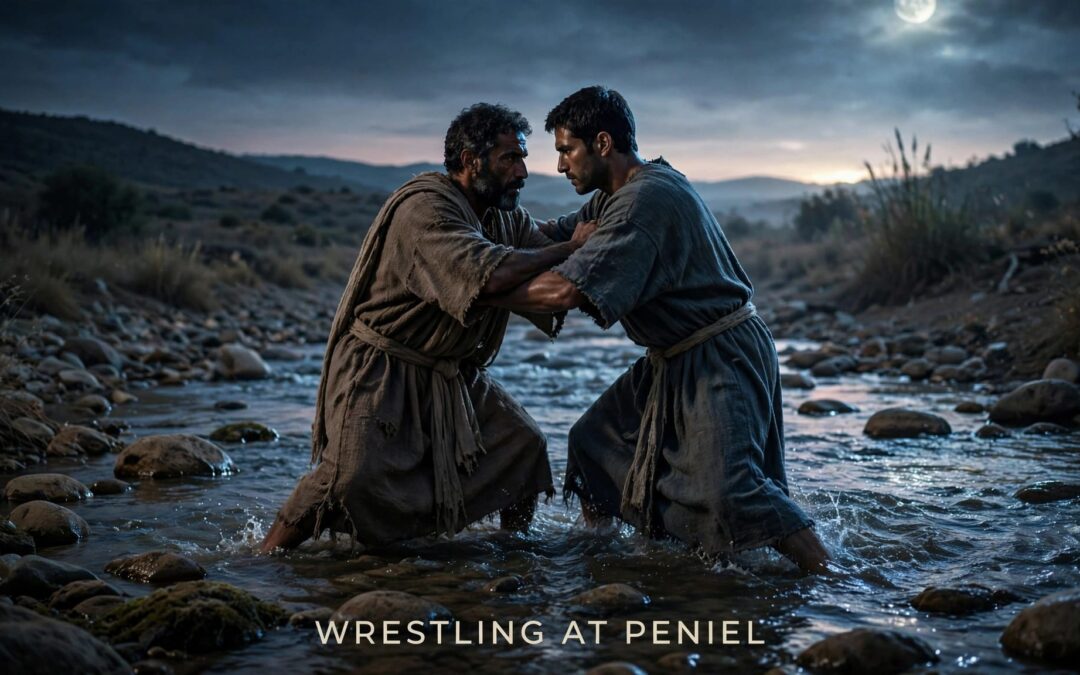
Jacob's wrestling in this encounter reveals a man brought to dependence on God's blessing before facing the brother he had wronged. God met Jacob in his fear and changed his name, his walk, and his future.
We must read this encounter alongside the events surrounding it, because Jacob's struggle begins before that night at the river.
Key Takeaways
- Jacob wrestled through the night before meeting Esau, the brother he had wronged, and refused to release his opponent without a blessing.
- Genesis calls the opponent a man, Hosea calls him an angel, and Jacob says he saw God. The article reads the encounter as a real divine encounter without claiming Scripture names the figure as Jesus.
- God renamed Jacob Israel and blessed him, while a touch to his hip left him limping. Jacob's new name also became the name of the covenant people descended from him.
- Jacob approached Esau with humility, and the brothers reconciled. The encounter teaches dependence on God's blessing, perseverance in prayer, and surrender to God's will.
Jacob Wrestling With God at the Jabbok
After years with Laban, Jacob was returning home and feared the reunion with his brother. He had deceived their father, Isaac, and taken his blessing. The text reports that Esau approached with 400 men.
In Genesis 32:22-32, Jacob prayed for deliverance and sent lavish gifts ahead. He divided his household, then sent his wives, children, and possessions across the Jabbok River.
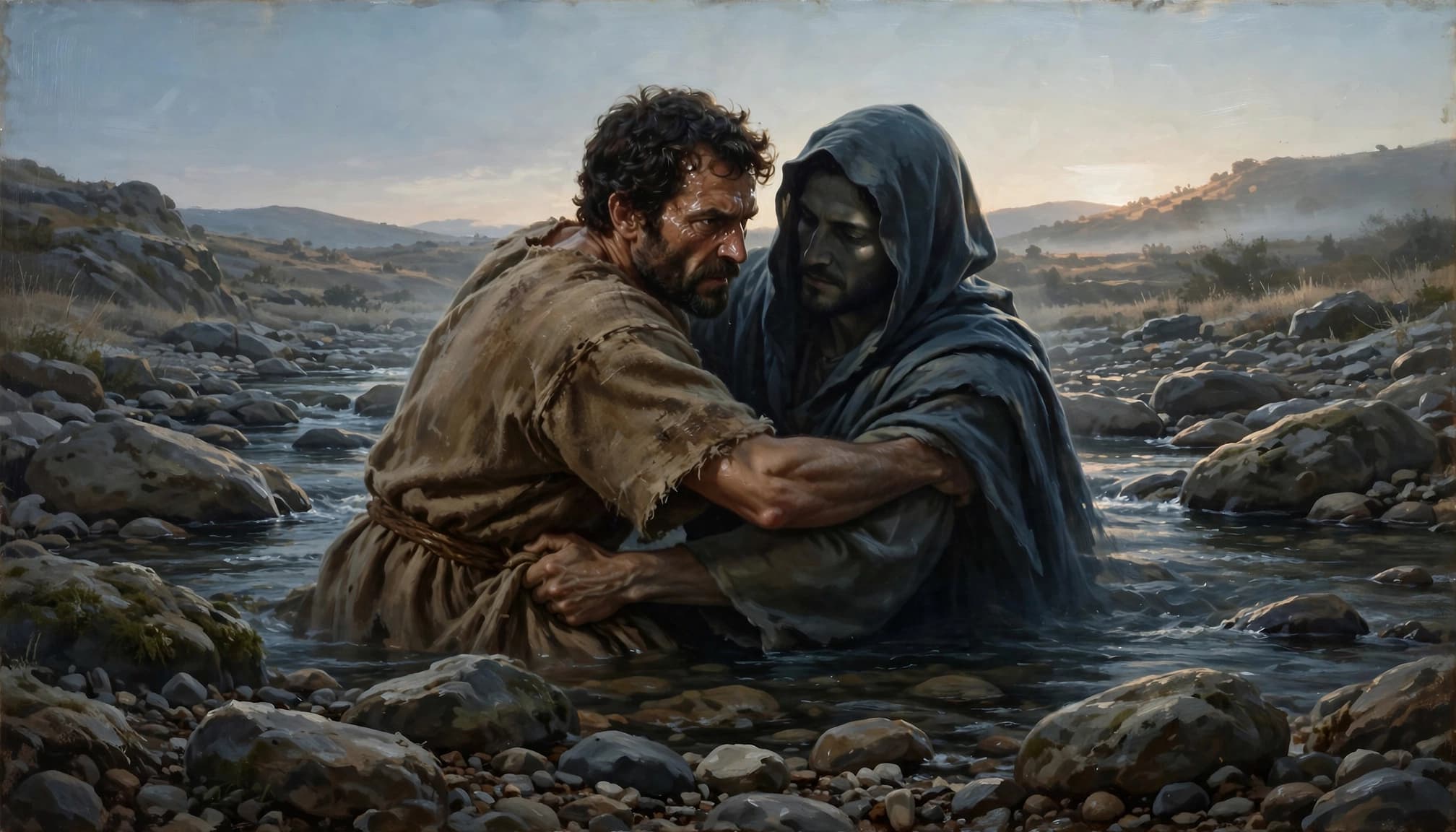
After his family crossed, he remained alone. A Man wrestled with him until daybreak. When the Man touched Jacob's hip, it was dislocated. Yet he held on, refusing to release Him without a blessing.
The meeting Jacob feared was with Esau. The encounter that changed him was with God. In Genesis 33, Esau and Jacob reconciled.
Who Was Jacob’s Opponent?
The Biblical Witness
Genesis calls Jacob's opponent a "man," using the Hebrew word ish. Hosea 12:4 calls him an angel and says Jacob wept and sought his favor.
The Hebrew word malakh means messenger or angel. These descriptions sit alongside Jacob's own testimony that he had seen God.
We read the account as a real divine encounter in which Jacob received a blessing from God through the one who confronted him.
Later Interpretations
Rashi identified the opponent as Esau's guardian angel, associated with Samael in Jewish tradition. Maimonides understood the encounter as a prophetic vision.
Many Christians identify the figure as Christ appearing before His incarnation. Genesis doesn't explicitly identify Him by name as Jesus. Our conclusions must remain under Scripture, rather than demanding that Scripture answer every question it leaves open.
Our teaching on reading Biblical narratives carefully follows this same principle.
What Israel, Peniel, and the Limp Mean
A Name Changed by God
Jacob's name is linked to the Hebrew word for heel and the sense of a heel-catcher or supplanter. Jacob's deception of Isaac and Esau gave that association painful significance.
God renamed him Israel, connecting the name with his struggle. Genesis 32:28 says, "for you have struggled with God and with men, and have prevailed."
Jacob received a new name through blessing. That name also became the name of the covenant people descended from him.
A Blessing and an Injured Hip
Peniel, also written Penuel, means "face of God." At Peniel, Jacob says he saw God face to face and survived. The name's explanation doesn't say Jacob physically overpowered God.
He left with a blessing and a limp. The touch that dislocated his hip shows God's power wasn't exhausted by the struggle.
Genesis reports that Israelites did not eat the thigh tendon. Later Jewish dietary practice identifies the sciatic nerve as the part to remove.
The encounter appears in the Vienna Genesis, Rembrandt's 1659 painting, Dore's 1855 engraving, Delacroix's 1861 mural, and Charles Wesley's hymn "Wrestling Jacob."
Jacob’s Changed Meeting With Esau
The next morning, Genesis 33 records Jacob bowing to the ground seven times. He called Esau "my lord" and himself Esau's servant.
Esau ran to meet him, embraced him, kissed him, and wept.
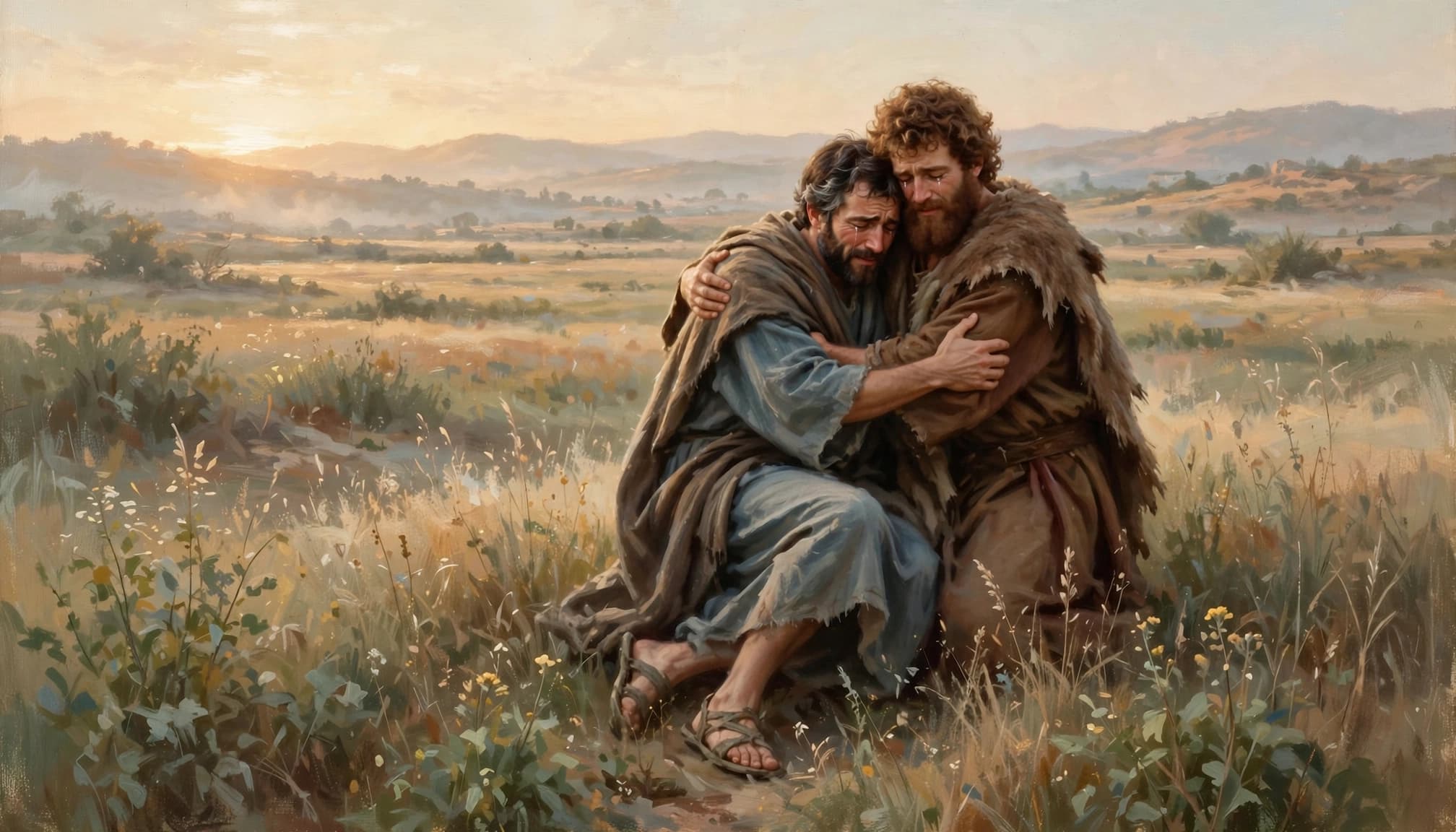
Rabbi Jonathan Sacks interprets Jacob's submission as Jacob returning the blessing of wealth and power he had taken. Genesis doesn't state that motive directly, but the humility is clear in his actions.
Receiving God's blessing didn't authorize Jacob to exalt himself over his brother. He approached the man he had wronged with humility and generosity.
Wrestling With God in Prayer
Holding on through fear and confusion isn't automatically sinful. Ligonier's discussion of Calvin's teaching explains that wrestling isn't blasphemous when undertaken in the right spirit. Hosea's account of Jacob's tears and pleading helps show what that spirit looks like.
Frederick Buechner described Jacob's encounter as the magnificent defeat of the human soul before God. That description captures the yielding involved in receiving a blessing we can't manufacture.
Jesus gives us the perfect example of submitted prayer in Mark 14:32-42. In Gethsemane, He repeatedly asked for the cup to pass while willingly yielding to the Father's will.
We urge you to bring doubt, grief, and unanswered questions before God. Continue in prayer, listen to His Word, and obey what He has already made clear.
An injury doesn't give us authority to declare every disability or hardship God's punishment.
The Holy Spirit leads believers into truth and obedience. Persistence in prayer must remain joined to surrender.
Frequently Asked Questions
Why did Jacob wrestle with God?
Jacob wrestled through the night before facing Esau, the brother he had wronged. He held on until he received a blessing, and the encounter brought him to depend on God rather than his own strength.
Who was Jacob’s opponent at Peniel?
Genesis calls the opponent a man, while Hosea calls him an angel. Jacob said he had seen God, and the article reads the account as a real divine encounter without identifying the figure by name as Jesus.
What do the names Israel and Peniel mean?
Genesis connects the name Israel with Jacob's struggle with God and men. Peniel, also written Penuel, means "face of God," which fits Jacob's words that he saw God face to face and survived.
How did Jacob approach Esau after the wrestling?
Jacob bowed to the ground seven times and called Esau his lord. Esau ran to meet him, embraced him, kissed him, and wept, and the brothers reconciled.
What does Jacob’s wrestling teach about prayer?
The article encourages believers to bring doubt, grief, and unanswered questions before God and continue in prayer. Persistence must remain joined to listening to God's Word, obeying what He has made clear, and surrendering to His will.
Hold On With a Surrendered Heart
Jacob's wrestling with God teaches dependence, humility, and perseverance. He received the blessing while learning that his strength couldn't secure what only the Lord could give.
When you struggle in prayer, continue seeking the Lord with an obedient heart. God's blessing never releases you from surrender to His will. Jacob carried that blessing into the next morning and approached his brother humbly.