

Day(s)
:
Hour(s)
:
Minute(s)
:
Second(s)
Wednesdays at 7pm
Press Play above to join us live
Wednesday Services
We have something for everyone on Wednesday Nights in Independence, KY. Kingdom Builders is one of many programs happening at our church every Wednesday night. Come and join us at CFC on Wednesday nights at 7:00 pm.
About Us
Our Core Values define who we are and what matters the most at Community Family Church. We are passionate about our Core Values—they drive this ministry and guide absolutely everything we do to achieve our mission.
Watch All Kingdom Builders Live Streams


 Subscribe to our channel
NTS AI Bible App


 Returning to the Father’s House Through JesusWalking away from God doesn’t mean you have gone beyond the reach of His mercy. Through Jesus Christ, restoration is possible, and shame doesn’t have to keep you away from the Father.
We proclaim that hope because Jesus gave Himself for sinners and made forgiveness available through His cross. The way back begins with turning toward the Savior Who is calling you out of darkness.
Worldly Pleasures Cannot Heal the Emptiness
The pleasures of the world can occupy your attention while leaving your heart empty. Searching for love among strangers, pursuing relationships, and seeking the approval of others cannot provide the restoration that comes through Jesus Christ.
Shame can remain beneath all that searching. A person can keep moving, keep pursuing something else, and still feel lost inside, because another pleasure hasn’t dealt with the guilt or restored fellowship with God.
Even the memory of spiritual fire can become painful when that fire seems to have faded. What once burned brightly now feels cold, and the distance between that earlier devotion and the present condition can make returning seem impossible.
But feeling beyond forgiveness doesn’t mean that forgiveness is unavailable. Shame must not have the final word when Jesus is offering mercy.
Jesus Welcomes the Returning Prodigal
The turning point comes through Jesus reaching toward the person who believes there is no way back. His mercy answers the fear that past wrongs have permanently closed the door.
We see this welcome in the Parable of the Prodigal Son in Luke 15. The son had gone away, yet his return was met with the father’s compassion.
Love Calls the Wanderer Back
The father’s love was present before the son returned, but the son still had to get up and return. The father received him out of the life he had wandered into.
That distinction matters. God’s love reaches the sinner, and that same love calls the sinner back to Him. Our teaching on God’s love for sinners holds together the truth about sin and the mercy available through Christ.
The Father’s Welcome Includes Belonging
A prepared table, a lighted house, and the robe and ring give a picture of welcome and restored belonging. The returning child is received with generosity rather than reluctance.
We must understand the Father’s heart in that welcome. You don’t have to remain outside because you are ashamed of where you have been. Through Jesus, returning to the Father is possible.
The Cross Is the Way Back
Jesus made the way for the person who could see no way forward. His wounded hands direct our attention to the cross, where He gave Himself so sinners could be forgiven and set free.
The welcome of the Father cannot be separated from the sacrifice of the Son. Forgiveness came at a cost, and Jesus willingly bore that cost.
We cannot speak about God’s mercy through Jesus as though God simply overlooks sin. At the cross, He dealt with sin through Christ. The One Who calls you back is the Savior Who gave Himself for you.
That is why returning to God carries hope. Your guilt is real, but Jesus has provided forgiveness. Your shame is real, but He has provided cleansing.
Our confidence rests in what Jesus has done. His sacrifice gives the returning sinner a reason to trust Him rather than remain hidden.
Grace Gives a Firm Foundation
A life spent searching for relief in worldly pleasures leaves the heart without a firm foundation. Grace gives us confidence in the Savior Who receives us, forgives us, and holds us.
Being found by Jesus changes the direction of a life that was lost. Running gives way to returning, and the burden of shame gives way to the hope of restoration.
Healing, hope, and love belong together in this welcome. The Father’s house is a place where the returning person can receive what those earlier pursuits could never provide.
We rest in God’s gift of grace because forgiveness cannot be purchased through religious effort. Grace also calls for a changed response to God. The person who receives mercy has reason to stop running and begin walking with Jesus.
Ephesians 2:8-10 gives that order clearly: salvation comes by grace through faith, and good works follow in the life God has made new.
Repentance Is the Response to Mercy
Returning to the Father involves an honest response. Repentance means agreeing with God about sin, turning away from the old direction, and trusting Jesus Christ for forgiveness.
Feeling ashamed can leave a person hiding. Repentance brings the matter before God. We stop defending what has separated us from Him and receive the mercy He offers through His Son.
1 John 1:9 assures us that God forgives and cleanses those who confess their sins. Our confidence belongs in His faithfulness, because our sorrow cannot accomplish what only Jesus can do.
Mercy gives the repentant person hope. You can acknowledge your sin without deciding that your sin has placed you beyond the Savior’s reach.
The invitation also reaches the person who is exhausted by pretending. If you have walked away, or if you are weary of appearing well while struggling within, the Father sees you. You can return honestly, with faith in Christ and a heart willing to follow Him.
The Father’s Invitation Is for Today
The Father’s welcome gives you a reason to return rather than remain distant. Jesus has made forgiveness available through His cross, and His grace gives hope to the ashamed and weary.
We proclaim restoration through Jesus Christ because the way back rests in Him. If you have walked away from your heavenly Father, His invitation calls for a response today. Turn toward Him and receive the mercy He offers. […]
Returning to the Father’s House Through JesusWalking away from God doesn’t mean you have gone beyond the reach of His mercy. Through Jesus Christ, restoration is possible, and shame doesn’t have to keep you away from the Father.
We proclaim that hope because Jesus gave Himself for sinners and made forgiveness available through His cross. The way back begins with turning toward the Savior Who is calling you out of darkness.
Worldly Pleasures Cannot Heal the Emptiness
The pleasures of the world can occupy your attention while leaving your heart empty. Searching for love among strangers, pursuing relationships, and seeking the approval of others cannot provide the restoration that comes through Jesus Christ.
Shame can remain beneath all that searching. A person can keep moving, keep pursuing something else, and still feel lost inside, because another pleasure hasn’t dealt with the guilt or restored fellowship with God.
Even the memory of spiritual fire can become painful when that fire seems to have faded. What once burned brightly now feels cold, and the distance between that earlier devotion and the present condition can make returning seem impossible.
But feeling beyond forgiveness doesn’t mean that forgiveness is unavailable. Shame must not have the final word when Jesus is offering mercy.
Jesus Welcomes the Returning Prodigal
The turning point comes through Jesus reaching toward the person who believes there is no way back. His mercy answers the fear that past wrongs have permanently closed the door.
We see this welcome in the Parable of the Prodigal Son in Luke 15. The son had gone away, yet his return was met with the father’s compassion.
Love Calls the Wanderer Back
The father’s love was present before the son returned, but the son still had to get up and return. The father received him out of the life he had wandered into.
That distinction matters. God’s love reaches the sinner, and that same love calls the sinner back to Him. Our teaching on God’s love for sinners holds together the truth about sin and the mercy available through Christ.
The Father’s Welcome Includes Belonging
A prepared table, a lighted house, and the robe and ring give a picture of welcome and restored belonging. The returning child is received with generosity rather than reluctance.
We must understand the Father’s heart in that welcome. You don’t have to remain outside because you are ashamed of where you have been. Through Jesus, returning to the Father is possible.
The Cross Is the Way Back
Jesus made the way for the person who could see no way forward. His wounded hands direct our attention to the cross, where He gave Himself so sinners could be forgiven and set free.
The welcome of the Father cannot be separated from the sacrifice of the Son. Forgiveness came at a cost, and Jesus willingly bore that cost.
We cannot speak about God’s mercy through Jesus as though God simply overlooks sin. At the cross, He dealt with sin through Christ. The One Who calls you back is the Savior Who gave Himself for you.
That is why returning to God carries hope. Your guilt is real, but Jesus has provided forgiveness. Your shame is real, but He has provided cleansing.
Our confidence rests in what Jesus has done. His sacrifice gives the returning sinner a reason to trust Him rather than remain hidden.
Grace Gives a Firm Foundation
A life spent searching for relief in worldly pleasures leaves the heart without a firm foundation. Grace gives us confidence in the Savior Who receives us, forgives us, and holds us.
Being found by Jesus changes the direction of a life that was lost. Running gives way to returning, and the burden of shame gives way to the hope of restoration.
Healing, hope, and love belong together in this welcome. The Father’s house is a place where the returning person can receive what those earlier pursuits could never provide.
We rest in God’s gift of grace because forgiveness cannot be purchased through religious effort. Grace also calls for a changed response to God. The person who receives mercy has reason to stop running and begin walking with Jesus.
Ephesians 2:8-10 gives that order clearly: salvation comes by grace through faith, and good works follow in the life God has made new.
Repentance Is the Response to Mercy
Returning to the Father involves an honest response. Repentance means agreeing with God about sin, turning away from the old direction, and trusting Jesus Christ for forgiveness.
Feeling ashamed can leave a person hiding. Repentance brings the matter before God. We stop defending what has separated us from Him and receive the mercy He offers through His Son.
1 John 1:9 assures us that God forgives and cleanses those who confess their sins. Our confidence belongs in His faithfulness, because our sorrow cannot accomplish what only Jesus can do.
Mercy gives the repentant person hope. You can acknowledge your sin without deciding that your sin has placed you beyond the Savior’s reach.
The invitation also reaches the person who is exhausted by pretending. If you have walked away, or if you are weary of appearing well while struggling within, the Father sees you. You can return honestly, with faith in Christ and a heart willing to follow Him.
The Father’s Invitation Is for Today
The Father’s welcome gives you a reason to return rather than remain distant. Jesus has made forgiveness available through His cross, and His grace gives hope to the ashamed and weary.
We proclaim restoration through Jesus Christ because the way back rests in Him. If you have walked away from your heavenly Father, His invitation calls for a response today. Turn toward Him and receive the mercy He offers. […]
 The Love of Jesus Rescues and RestoresJesus rescues us through His mercy, restores us through His compassion, and calls us into a life of willing service. Our response begins with His love, the love that reaches us while we’re still burdened by sorrow, sin, and shame.
As you listen to this testimony, the attention remains on what Jesus has done and the devotion His grace produces. It begins in darkness, where His mercy reaches down and refuses to leave us where He found us.
Mercy Reaches Into the Darkness
Sorrow can leave a person feeling trapped, isolated, and without hope. The opening testimony describes that condition plainly, with the picture of someone sinking, surrounded by shadows, lost and cold. The need is real, and the rescue must come through Someone stronger than the darkness.
Jesus reaches into that place with mercy. He lifts us out of death and shame, and His grace changes the condition in which He found us. We give Him the glory because the rescue begins with His compassion.
Called by Name
The rescue is personal. Jesus draws us near, surrounds us with grace, and calls us by name. His care reaches the person who has been living beneath the weight of sorrow and shame.
We aren’t given the particular events behind that sorrow, and we don’t need to invent them. The testimony tells us what matters: Jesus found someone in darkness, showed mercy, and brought that person close to Himself.
His Love Is Stronger Than Bondage
The central picture is a bond of love stronger than the chains that once held us. Those chains speak of captivity, while His love draws us into a relationship with Him. The strength that once seemed to belong to bondage is overcome by the greater strength of His love.
We also hear two parts of His saving work together: Jesus lifts us out of the lowest place, and He cleanses us from sin. Our need includes both rescue and cleansing. He deals with the shame we carry and the sin from which we need forgiveness.
The testimony then turns our attention toward His wounded hands. The One who holds us is the One who gave Himself for us. His compassion cannot be separated from His sacrifice.
Hebrews 9:14 teaches that Christ’s blood cleanses the conscience so that we can serve the living God. That same connection belongs here: cleansing leads into service, and the mercy we receive becomes the reason we willingly give ourselves to Him.
His Compassion Restores the Wounded
Jesus’ care continues after the rescue. The testimony describes Him tending wounds, removing fear, restoring what had been wasted, and giving joy where there had been pain.
These are personal expressions of compassion. He attends to the places that hurt. He meets the fears that have troubled us. Our gratitude includes what He has restored, as well as what He has forgiven.
Faithful as Shepherd and Bridegroom
Jesus is described as the Shepherd who stays and the Bridegroom whose love is strong and faithful. Both pictures speak of relationship, and both give us reason to trust His care.
The Shepherd doesn’t abandon those who belong to Him. The Bridegroom’s commitment is steadfast. Together, these pictures show why we can speak of being surrounded by compassion: the One who rescued us remains present with us.
The testimony doesn’t name every wound or explain every loss. Its confidence rests in the character of Jesus, whose love remains faithful through the places where restoration is needed.
Grace Calls Us Into Purpose
Grace brings us into a life of service. The testimony places the source of that service in God’s enduring love, rather than our strength or our striving. We serve because His grace has reached us and called us into purpose.
That order matters. We don’t earn His mercy through our service. His mercy comes first, and our willing response follows. This is the same truth we emphasize in our teaching on God’s gift of saving grace: salvation begins with what God gives through Jesus Christ.
1 John 4:19 explains that our love answers the love God first showed us. Our devotion has its beginning in Him.
The testimony also describes service within friendship with the Lord. We have been drawn close, given purpose, and called to serve the One who loves us. His grace gives us a reason to offer Him our lives willingly.
A Changed Story Gives Jesus Glory
The response reaches beyond a single expression of gratitude. Every breath becomes another opportunity to sing, proclaim, and honor the name of Jesus. The changed life gives testimony to the One who changed it.
When we speak about what God has done, Jesus must remain at the center. Our sorrow belongs in the account, but His mercy deserves the attention. Our past explains the need for rescue; His saving work gives us something worth proclaiming.
That is the emphasis of sharing a Christ-centered testimony. We tell the truth about where we were, while making clear who reached us, cleansed us, and gave us purpose.
The returning refrain brings these truths together again: His love overcame bondage, His mercy lifted us, and His grace holds us close. The final repetition settles on a commitment to serve Jesus for the rest of our lives. Gratitude becomes enduring devotion.
A Life Willingly Given to Jesus
The testimony begins with someone overwhelmed by sorrow and closes with someone committed to Jesus. His love has changed the direction of the life He rescued.
We give Him glory for the mercy that found us and the compassion that continues to restore us. Our answer is willing service to the Savior who drew us close and called us His own. […]
The Love of Jesus Rescues and RestoresJesus rescues us through His mercy, restores us through His compassion, and calls us into a life of willing service. Our response begins with His love, the love that reaches us while we’re still burdened by sorrow, sin, and shame.
As you listen to this testimony, the attention remains on what Jesus has done and the devotion His grace produces. It begins in darkness, where His mercy reaches down and refuses to leave us where He found us.
Mercy Reaches Into the Darkness
Sorrow can leave a person feeling trapped, isolated, and without hope. The opening testimony describes that condition plainly, with the picture of someone sinking, surrounded by shadows, lost and cold. The need is real, and the rescue must come through Someone stronger than the darkness.
Jesus reaches into that place with mercy. He lifts us out of death and shame, and His grace changes the condition in which He found us. We give Him the glory because the rescue begins with His compassion.
Called by Name
The rescue is personal. Jesus draws us near, surrounds us with grace, and calls us by name. His care reaches the person who has been living beneath the weight of sorrow and shame.
We aren’t given the particular events behind that sorrow, and we don’t need to invent them. The testimony tells us what matters: Jesus found someone in darkness, showed mercy, and brought that person close to Himself.
His Love Is Stronger Than Bondage
The central picture is a bond of love stronger than the chains that once held us. Those chains speak of captivity, while His love draws us into a relationship with Him. The strength that once seemed to belong to bondage is overcome by the greater strength of His love.
We also hear two parts of His saving work together: Jesus lifts us out of the lowest place, and He cleanses us from sin. Our need includes both rescue and cleansing. He deals with the shame we carry and the sin from which we need forgiveness.
The testimony then turns our attention toward His wounded hands. The One who holds us is the One who gave Himself for us. His compassion cannot be separated from His sacrifice.
Hebrews 9:14 teaches that Christ’s blood cleanses the conscience so that we can serve the living God. That same connection belongs here: cleansing leads into service, and the mercy we receive becomes the reason we willingly give ourselves to Him.
His Compassion Restores the Wounded
Jesus’ care continues after the rescue. The testimony describes Him tending wounds, removing fear, restoring what had been wasted, and giving joy where there had been pain.
These are personal expressions of compassion. He attends to the places that hurt. He meets the fears that have troubled us. Our gratitude includes what He has restored, as well as what He has forgiven.
Faithful as Shepherd and Bridegroom
Jesus is described as the Shepherd who stays and the Bridegroom whose love is strong and faithful. Both pictures speak of relationship, and both give us reason to trust His care.
The Shepherd doesn’t abandon those who belong to Him. The Bridegroom’s commitment is steadfast. Together, these pictures show why we can speak of being surrounded by compassion: the One who rescued us remains present with us.
The testimony doesn’t name every wound or explain every loss. Its confidence rests in the character of Jesus, whose love remains faithful through the places where restoration is needed.
Grace Calls Us Into Purpose
Grace brings us into a life of service. The testimony places the source of that service in God’s enduring love, rather than our strength or our striving. We serve because His grace has reached us and called us into purpose.
That order matters. We don’t earn His mercy through our service. His mercy comes first, and our willing response follows. This is the same truth we emphasize in our teaching on God’s gift of saving grace: salvation begins with what God gives through Jesus Christ.
1 John 4:19 explains that our love answers the love God first showed us. Our devotion has its beginning in Him.
The testimony also describes service within friendship with the Lord. We have been drawn close, given purpose, and called to serve the One who loves us. His grace gives us a reason to offer Him our lives willingly.
A Changed Story Gives Jesus Glory
The response reaches beyond a single expression of gratitude. Every breath becomes another opportunity to sing, proclaim, and honor the name of Jesus. The changed life gives testimony to the One who changed it.
When we speak about what God has done, Jesus must remain at the center. Our sorrow belongs in the account, but His mercy deserves the attention. Our past explains the need for rescue; His saving work gives us something worth proclaiming.
That is the emphasis of sharing a Christ-centered testimony. We tell the truth about where we were, while making clear who reached us, cleansed us, and gave us purpose.
The returning refrain brings these truths together again: His love overcame bondage, His mercy lifted us, and His grace holds us close. The final repetition settles on a commitment to serve Jesus for the rest of our lives. Gratitude becomes enduring devotion.
A Life Willingly Given to Jesus
The testimony begins with someone overwhelmed by sorrow and closes with someone committed to Jesus. His love has changed the direction of the life He rescued.
We give Him glory for the mercy that found us and the compassion that continues to restore us. Our answer is willing service to the Savior who drew us close and called us His own. […]
 Psalm 121: Help From the Lord Who Never SleepsThe Lord who created heaven and earth is the source of our help. In Psalm 121, we confess our dependence upon Him as our Keeper, the One whose watchful care never stops.
You can bring your need before the Lord with confidence in His keeping. Our assurance rests in who He is: the Creator who watches over His people without slumber or sleep.
Looking to the Lord for Help
The opening words describe lifted eyes looking toward the hills, followed by a question about the source of help. The answer is definite. Our help is in the Lord, and the Lord is the Maker of heaven and earth.
Psalm 121:2 joins these truths together. The One who helps is the One who created. We aren’t speaking about help without naming its source; we are declaring our dependence upon God Himself.
The song repeats that answer before continuing. Our confidence remains fixed upon the Lord and His ability to keep us.
For anxious days, this gives us a clear foundation for praying the Psalms for strength. We bring our need before God with our attention directed toward His faithfulness.
The Keeper Who Never Sleeps
The Lord’s keeping reaches to our footing. The picture in Psalm 121:3 is of a foot held steady, with the assurance that the One watching over us doesn’t fall asleep.
The next verse names Israel and repeats the assurance about God’s wakefulness. Psalm 121:4 declares that Israel’s Keeper remains watchful, without either slumber or sleep.
These lines belong together. The Lord keeps the person addressed, and He keeps Israel. His attention doesn’t lapse. His care doesn’t depend upon a period of rest followed by a return to watchfulness.
God remains awake and attentive. Our confidence is in His keeping, and His keeping continues when the day gives way to night.
His Shade Is Close at Hand
Psalm 121:5 identifies the Lord as Keeper and describes Him as shade beside the person He keeps. The image places His shelter close at hand.
The following words speak of the sun during the day and the moon during the night. We read these images together. The shade, the daylight, and the darkness all remain connected to the same truth about the Lord’s care.
His keeping extends through day and night. The change in the sky doesn’t bring a change in the One watching over His people.
This is why the surrounding words matter when we read imagery in Biblical poetry. The next lines explain the picture of shade through the Lord’s protection in daylight and darkness. Our attention remains upon Him and the shelter He provides.
The Lord Keeps Our Life
The words about shade lead into a broader declaration in Psalm 121:7: the Lord guards against evil and preserves life.
The same Keeper remains the subject. The Lord who watches without sleeping is the Lord whose care reaches to our life itself. We don’t have to separate His watchfulness from His keeping; the psalm speaks of them together.
The song later expresses this confidence through the picture of shelter during a storm. That shelter belongs to the same Lord already named as Creator and Keeper.
Our assurance is personal. We depend upon Him for help, and we rest in His care.
His Keeping Has No End
Psalm 121:8 speaks of the Lord watching over departure and return. Both movements are held within His keeping.
The promise also reaches beyond the present moment. God’s care is described as continuing now and forever. The words give no ending to His watchfulness.
The refrain then returns to the Lord as the source of help and the Maker of heaven and earth. We sing of Him as our Keeper and our shelter, with confidence that He remains watchful wherever we go.
The final assurance is safety in His care. The song returns once more to our dependence upon the Lord before closing with music and vocal sounds.
Confidence in the Lord’s Care
Our help rests in the Lord who made heaven and earth. His watchfulness continues through daylight and darkness, through departure and return.
We confess our dependence upon the Lord our Keeper. Our confidence remains in Him, the One who never sleeps. […]
Psalm 121: Help From the Lord Who Never SleepsThe Lord who created heaven and earth is the source of our help. In Psalm 121, we confess our dependence upon Him as our Keeper, the One whose watchful care never stops.
You can bring your need before the Lord with confidence in His keeping. Our assurance rests in who He is: the Creator who watches over His people without slumber or sleep.
Looking to the Lord for Help
The opening words describe lifted eyes looking toward the hills, followed by a question about the source of help. The answer is definite. Our help is in the Lord, and the Lord is the Maker of heaven and earth.
Psalm 121:2 joins these truths together. The One who helps is the One who created. We aren’t speaking about help without naming its source; we are declaring our dependence upon God Himself.
The song repeats that answer before continuing. Our confidence remains fixed upon the Lord and His ability to keep us.
For anxious days, this gives us a clear foundation for praying the Psalms for strength. We bring our need before God with our attention directed toward His faithfulness.
The Keeper Who Never Sleeps
The Lord’s keeping reaches to our footing. The picture in Psalm 121:3 is of a foot held steady, with the assurance that the One watching over us doesn’t fall asleep.
The next verse names Israel and repeats the assurance about God’s wakefulness. Psalm 121:4 declares that Israel’s Keeper remains watchful, without either slumber or sleep.
These lines belong together. The Lord keeps the person addressed, and He keeps Israel. His attention doesn’t lapse. His care doesn’t depend upon a period of rest followed by a return to watchfulness.
God remains awake and attentive. Our confidence is in His keeping, and His keeping continues when the day gives way to night.
His Shade Is Close at Hand
Psalm 121:5 identifies the Lord as Keeper and describes Him as shade beside the person He keeps. The image places His shelter close at hand.
The following words speak of the sun during the day and the moon during the night. We read these images together. The shade, the daylight, and the darkness all remain connected to the same truth about the Lord’s care.
His keeping extends through day and night. The change in the sky doesn’t bring a change in the One watching over His people.
This is why the surrounding words matter when we read imagery in Biblical poetry. The next lines explain the picture of shade through the Lord’s protection in daylight and darkness. Our attention remains upon Him and the shelter He provides.
The Lord Keeps Our Life
The words about shade lead into a broader declaration in Psalm 121:7: the Lord guards against evil and preserves life.
The same Keeper remains the subject. The Lord who watches without sleeping is the Lord whose care reaches to our life itself. We don’t have to separate His watchfulness from His keeping; the psalm speaks of them together.
The song later expresses this confidence through the picture of shelter during a storm. That shelter belongs to the same Lord already named as Creator and Keeper.
Our assurance is personal. We depend upon Him for help, and we rest in His care.
His Keeping Has No End
Psalm 121:8 speaks of the Lord watching over departure and return. Both movements are held within His keeping.
The promise also reaches beyond the present moment. God’s care is described as continuing now and forever. The words give no ending to His watchfulness.
The refrain then returns to the Lord as the source of help and the Maker of heaven and earth. We sing of Him as our Keeper and our shelter, with confidence that He remains watchful wherever we go.
The final assurance is safety in His care. The song returns once more to our dependence upon the Lord before closing with music and vocal sounds.
Confidence in the Lord’s Care
Our help rests in the Lord who made heaven and earth. His watchfulness continues through daylight and darkness, through departure and return.
We confess our dependence upon the Lord our Keeper. Our confidence remains in Him, the One who never sleeps. […]
 What the Bible Means by the Fear of the LordThe fear of the Lord is holy reverence for God that brings a person willingly under His authority. It includes awe before His holiness, seriousness about His judgment, and a readiness to obey what He says.
We cannot separate reverence from obedience and still preserve the Biblical meaning of fearing God. You can speak respectfully about the Lord while refusing His correction, but respectful language alone doesn’t establish a surrendered heart.
To understand this fear, we must begin with Who God is and what His authority requires.
What the fear of the Lord means
God is holy, righteous, and worthy of complete devotion. Fearing Him means receiving those truths as realities that govern your life.
Reverence acknowledges God’s authority
The Lord has the right to correct our thinking, confront our desires, and command our conduct. His authority doesn’t depend on whether His instruction agrees with what you already wanted.
We teach submission because God deserves more than acknowledgment. A person may acknowledge that God exists while continuing to resist everything He requires.
Reverence gives God’s Word authority over your choices. When Scripture exposes something wrong, the proper response is to receive the correction. Defending a preference against God’s instruction reveals where surrender is still needed.
The original words carry real weight
The Hebrew word yirah, meaning fear and reverence, includes the sense of awe before someone greater. The Greek word phobos, meaning fear or reverence, also carries meanings that include fear, terror, and respect.
These words must be understood within their passages. We shouldn’t reduce every occurrence to panic, nor should we remove every sense of trembling before God’s majesty.
Biblical reverence recognizes that the One Who offers mercy is also the One to Whom every person must answer.
The fear of the Lord begins wisdom
Proverbs 9:10 places the fear of the Lord at the beginning of wisdom. That beginning determines how everything afterward is understood.
Knowledge must receive correction
A person can understand arguments, remember facts, and explain religious ideas while remaining unwilling to hear God. Intelligence doesn’t make pride obedient.
Wisdom begins with a teachable heart because God’s truth will confront what human reasoning wants to protect. You cannot receive His instruction while reserving the right to reject whatever challenges you.
This is why we emphasize living by God’s wisdom. The purpose reaches beyond having an answer. God’s wisdom teaches a person how to live faithfully before Him, including when obedience brings no immediate advantage.
Understanding turns away from evil
Job 28:28 joins fearing the Lord with wisdom and departing from evil with understanding. The connection is moral and practical.
Understanding should change what you tolerate, what you pursue, and what you willingly leave behind. Knowing that dishonesty is wrong accomplishes little if you continue lying whenever truth becomes costly.
The person receiving wisdom becomes willing to abandon sin because God has spoken against it. A changed direction belongs to genuine understanding. We must teach wisdom as instruction for holy living, rather than permission to admire truth without following it.
Fear, love, and obedience belong together
Scripture doesn’t present love for God as permission to disregard Him. Love receives His authority willingly because the heart recognizes His goodness.
Love responds to what Jesus commands
In John 14:15, Jesus connects love for Him with keeping His commandments. His words give love an obedient expression.
Affection, gratitude, and worship matter, but they cannot replace doing what Jesus says. A declaration of love becomes contradicted when a person deliberately refuses His instruction.
We teach obedience motivated by love because willing surrender belongs to a living relationship with Christ. You aren’t purchasing His love through good behavior. You are responding to the Savior Who loved you and gave Himself for you.
Grace receives the Father’s correction
Salvation is God’s gift through Jesus Christ. Human effort cannot purchase forgiveness, and religious performance cannot replace faith in Him.
That grace also teaches a different response to correction. Hebrews 12 describes the Lord disciplining those He loves. His correction belongs to His care for His children.
When God exposes pride, bitterness, or disobedience, the faithful response is to yield. Defending the sin delays the very change His correction calls for.
Grace never makes rebellion harmless. It gives the repentant person reason to return to God rather than remain hidden in shame. We receive mercy with gratitude and receive instruction with the same willing heart.
Jesus teaches holy fear without abandoning trust
Moses makes an important distinction in Exodus 20:20. He tells the people not to be afraid while explaining that the fear of God should restrain them from sin.
There is a difference between terror that makes a person withdraw and reverence that makes a person listen. The passage directs attention toward obedience.
Jesus also teaches the seriousness of fearing God in Luke 12. He warns His followers against allowing human threats to become their highest concern. God’s authority reaches beyond anything another person can do.
In that same chapter, Jesus speaks of God’s care and the value of His people. His warning and His reassurance belong together.
We must receive both. God’s care gives you reason to trust Him, while His authority gives you reason to obey Him even under pressure. Fear of rejection by people must never become permission to reject what God commands.
God’s care doesn’t cancel His authority. His authority doesn’t make His care uncertain.
This is the confidence of faith: the Lord Who commands your obedience is worthy of your trust.
The Holy Spirit produces reverent living
We believe in the baptism in the Holy Spirit and the continuing gifts of the Spirit. Spiritual power calls for a life yielded to God.
Spiritual gifts never excuse disobedience
The Holy Spirit empowers believers for witness and ministry. He also works in their character.
In Galatians 5, Paul connects walking in the Spirit with resisting the flesh and bearing spiritual fruit. Love, patience, faithfulness, and self-control belong to that Spirit-led life.
A person shouldn’t point to spiritual activity as an excuse for dishonesty, cruelty, or hidden sin. The gifts of the Spirit must never become a defense against the correction of the Spirit.
We welcome His power while submitting to His work of making God’s people holy.
Every impression remains under Scripture
Reverence also governs what a person claims to have heard from God. A strong feeling doesn’t establish divine authority.
The Holy Spirit doesn’t lead anyone into conduct that contradicts the Scripture He inspired. Every teaching, impression, and claimed revelation must remain subject to the written Word.
This matters in worship as well. Joy, tears, praise, and spiritual gifts have a place, but an emotional response cannot settle whether someone has obeyed.
A yielded heart remains correctable. We must be willing to surrender an interpretation, an ambition, or a cherished impression when it fails to agree with Scripture. Honoring the Spirit includes honoring the truth He has given.
Practicing reverence in ordinary decisions
Psalm 34 teaches the fear of the Lord through concrete conduct: guarding speech, refusing deceit, turning away from evil, doing good, and pursuing peace.
That instruction brings reverence into daily life. Tell the truth when a lie would protect your reputation. Refuse dishonest gain when nobody else would know. Seek peace without agreeing to wrongdoing.
Private choices matter because God’s knowledge reaches beyond public appearances. You cannot measure faithfulness only by what other people can observe.
When you sin, confess it and return to obedience. A repentant response takes God’s correction seriously without treating failure as a reason to abandon Him.
We can pray plainly: “Lord, expose what resists Your will. Teach us to receive Your correction and obey Your Word.”
Then act on what He has already made clear. Prayer should accompany the apology, the truthful conversation, or the abandoned habit that obedience requires. Waiting for a stronger feeling must never replace a responsibility you already understand.
Key takeaways
The fear of the Lord recognizes God’s holiness, authority, and right to judge.
Wisdom requires a teachable heart and a willingness to turn away from evil.
Love for Jesus receives expression through obedience to His commands.
The Holy Spirit’s gifts belong alongside holiness, spiritual fruit, and submission to Scripture.
Daily reverence reaches speech, private conduct, repentance, and the treatment of other people.
Frequently asked questions
Does feeling anxious mean someone lacks reverence for God?
Anxiety isn’t a reliable measure of your devotion. A believer may feel distress while choosing to trust and obey the Lord.
We encourage overcoming fear through God’s Word, prayer, and the support of other believers. Bring your concerns honestly before Him. Persistent anxiety can also warrant help from a qualified professional; receiving care doesn’t contradict faith.
Does fearing God require unquestioning obedience to religious leaders?
God alone has final authority. A leader’s position doesn’t make every instruction faithful to His Word.
Receive sound teaching and Godly counsel, but no person has the right to demand sin, conceal abuse, or claim immunity from correction. Reverence for God requires that human authority remain accountable to Scripture. Submission to the Lord must never become an excuse for protecting wrongdoing.
Let reverence govern the response
The fear of the Lord reaches beyond knowing the right definition. It brings the heart under God’s authority and gives His Word a claim upon daily conduct.
We honor Him by trusting His mercy, receiving His correction, and obeying what He says. Willing surrender is the fitting response to the Lord Who is holy and good.
Where His instruction is clear, let your response be faithful. […]
What the Bible Means by the Fear of the LordThe fear of the Lord is holy reverence for God that brings a person willingly under His authority. It includes awe before His holiness, seriousness about His judgment, and a readiness to obey what He says.
We cannot separate reverence from obedience and still preserve the Biblical meaning of fearing God. You can speak respectfully about the Lord while refusing His correction, but respectful language alone doesn’t establish a surrendered heart.
To understand this fear, we must begin with Who God is and what His authority requires.
What the fear of the Lord means
God is holy, righteous, and worthy of complete devotion. Fearing Him means receiving those truths as realities that govern your life.
Reverence acknowledges God’s authority
The Lord has the right to correct our thinking, confront our desires, and command our conduct. His authority doesn’t depend on whether His instruction agrees with what you already wanted.
We teach submission because God deserves more than acknowledgment. A person may acknowledge that God exists while continuing to resist everything He requires.
Reverence gives God’s Word authority over your choices. When Scripture exposes something wrong, the proper response is to receive the correction. Defending a preference against God’s instruction reveals where surrender is still needed.
The original words carry real weight
The Hebrew word yirah, meaning fear and reverence, includes the sense of awe before someone greater. The Greek word phobos, meaning fear or reverence, also carries meanings that include fear, terror, and respect.
These words must be understood within their passages. We shouldn’t reduce every occurrence to panic, nor should we remove every sense of trembling before God’s majesty.
Biblical reverence recognizes that the One Who offers mercy is also the One to Whom every person must answer.
The fear of the Lord begins wisdom
Proverbs 9:10 places the fear of the Lord at the beginning of wisdom. That beginning determines how everything afterward is understood.
Knowledge must receive correction
A person can understand arguments, remember facts, and explain religious ideas while remaining unwilling to hear God. Intelligence doesn’t make pride obedient.
Wisdom begins with a teachable heart because God’s truth will confront what human reasoning wants to protect. You cannot receive His instruction while reserving the right to reject whatever challenges you.
This is why we emphasize living by God’s wisdom. The purpose reaches beyond having an answer. God’s wisdom teaches a person how to live faithfully before Him, including when obedience brings no immediate advantage.
Understanding turns away from evil
Job 28:28 joins fearing the Lord with wisdom and departing from evil with understanding. The connection is moral and practical.
Understanding should change what you tolerate, what you pursue, and what you willingly leave behind. Knowing that dishonesty is wrong accomplishes little if you continue lying whenever truth becomes costly.
The person receiving wisdom becomes willing to abandon sin because God has spoken against it. A changed direction belongs to genuine understanding. We must teach wisdom as instruction for holy living, rather than permission to admire truth without following it.
Fear, love, and obedience belong together
Scripture doesn’t present love for God as permission to disregard Him. Love receives His authority willingly because the heart recognizes His goodness.
Love responds to what Jesus commands
In John 14:15, Jesus connects love for Him with keeping His commandments. His words give love an obedient expression.
Affection, gratitude, and worship matter, but they cannot replace doing what Jesus says. A declaration of love becomes contradicted when a person deliberately refuses His instruction.
We teach obedience motivated by love because willing surrender belongs to a living relationship with Christ. You aren’t purchasing His love through good behavior. You are responding to the Savior Who loved you and gave Himself for you.
Grace receives the Father’s correction
Salvation is God’s gift through Jesus Christ. Human effort cannot purchase forgiveness, and religious performance cannot replace faith in Him.
That grace also teaches a different response to correction. Hebrews 12 describes the Lord disciplining those He loves. His correction belongs to His care for His children.
When God exposes pride, bitterness, or disobedience, the faithful response is to yield. Defending the sin delays the very change His correction calls for.
Grace never makes rebellion harmless. It gives the repentant person reason to return to God rather than remain hidden in shame. We receive mercy with gratitude and receive instruction with the same willing heart.
Jesus teaches holy fear without abandoning trust
Moses makes an important distinction in Exodus 20:20. He tells the people not to be afraid while explaining that the fear of God should restrain them from sin.
There is a difference between terror that makes a person withdraw and reverence that makes a person listen. The passage directs attention toward obedience.
Jesus also teaches the seriousness of fearing God in Luke 12. He warns His followers against allowing human threats to become their highest concern. God’s authority reaches beyond anything another person can do.
In that same chapter, Jesus speaks of God’s care and the value of His people. His warning and His reassurance belong together.
We must receive both. God’s care gives you reason to trust Him, while His authority gives you reason to obey Him even under pressure. Fear of rejection by people must never become permission to reject what God commands.
God’s care doesn’t cancel His authority. His authority doesn’t make His care uncertain.
This is the confidence of faith: the Lord Who commands your obedience is worthy of your trust.
The Holy Spirit produces reverent living
We believe in the baptism in the Holy Spirit and the continuing gifts of the Spirit. Spiritual power calls for a life yielded to God.
Spiritual gifts never excuse disobedience
The Holy Spirit empowers believers for witness and ministry. He also works in their character.
In Galatians 5, Paul connects walking in the Spirit with resisting the flesh and bearing spiritual fruit. Love, patience, faithfulness, and self-control belong to that Spirit-led life.
A person shouldn’t point to spiritual activity as an excuse for dishonesty, cruelty, or hidden sin. The gifts of the Spirit must never become a defense against the correction of the Spirit.
We welcome His power while submitting to His work of making God’s people holy.
Every impression remains under Scripture
Reverence also governs what a person claims to have heard from God. A strong feeling doesn’t establish divine authority.
The Holy Spirit doesn’t lead anyone into conduct that contradicts the Scripture He inspired. Every teaching, impression, and claimed revelation must remain subject to the written Word.
This matters in worship as well. Joy, tears, praise, and spiritual gifts have a place, but an emotional response cannot settle whether someone has obeyed.
A yielded heart remains correctable. We must be willing to surrender an interpretation, an ambition, or a cherished impression when it fails to agree with Scripture. Honoring the Spirit includes honoring the truth He has given.
Practicing reverence in ordinary decisions
Psalm 34 teaches the fear of the Lord through concrete conduct: guarding speech, refusing deceit, turning away from evil, doing good, and pursuing peace.
That instruction brings reverence into daily life. Tell the truth when a lie would protect your reputation. Refuse dishonest gain when nobody else would know. Seek peace without agreeing to wrongdoing.
Private choices matter because God’s knowledge reaches beyond public appearances. You cannot measure faithfulness only by what other people can observe.
When you sin, confess it and return to obedience. A repentant response takes God’s correction seriously without treating failure as a reason to abandon Him.
We can pray plainly: “Lord, expose what resists Your will. Teach us to receive Your correction and obey Your Word.”
Then act on what He has already made clear. Prayer should accompany the apology, the truthful conversation, or the abandoned habit that obedience requires. Waiting for a stronger feeling must never replace a responsibility you already understand.
Key takeaways
The fear of the Lord recognizes God’s holiness, authority, and right to judge.
Wisdom requires a teachable heart and a willingness to turn away from evil.
Love for Jesus receives expression through obedience to His commands.
The Holy Spirit’s gifts belong alongside holiness, spiritual fruit, and submission to Scripture.
Daily reverence reaches speech, private conduct, repentance, and the treatment of other people.
Frequently asked questions
Does feeling anxious mean someone lacks reverence for God?
Anxiety isn’t a reliable measure of your devotion. A believer may feel distress while choosing to trust and obey the Lord.
We encourage overcoming fear through God’s Word, prayer, and the support of other believers. Bring your concerns honestly before Him. Persistent anxiety can also warrant help from a qualified professional; receiving care doesn’t contradict faith.
Does fearing God require unquestioning obedience to religious leaders?
God alone has final authority. A leader’s position doesn’t make every instruction faithful to His Word.
Receive sound teaching and Godly counsel, but no person has the right to demand sin, conceal abuse, or claim immunity from correction. Reverence for God requires that human authority remain accountable to Scripture. Submission to the Lord must never become an excuse for protecting wrongdoing.
Let reverence govern the response
The fear of the Lord reaches beyond knowing the right definition. It brings the heart under God’s authority and gives His Word a claim upon daily conduct.
We honor Him by trusting His mercy, receiving His correction, and obeying what He says. Willing surrender is the fitting response to the Lord Who is holy and good.
Where His instruction is clear, let your response be faithful. […]
 Jonah and Nineveh: God’s Mercy Beyond IsraelGod’s concern reaches beyond Israel, and His mercy calls even those regarded as enemies to turn from evil. Jonah and Nineveh teach us that God’s compassion cannot be confined by human resentment, national loyalty, or our judgment about who deserves another opportunity.
We can recognize someone’s wickedness and still resist God’s desire to bring that person to repentance. The Lord’s command to Jonah confronts that resistance and requires us to receive His heart along with His instructions.
Key Takeaways
God’s warning to Nineveh revealed His holiness and His willingness to show mercy beyond Israel.
Nineveh’s deliverance followed a genuine turning from evil, so mercy must never be confused with permission to continue sinning.
Jonah knew God’s character, yet he resisted God’s compassion toward others.
We must allow the Holy Spirit to confront bitterness while we faithfully call people to repentance through Jesus Christ.
God Sends His Word Beyond Israel
God’s concern for people begins with His authority over them. No nation exists outside His sight, and no national identity places anyone beyond His right to confront sin.
God’s Warning Reveals His Holiness
In Jonah 1, the Lord commands Jonah to go to Nineveh and cry out against its wickedness. God sees evil clearly, and He names it without softening its seriousness.
The setting is a real city, Nineveh in ancient Assyria, rather than an imaginary place created for a moral lesson. God’s message addresses actual wrongdoing among actual people.
We must receive that order correctly. Compassion never requires God to call wickedness acceptable. His concern for sinners includes confronting the sin that brings them under judgment.
God’s Commission Reveals His Concern
The Lord sends His prophet beyond Israel with a message those people need to hear. His warning gives them an opportunity to respond before judgment falls.
That matters when we consider God’s concern for Israel’s enemies. His covenant relationship with Israel doesn’t mean He is indifferent to people outside Israel.
We must never confuse being entrusted with God’s truth with having authority to restrict its reach. The messenger belongs to God, the message belongs to God, and the people who hear it remain accountable to God.
Jonah and Nineveh Reveal Mercy Through Repentance
God’s compassion becomes visible in His response to people who turn from evil. We must keep that response connected to repentance rather than separating mercy from obedience.
Turning From Evil Requires a Changed Direction
In Jonah 3, the word of the Lord comes to Jonah again, and he carries God’s message to Nineveh. The decisive response is described in Jonah 3:10: God sees that the people have turned from their evil way, and He withholds the announced disaster.
Their response reaches their conduct. God’s Word exposes their evil, and they turn away from it.
This is why we teach repentance in the Bible as a genuine turning toward God. Sorrow may accompany repentance, but sorrow alone doesn’t establish obedience. A person can regret consequences while continuing to defend the behavior that caused them.
Mercy Doesn’t Change God’s Character
When God spares Nineveh, He acts consistently with His holiness and compassion. He hasn’t discovered that wickedness is harmless, and He hasn’t abandoned His right to judge.
His dealings with the people change because their response to His warning changes. The same God who confronts evil shows mercy when people turn from it.
We must therefore reject presumption. God’s patience calls for a response. Delayed judgment gives people time to turn, but that delay must never become an excuse to continue in rebellion.
Jonah Knows God’s Character but Resists His Mercy
Jonah’s response exposes a serious spiritual danger: we can speak accurately about God while resisting what God wants to accomplish.
Knowing the Truth Requires Submission
In Jonah 4:2, Jonah acknowledges that God is gracious, merciful, slow to anger, and abundant in lovingkindness. He explains his resistance in light of the very mercy he knows God possesses.
His understanding of God’s character is correct. His attitude toward God’s compassion requires correction.
We must hear that personally. Knowledge of Scripture doesn’t excuse an unwilling heart. We can explain mercy, defend mercy, and thank God for mercy while becoming angry when He extends mercy to someone we resent.
Truth must govern our response, especially when God’s work contradicts our personal desires.
Mercy Cannot Belong Only to Us
Jonah’s anger reveals how easily human loyalty becomes selective compassion. We welcome patience when we need time to repent, yet demand immediate consequences when someone else has sinned.
Our teaching on God’s patience with sinners keeps the purpose of that patience before us: God gives people room to turn.
We have no authority to decide that another person’s repentance would be an unwelcome outcome. Their wrongdoing may be serious, and consequences may remain, but their return to God is still something we should desire.
God’s Closing Question Exposes a Divided Heart
The final chapter brings God’s concern into direct conflict with Jonah’s priorities. The Lord addresses His prophet as well as the city.
In Jonah 4, the plant becomes part of God’s correction. Jonah’s concern over its loss is placed beside God’s concern for the people of Nineveh.
The contrast exposes a divided heart. Jonah feels strongly about something that benefits him, while resisting compassion toward people whose lives are at stake.
God’s closing question in Jonah 4:11 identifies more than 120,000 people who cannot discern between their right hand and their left, and also mentions livestock. The verse directs attention to the living creatures within the city, rather than allowing Jonah to regard Nineveh only as a target for destruction.
We shouldn’t turn that number into a claim about independently established population figures. It is the number Scripture gives within God’s appeal to His prophet.
The book closes with God’s question. We aren’t given a final speech in which Jonah resolves the matter. Instead, we are left facing the same issue: will we submit our compassion to God’s compassion?
His question requires more than agreement about His goodness. It requires a willing heart toward the people He calls to repentance.
The Holy Spirit Leads Believers Into Obedient Compassion
We cannot receive Jonah’s correction faithfully while refusing the Holy Spirit’s correction in our own lives. Spiritual ministry requires a yielded heart, including our attitudes toward people who oppose us.
The Holy Spirit empowers believers to bear witness to Jesus Christ. That witness includes truth about sin, the necessity of repentance, and forgiveness through the blood of Jesus. We must proclaim the whole message rather than choosing only the part that agrees with our feelings.
If we desire judgment more than someone’s repentance, we need to bring that desire before the Lord. Bitterness doesn’t become Godly because the person we resent has done something wrong.
At the same time, compassion doesn’t require us to deny abuse, conceal wrongdoing, or remove every consequence. We can pursue justice, maintain necessary boundaries, and still pray for a person’s salvation. Forgiveness never requires participation in another person’s sin.
Our understanding of God’s mercy throughout the Bible must reach our conduct. We should speak truthfully about wrongdoing without speaking as though repentance would disappoint us.
Jesus Christ died and rose again so sinners could receive salvation through Him. We therefore preach repentance with urgency and pray with expectancy, trusting the Lord to reach people we cannot change through argument or personal strength.
The person who opposes the Gospel today still needs to hear it. Our responsibility is faithful witness, prayer, and obedience.
Frequently Asked Questions
Does God’s Concern for Enemies Excuse Their Sin?
God’s concern includes His opposition to their wickedness. Nineveh receives a warning because its evil matters, and mercy follows its turning from evil. We must hold those truths together. Love confronts what destroys people and calls them to respond to God.
Does Jonah Teach That Everyone Will Be Saved?
Jonah teaches that God’s compassion reaches beyond Israel, but the book doesn’t promise salvation regardless of a person’s response. Its account connects deliverance with turning from evil. We must never use God’s mercy to make repentance unnecessary or present continued rebellion as a safe condition.
Does Mercy Toward Others Cancel God’s Faithfulness to Israel?
God’s concern for people outside Israel doesn’t cancel His covenant faithfulness. Jonah’s commission shows that His authority and compassion extend beyond one nation’s borders. We should receive that wider concern without erasing Israel’s place in Scripture or treating God’s promises as unreliable. His mercy toward others gives us reason to honor His character.
God’s Mercy Calls for a Willing Heart
Jonah and Nineveh require us to receive God’s holiness and compassion together. He confronts wickedness, calls for repentance, and shows mercy without surrendering His righteousness.
We must allow that truth to correct our desires as well as our teaching. A willing heart rejoices when sinners turn to God, even when those sinners have been regarded as enemies.
Bring resentment before the Lord, pray for genuine repentance, and remain faithful to the Gospel of Jesus Christ. God’s servants must carry His message with hearts submitted to His will. […]
Jonah and Nineveh: God’s Mercy Beyond IsraelGod’s concern reaches beyond Israel, and His mercy calls even those regarded as enemies to turn from evil. Jonah and Nineveh teach us that God’s compassion cannot be confined by human resentment, national loyalty, or our judgment about who deserves another opportunity.
We can recognize someone’s wickedness and still resist God’s desire to bring that person to repentance. The Lord’s command to Jonah confronts that resistance and requires us to receive His heart along with His instructions.
Key Takeaways
God’s warning to Nineveh revealed His holiness and His willingness to show mercy beyond Israel.
Nineveh’s deliverance followed a genuine turning from evil, so mercy must never be confused with permission to continue sinning.
Jonah knew God’s character, yet he resisted God’s compassion toward others.
We must allow the Holy Spirit to confront bitterness while we faithfully call people to repentance through Jesus Christ.
God Sends His Word Beyond Israel
God’s concern for people begins with His authority over them. No nation exists outside His sight, and no national identity places anyone beyond His right to confront sin.
God’s Warning Reveals His Holiness
In Jonah 1, the Lord commands Jonah to go to Nineveh and cry out against its wickedness. God sees evil clearly, and He names it without softening its seriousness.
The setting is a real city, Nineveh in ancient Assyria, rather than an imaginary place created for a moral lesson. God’s message addresses actual wrongdoing among actual people.
We must receive that order correctly. Compassion never requires God to call wickedness acceptable. His concern for sinners includes confronting the sin that brings them under judgment.
God’s Commission Reveals His Concern
The Lord sends His prophet beyond Israel with a message those people need to hear. His warning gives them an opportunity to respond before judgment falls.
That matters when we consider God’s concern for Israel’s enemies. His covenant relationship with Israel doesn’t mean He is indifferent to people outside Israel.
We must never confuse being entrusted with God’s truth with having authority to restrict its reach. The messenger belongs to God, the message belongs to God, and the people who hear it remain accountable to God.
Jonah and Nineveh Reveal Mercy Through Repentance
God’s compassion becomes visible in His response to people who turn from evil. We must keep that response connected to repentance rather than separating mercy from obedience.
Turning From Evil Requires a Changed Direction
In Jonah 3, the word of the Lord comes to Jonah again, and he carries God’s message to Nineveh. The decisive response is described in Jonah 3:10: God sees that the people have turned from their evil way, and He withholds the announced disaster.
Their response reaches their conduct. God’s Word exposes their evil, and they turn away from it.
This is why we teach repentance in the Bible as a genuine turning toward God. Sorrow may accompany repentance, but sorrow alone doesn’t establish obedience. A person can regret consequences while continuing to defend the behavior that caused them.
Mercy Doesn’t Change God’s Character
When God spares Nineveh, He acts consistently with His holiness and compassion. He hasn’t discovered that wickedness is harmless, and He hasn’t abandoned His right to judge.
His dealings with the people change because their response to His warning changes. The same God who confronts evil shows mercy when people turn from it.
We must therefore reject presumption. God’s patience calls for a response. Delayed judgment gives people time to turn, but that delay must never become an excuse to continue in rebellion.
Jonah Knows God’s Character but Resists His Mercy
Jonah’s response exposes a serious spiritual danger: we can speak accurately about God while resisting what God wants to accomplish.
Knowing the Truth Requires Submission
In Jonah 4:2, Jonah acknowledges that God is gracious, merciful, slow to anger, and abundant in lovingkindness. He explains his resistance in light of the very mercy he knows God possesses.
His understanding of God’s character is correct. His attitude toward God’s compassion requires correction.
We must hear that personally. Knowledge of Scripture doesn’t excuse an unwilling heart. We can explain mercy, defend mercy, and thank God for mercy while becoming angry when He extends mercy to someone we resent.
Truth must govern our response, especially when God’s work contradicts our personal desires.
Mercy Cannot Belong Only to Us
Jonah’s anger reveals how easily human loyalty becomes selective compassion. We welcome patience when we need time to repent, yet demand immediate consequences when someone else has sinned.
Our teaching on God’s patience with sinners keeps the purpose of that patience before us: God gives people room to turn.
We have no authority to decide that another person’s repentance would be an unwelcome outcome. Their wrongdoing may be serious, and consequences may remain, but their return to God is still something we should desire.
God’s Closing Question Exposes a Divided Heart
The final chapter brings God’s concern into direct conflict with Jonah’s priorities. The Lord addresses His prophet as well as the city.
In Jonah 4, the plant becomes part of God’s correction. Jonah’s concern over its loss is placed beside God’s concern for the people of Nineveh.
The contrast exposes a divided heart. Jonah feels strongly about something that benefits him, while resisting compassion toward people whose lives are at stake.
God’s closing question in Jonah 4:11 identifies more than 120,000 people who cannot discern between their right hand and their left, and also mentions livestock. The verse directs attention to the living creatures within the city, rather than allowing Jonah to regard Nineveh only as a target for destruction.
We shouldn’t turn that number into a claim about independently established population figures. It is the number Scripture gives within God’s appeal to His prophet.
The book closes with God’s question. We aren’t given a final speech in which Jonah resolves the matter. Instead, we are left facing the same issue: will we submit our compassion to God’s compassion?
His question requires more than agreement about His goodness. It requires a willing heart toward the people He calls to repentance.
The Holy Spirit Leads Believers Into Obedient Compassion
We cannot receive Jonah’s correction faithfully while refusing the Holy Spirit’s correction in our own lives. Spiritual ministry requires a yielded heart, including our attitudes toward people who oppose us.
The Holy Spirit empowers believers to bear witness to Jesus Christ. That witness includes truth about sin, the necessity of repentance, and forgiveness through the blood of Jesus. We must proclaim the whole message rather than choosing only the part that agrees with our feelings.
If we desire judgment more than someone’s repentance, we need to bring that desire before the Lord. Bitterness doesn’t become Godly because the person we resent has done something wrong.
At the same time, compassion doesn’t require us to deny abuse, conceal wrongdoing, or remove every consequence. We can pursue justice, maintain necessary boundaries, and still pray for a person’s salvation. Forgiveness never requires participation in another person’s sin.
Our understanding of God’s mercy throughout the Bible must reach our conduct. We should speak truthfully about wrongdoing without speaking as though repentance would disappoint us.
Jesus Christ died and rose again so sinners could receive salvation through Him. We therefore preach repentance with urgency and pray with expectancy, trusting the Lord to reach people we cannot change through argument or personal strength.
The person who opposes the Gospel today still needs to hear it. Our responsibility is faithful witness, prayer, and obedience.
Frequently Asked Questions
Does God’s Concern for Enemies Excuse Their Sin?
God’s concern includes His opposition to their wickedness. Nineveh receives a warning because its evil matters, and mercy follows its turning from evil. We must hold those truths together. Love confronts what destroys people and calls them to respond to God.
Does Jonah Teach That Everyone Will Be Saved?
Jonah teaches that God’s compassion reaches beyond Israel, but the book doesn’t promise salvation regardless of a person’s response. Its account connects deliverance with turning from evil. We must never use God’s mercy to make repentance unnecessary or present continued rebellion as a safe condition.
Does Mercy Toward Others Cancel God’s Faithfulness to Israel?
God’s concern for people outside Israel doesn’t cancel His covenant faithfulness. Jonah’s commission shows that His authority and compassion extend beyond one nation’s borders. We should receive that wider concern without erasing Israel’s place in Scripture or treating God’s promises as unreliable. His mercy toward others gives us reason to honor His character.
God’s Mercy Calls for a Willing Heart
Jonah and Nineveh require us to receive God’s holiness and compassion together. He confronts wickedness, calls for repentance, and shows mercy without surrendering His righteousness.
We must allow that truth to correct our desires as well as our teaching. A willing heart rejoices when sinners turn to God, even when those sinners have been regarded as enemies.
Bring resentment before the Lord, pray for genuine repentance, and remain faithful to the Gospel of Jesus Christ. God’s servants must carry His message with hearts submitted to His will. […]
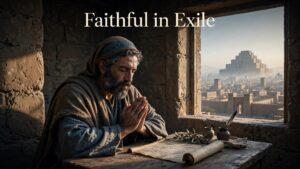 What Daniel Teaches About Faithfulness in ExileDaniel teaches that faithfulness in exile means continuing to obey God when your surroundings oppose His authority. His circumstances changed, his rulers changed, and the cost of obedience changed, but his allegiance remained with God.
We must receive that instruction seriously. Knowing God’s truth carries a responsibility to obey God’s truth, even when obedience threatens your comfort or position.
Daniel’s example begins with a settled heart, long before the decree that sent him into the lions’ den.
Key Takeaways
Daniel maintained his devotion to God while carrying responsibilities under rulers who didn’t worship the Lord.
His conduct demonstrated that private prayer and public integrity belong together.
God’s promises moved Daniel toward confession and intercession rather than passive waiting.
Faithfulness requires willing obedience, including when the consequences remain beyond your control.
Exile Changed Daniel’s Home, Not God’s Authority
Daniel’s account of captivity begins with Nebuchadnezzar besieging Jerusalem during Jehoiakim’s reign. Daniel’s life in Babylon arose from conquest and displacement. Exile involved actual loss, separation, and life under foreign authority.
We must honor that history before applying the word exile to our own circumstances. Disagreement with the surrounding culture isn’t identical to being carried away from your homeland.
Yet the spiritual instruction remains clear. Babylon could place Daniel within its institutions, teach him its language, and assign him responsibilities. Babylon could not establish the rightful object of his worship.
God’s authority didn’t end at Jerusalem’s borders. Daniel remained accountable to the Lord while living under another king.
This also corrects how we speak about suffering. Judah’s exile belonged to a particular history of covenant judgment. We aren’t authorized to accuse every suffering person of concealed rebellion. Faithful people can endure consequences they didn’t personally create.
Faithfulness in Exile Begins With Settled Obedience
Conviction Must Govern What You Accept
Daniel 1:8 records Daniel’s determination not to defile himself with the king’s food and wine. His decision began in his heart before it appeared in his request.
That order matters. A heart that waits until temptation arrives to decide whether God deserves obedience is already vulnerable to compromise.
Daniel recognized that provision offered by a king still had to be considered under God’s authority. Favor didn’t give him permission to disregard what faithfulness required.
We must teach the same responsibility. An advantage doesn’t become righteous because it comes with approval, money, or access. You remain answerable to God for what you willingly receive and practice.
Conviction Doesn’t Require Contempt
Daniel asked the official for permission. His refusal was deliberate, but his manner wasn’t careless or insulting.
Firm obedience and respectful conduct can exist together. You don’t have to despise people to refuse what violates your devotion to God.
This distinction protects Christian witness. Harshness can come from pride as easily as compromise can come from fear. We must reject both.
When a request violates Scripture, explain your position truthfully and seek an honorable way forward. Respect others without surrendering the responsibility God has placed upon you.
Faithful Service Must Agree With Faithful Worship
Integrity Belongs in Public Responsibility
The officials opposing Daniel searched for grounds to accuse him. Daniel 6 describes their inability to find corruption or negligence in his administration.
His devotion didn’t become an excuse for disorder. His responsibilities received the attention that faithfulness required.
We must let this examine our work. Truthful hours, accurate expenses, proper use of property, and honest reporting belong to Christian obedience. A person can’t willingly practice deception at work and make that deception harmless through religious activity afterward.
Our teaching on Daniel’s example of Christian integrity follows this same connection between conviction and conduct. What you confess about God must govern what you do when someone examines your work.
Wisdom Must Return Glory to God
When Nebuchadnezzar demanded an explanation of his dream, Daniel sought mercy from God alongside his companions. Daniel 2 records prayer before the answer and thanksgiving after the revelation.
Daniel didn’t present God’s answer as proof of his own superiority. He acknowledged the God Who reveals what human ability cannot discover.
Spiritual gifts never authorize self-exaltation. We must seek God’s help, receive His answer humbly, and give Him the honor.
Knowledge carries responsibility. If what we receive produces pride instead of submission, our response needs correction. Godly wisdom directs attention toward the Lord and places the person receiving it under greater responsibility to obey Him.
Prayer Must Continue When Obedience Costs Something
Prayer Was Already Daniel’s Practice
Daniel 6:10 records that Daniel continued praying three times daily after learning that the decree had been signed. He knelt, prayed, and gave thanks as he had previously done.
Daniel’s prayer wasn’t a performance invented to answer his enemies. It was an established expression of allegiance to God.
We must build devotion before pressure demands a decision. A prayer life governed entirely by convenience leaves obedience dependent upon favorable circumstances.
Daniel also gave thanks. The threat was real, but the threat hadn’t removed God’s worthiness. Thanksgiving continued because God remained God.
Obedience Entrusts the Outcome to God
Daniel knew about the decree and continued praying. His responsibility before God remained clear even when the outcome was beyond his control.
We must distinguish surrender from presumption. Faith obeys God without claiming authority over every consequence.
Daniel continued the prayer that the decree condemned; he didn’t alter his allegiance to preserve his position.
Daniel 6:22 records his testimony that God sent His angel and shut the lions’ mouths. The rescue belonged to God’s power.
We can ask boldly for deliverance while leaving the outcome with the Lord. Obedience must remain settled before the answer arrives.
God’s Promise Calls for Repentance While Waiting
Scripture Directed Daniel’s Intercession
In Daniel 9, Daniel understood through Jeremiah’s writings that Jerusalem’s desolation had an appointed period of seventy years. That understanding moved him toward prayer, fasting, and confession.
He didn’t treat the promise as permission to become spiritually idle. God’s Word directed his response to God.
This corrects a common misuse of Biblical promises. We cannot detach a promise from the people addressed, the circumstances surrounding it, or the obedience consistent with it.
The seventy years concerned God’s appointed dealings with Babylon and Jerusalem. They weren’t an identical period away from home for every individual captive.
Understanding Scripture should produce submission to Scripture. If our interpretation removes the need for repentance, prayer, and obedience, we have reason to examine that interpretation.
Confession Acknowledges God’s Righteousness
Daniel confessed the sins of his people and appealed to God’s mercy. He didn’t defend rebellion or accuse God of failing His covenant.
His prayer acknowledged that God’s judgment was righteous and that restoration depended upon God’s compassion.
We need that humility. Confession means agreeing with God about sin, including sin that religious language has helped us excuse.
Our teaching on God’s faithfulness in prayer and suffering keeps that distinction clear. His reliability gives us confidence to approach Him; it never gives us permission to resist His correction.
Waiting faithfully includes allowing the Lord to correct what remains wrong while we trust Him for what He has promised.
Spirit-Filled Faithfulness Requires Daily Surrender
Daniel’s example presses beyond admiration. We must respond to the God Daniel served, and for us that response centers upon surrender to Jesus Christ.
Jesus obeyed the Father through suffering and death, and His resurrection establishes our living hope. Christian faithfulness rests upon His grace and requires a willing response to His lordship.
As Spirit-filled believers, we must depend upon the Holy Spirit for power to witness, resist sin, and continue in obedience. Spiritual gifts don’t make disobedience acceptable. Public ministry doesn’t replace private surrender.
The Holy Spirit’s power must never become an excuse to resist His correction. We must receive what Scripture teaches and willingly submit our conduct to its authority.
That surrender becomes practical when you refuse dishonesty, correct a false statement, forgive someone who wronged you, or return to prayer after neglecting it. These choices reveal whether conviction governs conduct.
We aren’t called to imitate Daniel’s government position. We are called to receive the instruction of his faithfulness. God deserves willing obedience in the responsibilities already before you.
Frequently Asked Questions
Does Faithfulness Require Withdrawing From Unbelievers?
Daniel carried responsibilities within a kingdom that didn’t share his worship. His example demonstrates that involvement and compromise aren’t automatically the same thing.
We can work alongside people who don’t follow Jesus while remaining truthful, respectful, and obedient to God. The boundary concerns allegiance and conduct. When participation requires disobedience, faithfulness requires refusal, even when refusal carries a cost.
What Should a Believer Do After Compromising?
Tell the truth before God, repent, and turn away from the disobedience. Where your conduct harmed someone, accept responsibility and make the correction that righteousness requires.
We must never confuse integrity with pretending to have no need for mercy. A faithful response to conviction receives correction instead of defending sin. God’s mercy calls you back to obedience, and your response must include changed conduct.
Conclusion: Remain Faithful Where God Has Placed You
Daniel’s life teaches that faithfulness in exile reaches the heart, the workplace, and the place of prayer. Settled allegiance to God must govern them all.
We must receive God’s promises with confidence and His correction with humility. Your surroundings don’t remove your responsibility to obey Him.
Let the next clear act of obedience receive your willing yes, and entrust its consequences to the Lord. […]
What Daniel Teaches About Faithfulness in ExileDaniel teaches that faithfulness in exile means continuing to obey God when your surroundings oppose His authority. His circumstances changed, his rulers changed, and the cost of obedience changed, but his allegiance remained with God.
We must receive that instruction seriously. Knowing God’s truth carries a responsibility to obey God’s truth, even when obedience threatens your comfort or position.
Daniel’s example begins with a settled heart, long before the decree that sent him into the lions’ den.
Key Takeaways
Daniel maintained his devotion to God while carrying responsibilities under rulers who didn’t worship the Lord.
His conduct demonstrated that private prayer and public integrity belong together.
God’s promises moved Daniel toward confession and intercession rather than passive waiting.
Faithfulness requires willing obedience, including when the consequences remain beyond your control.
Exile Changed Daniel’s Home, Not God’s Authority
Daniel’s account of captivity begins with Nebuchadnezzar besieging Jerusalem during Jehoiakim’s reign. Daniel’s life in Babylon arose from conquest and displacement. Exile involved actual loss, separation, and life under foreign authority.
We must honor that history before applying the word exile to our own circumstances. Disagreement with the surrounding culture isn’t identical to being carried away from your homeland.
Yet the spiritual instruction remains clear. Babylon could place Daniel within its institutions, teach him its language, and assign him responsibilities. Babylon could not establish the rightful object of his worship.
God’s authority didn’t end at Jerusalem’s borders. Daniel remained accountable to the Lord while living under another king.
This also corrects how we speak about suffering. Judah’s exile belonged to a particular history of covenant judgment. We aren’t authorized to accuse every suffering person of concealed rebellion. Faithful people can endure consequences they didn’t personally create.
Faithfulness in Exile Begins With Settled Obedience
Conviction Must Govern What You Accept
Daniel 1:8 records Daniel’s determination not to defile himself with the king’s food and wine. His decision began in his heart before it appeared in his request.
That order matters. A heart that waits until temptation arrives to decide whether God deserves obedience is already vulnerable to compromise.
Daniel recognized that provision offered by a king still had to be considered under God’s authority. Favor didn’t give him permission to disregard what faithfulness required.
We must teach the same responsibility. An advantage doesn’t become righteous because it comes with approval, money, or access. You remain answerable to God for what you willingly receive and practice.
Conviction Doesn’t Require Contempt
Daniel asked the official for permission. His refusal was deliberate, but his manner wasn’t careless or insulting.
Firm obedience and respectful conduct can exist together. You don’t have to despise people to refuse what violates your devotion to God.
This distinction protects Christian witness. Harshness can come from pride as easily as compromise can come from fear. We must reject both.
When a request violates Scripture, explain your position truthfully and seek an honorable way forward. Respect others without surrendering the responsibility God has placed upon you.
Faithful Service Must Agree With Faithful Worship
Integrity Belongs in Public Responsibility
The officials opposing Daniel searched for grounds to accuse him. Daniel 6 describes their inability to find corruption or negligence in his administration.
His devotion didn’t become an excuse for disorder. His responsibilities received the attention that faithfulness required.
We must let this examine our work. Truthful hours, accurate expenses, proper use of property, and honest reporting belong to Christian obedience. A person can’t willingly practice deception at work and make that deception harmless through religious activity afterward.
Our teaching on Daniel’s example of Christian integrity follows this same connection between conviction and conduct. What you confess about God must govern what you do when someone examines your work.
Wisdom Must Return Glory to God
When Nebuchadnezzar demanded an explanation of his dream, Daniel sought mercy from God alongside his companions. Daniel 2 records prayer before the answer and thanksgiving after the revelation.
Daniel didn’t present God’s answer as proof of his own superiority. He acknowledged the God Who reveals what human ability cannot discover.
Spiritual gifts never authorize self-exaltation. We must seek God’s help, receive His answer humbly, and give Him the honor.
Knowledge carries responsibility. If what we receive produces pride instead of submission, our response needs correction. Godly wisdom directs attention toward the Lord and places the person receiving it under greater responsibility to obey Him.
Prayer Must Continue When Obedience Costs Something
Prayer Was Already Daniel’s Practice
Daniel 6:10 records that Daniel continued praying three times daily after learning that the decree had been signed. He knelt, prayed, and gave thanks as he had previously done.
Daniel’s prayer wasn’t a performance invented to answer his enemies. It was an established expression of allegiance to God.
We must build devotion before pressure demands a decision. A prayer life governed entirely by convenience leaves obedience dependent upon favorable circumstances.
Daniel also gave thanks. The threat was real, but the threat hadn’t removed God’s worthiness. Thanksgiving continued because God remained God.
Obedience Entrusts the Outcome to God
Daniel knew about the decree and continued praying. His responsibility before God remained clear even when the outcome was beyond his control.
We must distinguish surrender from presumption. Faith obeys God without claiming authority over every consequence.
Daniel continued the prayer that the decree condemned; he didn’t alter his allegiance to preserve his position.
Daniel 6:22 records his testimony that God sent His angel and shut the lions’ mouths. The rescue belonged to God’s power.
We can ask boldly for deliverance while leaving the outcome with the Lord. Obedience must remain settled before the answer arrives.
God’s Promise Calls for Repentance While Waiting
Scripture Directed Daniel’s Intercession
In Daniel 9, Daniel understood through Jeremiah’s writings that Jerusalem’s desolation had an appointed period of seventy years. That understanding moved him toward prayer, fasting, and confession.
He didn’t treat the promise as permission to become spiritually idle. God’s Word directed his response to God.
This corrects a common misuse of Biblical promises. We cannot detach a promise from the people addressed, the circumstances surrounding it, or the obedience consistent with it.
The seventy years concerned God’s appointed dealings with Babylon and Jerusalem. They weren’t an identical period away from home for every individual captive.
Understanding Scripture should produce submission to Scripture. If our interpretation removes the need for repentance, prayer, and obedience, we have reason to examine that interpretation.
Confession Acknowledges God’s Righteousness
Daniel confessed the sins of his people and appealed to God’s mercy. He didn’t defend rebellion or accuse God of failing His covenant.
His prayer acknowledged that God’s judgment was righteous and that restoration depended upon God’s compassion.
We need that humility. Confession means agreeing with God about sin, including sin that religious language has helped us excuse.
Our teaching on God’s faithfulness in prayer and suffering keeps that distinction clear. His reliability gives us confidence to approach Him; it never gives us permission to resist His correction.
Waiting faithfully includes allowing the Lord to correct what remains wrong while we trust Him for what He has promised.
Spirit-Filled Faithfulness Requires Daily Surrender
Daniel’s example presses beyond admiration. We must respond to the God Daniel served, and for us that response centers upon surrender to Jesus Christ.
Jesus obeyed the Father through suffering and death, and His resurrection establishes our living hope. Christian faithfulness rests upon His grace and requires a willing response to His lordship.
As Spirit-filled believers, we must depend upon the Holy Spirit for power to witness, resist sin, and continue in obedience. Spiritual gifts don’t make disobedience acceptable. Public ministry doesn’t replace private surrender.
The Holy Spirit’s power must never become an excuse to resist His correction. We must receive what Scripture teaches and willingly submit our conduct to its authority.
That surrender becomes practical when you refuse dishonesty, correct a false statement, forgive someone who wronged you, or return to prayer after neglecting it. These choices reveal whether conviction governs conduct.
We aren’t called to imitate Daniel’s government position. We are called to receive the instruction of his faithfulness. God deserves willing obedience in the responsibilities already before you.
Frequently Asked Questions
Does Faithfulness Require Withdrawing From Unbelievers?
Daniel carried responsibilities within a kingdom that didn’t share his worship. His example demonstrates that involvement and compromise aren’t automatically the same thing.
We can work alongside people who don’t follow Jesus while remaining truthful, respectful, and obedient to God. The boundary concerns allegiance and conduct. When participation requires disobedience, faithfulness requires refusal, even when refusal carries a cost.
What Should a Believer Do After Compromising?
Tell the truth before God, repent, and turn away from the disobedience. Where your conduct harmed someone, accept responsibility and make the correction that righteousness requires.
We must never confuse integrity with pretending to have no need for mercy. A faithful response to conviction receives correction instead of defending sin. God’s mercy calls you back to obedience, and your response must include changed conduct.
Conclusion: Remain Faithful Where God Has Placed You
Daniel’s life teaches that faithfulness in exile reaches the heart, the workplace, and the place of prayer. Settled allegiance to God must govern them all.
We must receive God’s promises with confidence and His correction with humility. Your surroundings don’t remove your responsibility to obey Him.
Let the next clear act of obedience receive your willing yes, and entrust its consequences to the Lord. […]
 How Nehemiah Led the Rebuilding of Jerusalem’s WallsNehemiah led the rebuilding of Jerusalem’s walls through prayer, royal authorization, organized labor, and steady resistance to opposition. The work was completed in 52 days, but the account begins with a man who wept over the condition of God’s people.
We must understand both parts of this history: Nehemiah trusted God, and Nehemiah accepted responsibility for the work before him. His response offers a model of prayerful leadership, showing how prayer, preparation, courage, and willing obedience belong together.
Key Takeaways
Nehemiah sought God before approaching the king or organizing the builders.
Families, priests, tradesmen, and neighboring communities shared responsibility for rebuilding.
Opposition required prayer, watchfulness, and continued work.
The completed walls protected Jerusalem, but the people still needed God’s Word, repentance, and continuing obedience.
Nehemiah’s Burden Began With Prayer
Hanani brought news of Jerusalem’s disgrace
Nehemiah 1 introduces Nehemiah at Susa, serving as cupbearer to King Artaxerxes. The cupbearer held a trusted position that regularly placed him in the king’s presence.
His brother Hanani arrived with men from Judah. Their report was painful: the survivors were suffering, Jerusalem’s walls were broken down, and its gates had been burned.
The destruction belonged to the larger history of Jerusalem’s fall and exile. Although the temple had already been rebuilt, the city’s damaged defenses left its people exposed and disgraced.
Nehemiah confessed before he requested
Nehemiah sat down, wept, mourned, fasted, and prayed. He confessed Israel’s sins, including his own family’s sins, and appealed to God’s covenant promises.
His burden brought him before God before it brought him before the king. We must receive that correction. Concern for God’s work doesn’t excuse prayerlessness, and recognizing another person’s failure doesn’t remove our responsibility to examine ourselves.
Nehemiah sought mercy when he later made his request. His prayer already anticipated a practical step.
The King Authorized the Rebuilding
The usual date for Nehemiah’s rebuilding is 445 BC. The Biblical Archaeology Society places Nehemiah’s return to Jerusalem in that year.
The opening report came in Kislev, commonly placed in late 446 BC; the royal conversation followed in Nisan, a spring month. These ancient months don’t follow our January-to-December calendar. The sequence shows months of prayer before the commission.
In Nehemiah 2, Artaxerxes noticed Nehemiah’s sadness. As the king’s cupbearer, Nehemiah explained Jerusalem’s condition, prayed to God, and requested permission to rebuild.
He also requested letters for safe passage and a letter to Asaph, keeper of the royal forest. Timber was needed for the temple fortress gates, the city wall, and his residence. The king supplied authorization and sent army officers and cavalry with him.
Scripture gives no total construction cost. Nehemiah’s requests for permission, protection, and materials show practical leadership. Dependence on God didn’t remove preparation.
The Night Inspection Came Before the Public Appeal
After three days in Jerusalem, Nehemiah went out at night with a few men. He hadn’t yet announced what God had put in his heart.
He rode his mount, traditionally pictured as a donkey, through the Valley Gate. He passed the Dung Gate and approached the Fountain Gate and the King’s Pool. The rubble eventually stopped his animal near the Dung Gate.
The route followed the city’s western and southern approaches toward the southeastern water area. Nehemiah examined the damage before assigning the work.
Then he gathered the leaders and people. He described Jerusalem’s disgrace, testified to God’s good hand upon him, and explained the king’s support.
The people agreed to rise and build. Notice the order: prayer, authorization, inspection, then a public call to action. Nehemiah’s confidence included a clear understanding of the task.
Families and Tradesmen Shared the Wall
Each group received a defined responsibility
Nehemiah 3 records the builders and their sections. Eliashib the high priest and his fellow priests rebuilt and consecrated the Sheep Gate.
Goldsmiths and a perfumer also worked. Rulers, priests, families, and people from surrounding settlements joined the labor. Shallum’s daughters participated alongside him.
Several builders repaired sections opposite their own houses. Others worked on assigned stretches elsewhere, so we shouldn’t turn the chapter into a rule that every family worked only at home.
The assignments made responsibility visible. A particular group repaired a particular section, while neighboring groups repaired their assigned stretches.
Tekoa’s people worked despite their nobles
The nobles of Tekoa refused to put their shoulders under the work of their supervisors. Scripture records their refusal without explaining their motive.
Their people still repaired the wall. Nehemiah 3:27 records the Tekoites repaired another section, even though their nobles had withheld support.
Another person’s unwillingness doesn’t release you from obedience. That is a concrete lesson for ministry. You can serve faithfully in the responsibility entrusted to you without waiting for everyone else to become willing.
Our teaching on obedience that comes from love follows this same responsibility before God. Willing service must become action.
Opposition Required Watchfulness and Justice
The people prayed and established guards
Sanballat, Tobiah, and Geshem mocked the rebuilding. Sanballat and his allies then threatened the workers, conspired against them, and tried to frighten them.
Nehemiah 4 records the response: the people prayed and posted a guard. Nehemiah stationed families at exposed places and reminded them to remember the Lord.
Half of his servants worked while half held spears, shields, bows, and coats of mail. Burden bearers worked with one hand and held a weapon with the other; builders wore swords at their sides.
A trumpeter stayed near Nehemiah so scattered workers could gather when danger came.
The weapon-and-tool description includes different assignments: burden bearers held weapons, builders wore swords, and guards protected the work.
This account doesn’t authorize Christians to threaten opponents. We receive its instruction about prayer, watchfulness, courage, and faithful service.
Nehemiah confronted wrongdoing within the community
The danger wasn’t only outside Jerusalem. Poorer Jews complained about debt, hunger, lost property, and their children being forced into servitude.
Nehemiah confronted nobles and officials who were charging interest and required restitution. He also refused to burden the people through the governor’s customary food allowance.
We must hear this clearly: Godly leadership confronts injustice among its own people. A leader cannot faithfully defend the community while ignoring those being harmed within it.
The Wall Was Finished in 52 Days
Nehemiah 6 describes further attempts to stop the work. Nehemiah’s enemies invited him to meetings intended to harm him, circulated accusations of rebellion, and used a false warning to tempt him into wrongdoing.
Nehemiah refused to abandon his responsibility. He prayed for strength and recognized that fear was being used to draw him into sin.
The wall was completed on the twenty-fifth day of Elul after 52 days. The surrounding enemies lost confidence because they recognized that God had helped His people.
That is the meaning of the completion account: God’s help brought the work to its appointed finish despite sustained opposition.
The 52 days describe the rebuilding period, not the entire time between Hanani’s report and completion. Prayer, royal authorization, travel, and preparation came beforehand.
We must also avoid turning this event into a deadline God has promised every believer. The passage gives testimony to His faithfulness, not a universal 52-day timetable.
God’s Word Had to Govern the Restored City
Ezra taught the assembled people
The completed wall didn’t remove the people’s need for instruction. In Nehemiah 8, Ezra the scribe read the Book of the Law before the assembly near the Water Gate.
The Levites helped the people understand what they heard. Conviction was followed by instruction, worship, rejoicing, and observance of the Feast of Tabernacles. Confession and covenant renewal followed in the continuing account.
Our study of Ezra’s return from exile distinguishes these assignments: the temple was rebuilt before Ezra arrived, Ezra taught God’s Law, and Nehemiah rebuilt the walls.
As Spirit-filled believers, we must receive the same correction. The Holy Spirit leads us into obedience to Scripture. Spiritual response must include submission to what God has spoken.
Later compromise still required correction
Nehemiah eventually returned to Artaxerxes’ court. When he later came back to Jerusalem, he found serious violations.
Nehemiah 13 records Eliashib’s provision of a large temple chamber for Tobiah, the same man who had opposed the rebuilding. Nehemiah threw Tobiah’s belongings out and ordered the rooms cleansed.
The high priest who helped rebuild the Sheep Gate later permitted compromise within the temple precincts. Earlier service didn’t excuse later disobedience.
Restored buildings couldn’t cleanse the heart. We need Jesus Christ’s saving work and the Holy Spirit’s renewing presence to walk faithfully before God.
Frequently Asked Questions
Why does the builders’ list begin at the Sheep Gate?
The priests rebuilt and consecrated this gate near the temple area. Its placement connects their labor with their responsibility for worship. Scripture doesn’t say that starting there established a required spiritual sequence for every rebuilding project.
Were all the gates finished before the wall?
No. The account describes wall sections and gates together, and the wall’s gaps were closed before all gate doors were installed. Gates mattered for security, but the narrative doesn’t teach that every gate was completed first.
What does Nehemiah 6:15 mean?
Nehemiah 6:15 records the completion date and the 52-day rebuilding period. The following verse attributes the achievement to God’s help, which even the enemies recognized.
Faithfulness Must Continue After the Work Is Finished
Nehemiah’s prayer, shared labor, and courage under pressure were hallmarks of faithful leadership as he rebuilt Jerusalem’s walls. Yet the finished wall didn’t remove the continuing call to obedience.
We must seek God’s help, accept our responsibility, and remain willing to receive His correction. The God Who enabled the rebuilding also required His people to hear His Word and live under His authority. […]
How Nehemiah Led the Rebuilding of Jerusalem’s WallsNehemiah led the rebuilding of Jerusalem’s walls through prayer, royal authorization, organized labor, and steady resistance to opposition. The work was completed in 52 days, but the account begins with a man who wept over the condition of God’s people.
We must understand both parts of this history: Nehemiah trusted God, and Nehemiah accepted responsibility for the work before him. His response offers a model of prayerful leadership, showing how prayer, preparation, courage, and willing obedience belong together.
Key Takeaways
Nehemiah sought God before approaching the king or organizing the builders.
Families, priests, tradesmen, and neighboring communities shared responsibility for rebuilding.
Opposition required prayer, watchfulness, and continued work.
The completed walls protected Jerusalem, but the people still needed God’s Word, repentance, and continuing obedience.
Nehemiah’s Burden Began With Prayer
Hanani brought news of Jerusalem’s disgrace
Nehemiah 1 introduces Nehemiah at Susa, serving as cupbearer to King Artaxerxes. The cupbearer held a trusted position that regularly placed him in the king’s presence.
His brother Hanani arrived with men from Judah. Their report was painful: the survivors were suffering, Jerusalem’s walls were broken down, and its gates had been burned.
The destruction belonged to the larger history of Jerusalem’s fall and exile. Although the temple had already been rebuilt, the city’s damaged defenses left its people exposed and disgraced.
Nehemiah confessed before he requested
Nehemiah sat down, wept, mourned, fasted, and prayed. He confessed Israel’s sins, including his own family’s sins, and appealed to God’s covenant promises.
His burden brought him before God before it brought him before the king. We must receive that correction. Concern for God’s work doesn’t excuse prayerlessness, and recognizing another person’s failure doesn’t remove our responsibility to examine ourselves.
Nehemiah sought mercy when he later made his request. His prayer already anticipated a practical step.
The King Authorized the Rebuilding
The usual date for Nehemiah’s rebuilding is 445 BC. The Biblical Archaeology Society places Nehemiah’s return to Jerusalem in that year.
The opening report came in Kislev, commonly placed in late 446 BC; the royal conversation followed in Nisan, a spring month. These ancient months don’t follow our January-to-December calendar. The sequence shows months of prayer before the commission.
In Nehemiah 2, Artaxerxes noticed Nehemiah’s sadness. As the king’s cupbearer, Nehemiah explained Jerusalem’s condition, prayed to God, and requested permission to rebuild.
He also requested letters for safe passage and a letter to Asaph, keeper of the royal forest. Timber was needed for the temple fortress gates, the city wall, and his residence. The king supplied authorization and sent army officers and cavalry with him.
Scripture gives no total construction cost. Nehemiah’s requests for permission, protection, and materials show practical leadership. Dependence on God didn’t remove preparation.
The Night Inspection Came Before the Public Appeal
After three days in Jerusalem, Nehemiah went out at night with a few men. He hadn’t yet announced what God had put in his heart.
He rode his mount, traditionally pictured as a donkey, through the Valley Gate. He passed the Dung Gate and approached the Fountain Gate and the King’s Pool. The rubble eventually stopped his animal near the Dung Gate.
The route followed the city’s western and southern approaches toward the southeastern water area. Nehemiah examined the damage before assigning the work.
Then he gathered the leaders and people. He described Jerusalem’s disgrace, testified to God’s good hand upon him, and explained the king’s support.
The people agreed to rise and build. Notice the order: prayer, authorization, inspection, then a public call to action. Nehemiah’s confidence included a clear understanding of the task.
Families and Tradesmen Shared the Wall
Each group received a defined responsibility
Nehemiah 3 records the builders and their sections. Eliashib the high priest and his fellow priests rebuilt and consecrated the Sheep Gate.
Goldsmiths and a perfumer also worked. Rulers, priests, families, and people from surrounding settlements joined the labor. Shallum’s daughters participated alongside him.
Several builders repaired sections opposite their own houses. Others worked on assigned stretches elsewhere, so we shouldn’t turn the chapter into a rule that every family worked only at home.
The assignments made responsibility visible. A particular group repaired a particular section, while neighboring groups repaired their assigned stretches.
Tekoa’s people worked despite their nobles
The nobles of Tekoa refused to put their shoulders under the work of their supervisors. Scripture records their refusal without explaining their motive.
Their people still repaired the wall. Nehemiah 3:27 records the Tekoites repaired another section, even though their nobles had withheld support.
Another person’s unwillingness doesn’t release you from obedience. That is a concrete lesson for ministry. You can serve faithfully in the responsibility entrusted to you without waiting for everyone else to become willing.
Our teaching on obedience that comes from love follows this same responsibility before God. Willing service must become action.
Opposition Required Watchfulness and Justice
The people prayed and established guards
Sanballat, Tobiah, and Geshem mocked the rebuilding. Sanballat and his allies then threatened the workers, conspired against them, and tried to frighten them.
Nehemiah 4 records the response: the people prayed and posted a guard. Nehemiah stationed families at exposed places and reminded them to remember the Lord.
Half of his servants worked while half held spears, shields, bows, and coats of mail. Burden bearers worked with one hand and held a weapon with the other; builders wore swords at their sides.
A trumpeter stayed near Nehemiah so scattered workers could gather when danger came.
The weapon-and-tool description includes different assignments: burden bearers held weapons, builders wore swords, and guards protected the work.
This account doesn’t authorize Christians to threaten opponents. We receive its instruction about prayer, watchfulness, courage, and faithful service.
Nehemiah confronted wrongdoing within the community
The danger wasn’t only outside Jerusalem. Poorer Jews complained about debt, hunger, lost property, and their children being forced into servitude.
Nehemiah confronted nobles and officials who were charging interest and required restitution. He also refused to burden the people through the governor’s customary food allowance.
We must hear this clearly: Godly leadership confronts injustice among its own people. A leader cannot faithfully defend the community while ignoring those being harmed within it.
The Wall Was Finished in 52 Days
Nehemiah 6 describes further attempts to stop the work. Nehemiah’s enemies invited him to meetings intended to harm him, circulated accusations of rebellion, and used a false warning to tempt him into wrongdoing.
Nehemiah refused to abandon his responsibility. He prayed for strength and recognized that fear was being used to draw him into sin.
The wall was completed on the twenty-fifth day of Elul after 52 days. The surrounding enemies lost confidence because they recognized that God had helped His people.
That is the meaning of the completion account: God’s help brought the work to its appointed finish despite sustained opposition.
The 52 days describe the rebuilding period, not the entire time between Hanani’s report and completion. Prayer, royal authorization, travel, and preparation came beforehand.
We must also avoid turning this event into a deadline God has promised every believer. The passage gives testimony to His faithfulness, not a universal 52-day timetable.
God’s Word Had to Govern the Restored City
Ezra taught the assembled people
The completed wall didn’t remove the people’s need for instruction. In Nehemiah 8, Ezra the scribe read the Book of the Law before the assembly near the Water Gate.
The Levites helped the people understand what they heard. Conviction was followed by instruction, worship, rejoicing, and observance of the Feast of Tabernacles. Confession and covenant renewal followed in the continuing account.
Our study of Ezra’s return from exile distinguishes these assignments: the temple was rebuilt before Ezra arrived, Ezra taught God’s Law, and Nehemiah rebuilt the walls.
As Spirit-filled believers, we must receive the same correction. The Holy Spirit leads us into obedience to Scripture. Spiritual response must include submission to what God has spoken.
Later compromise still required correction
Nehemiah eventually returned to Artaxerxes’ court. When he later came back to Jerusalem, he found serious violations.
Nehemiah 13 records Eliashib’s provision of a large temple chamber for Tobiah, the same man who had opposed the rebuilding. Nehemiah threw Tobiah’s belongings out and ordered the rooms cleansed.
The high priest who helped rebuild the Sheep Gate later permitted compromise within the temple precincts. Earlier service didn’t excuse later disobedience.
Restored buildings couldn’t cleanse the heart. We need Jesus Christ’s saving work and the Holy Spirit’s renewing presence to walk faithfully before God.
Frequently Asked Questions
Why does the builders’ list begin at the Sheep Gate?
The priests rebuilt and consecrated this gate near the temple area. Its placement connects their labor with their responsibility for worship. Scripture doesn’t say that starting there established a required spiritual sequence for every rebuilding project.
Were all the gates finished before the wall?
No. The account describes wall sections and gates together, and the wall’s gaps were closed before all gate doors were installed. Gates mattered for security, but the narrative doesn’t teach that every gate was completed first.
What does Nehemiah 6:15 mean?
Nehemiah 6:15 records the completion date and the 52-day rebuilding period. The following verse attributes the achievement to God’s help, which even the enemies recognized.
Faithfulness Must Continue After the Work Is Finished
Nehemiah’s prayer, shared labor, and courage under pressure were hallmarks of faithful leadership as he rebuilt Jerusalem’s walls. Yet the finished wall didn’t remove the continuing call to obedience.
We must seek God’s help, accept our responsibility, and remain willing to receive His correction. The God Who enabled the rebuilding also required His people to hear His Word and live under His authority. […]
 What Ezra Teaches About Israel’s Return from ExileEzra teaches that God faithfully brought Jewish exiles back from the Babylonian exile, but returning to Jerusalem didn’t remove their responsibility to obey Him. Restoration required a response: worship had to be restored, God’s Word had to be heard, and sin had to be confronted.
When we study Ezra’s return, we must distinguish the rebuilding of a city from the surrender of a people. The history begins with God’s mercy and covenant, which call His people back under His authority.
Key Takeaways
Zerubbabel, Ezra, and Nehemiah led distinct stages of return, traditionally dated around 537, 458, and 445 BC.
The temple was completed before Ezra arrived; Nehemiah later rebuilt Jerusalem’s walls.
God’s faithfulness preserved His people, but restored worship didn’t eliminate their need for repentance and obedient hearts.
The Three Returns from Exile
These three stages show the restoration in sequence and keep each leader’s assignment clear.
1. Zerubbabel: Returning to Rebuild, About 537 BC
Cyrus of Persia conquered Babylon in 539 BC and permitted the Judean exiles to return about one year later, in 538 BC. The first major group reached Jerusalem around 537 BC under Zerubbabel, with Jeshua as the leading priest.
The recorded assembly numbered 42,360, besides 7,337 servants and 200 male and female singers. Their task centered on restoring worship and rebuilding the temple.
2. Ezra: Returning to Teach, About 458 BC
Ezra came from Babylon under Artaxerxes, a king of Persia, as a priest and scribe. His group is commonly counted at about 1,754 men, including the Levites and temple servants recruited for the journey. Women and children accompanied them, but the account doesn’t provide a complete population total.
Ezra’s assignment concerned the Law of God and the life of the community. The temple already stood, but the people’s conduct still required correction.
3. Nehemiah: Returning to Rebuild the Walls, About 445 BC
Nehemiah came as governor with royal authorization to rebuild Jerusalem’s defenses. The city’s walls were completed in 52 days, despite threats and opposition. Scripture doesn’t give his arrival a population total comparable to the earlier groups.
Cyrus’s decree opened the way for Jewish exiles to return to Judea, the region also known as Judah, but the community remained under Persian rule.
What the Returnee Numbers Mean
The Assembly Was More Than a List of Men
The first return’s total describes the whole assembly. We shouldn’t automatically turn 42,360 into a count of adult men and multiply it to produce a larger population.
The named family and community entries don’t add neatly to the stated total. The text doesn’t explain every difference, so we shouldn’t supply an explanation and present it as Scripture.
The additional servants and singers bring the explicitly stated combined figure to 49,897. These categories must remain distinct if we’re going to handle the numbers faithfully.
Worship Required People and Provision
The lists identify priests, Levites, singers, gatekeepers, and temple servants. Priests receive their own listings; their responsibilities weren’t interchangeable with those of every other servant.
Family leaders also gave toward rebuilding. Their gifts totaled 61,000 gold darics, 5,000 minas of silver, and 100 priestly garments. The silver is sometimes expressed as approximately 6,250 pounds, though modern conversions vary.
These details show us a community preparing for worship through actual service and actual provision. Ezra’s account of the returning community gives attention to people, responsibilities, and resources because rebuilding required more than enthusiasm.
God’s work called for willing participation.
The Temple Came Before the Walls
The returnees first rebuilt the altar and resumed sacrifices. Work on the temple began around 537 or 536 BC, but opposition discouraged the builders and halted the temple project.
The work remained stalled for roughly sixteen years. Then the prophets Haggai and Zechariah spoke God’s Word to the people, and rebuilding resumed in 520 BC under Zerubbabel and Jeshua, also called Joshua.
We must hear the correction in that history. Opposition was real, but the people also needed to confront their own neglected priorities. Our study of the Minor Prophets’ historical setting places their preaching within this rebuilding period.
The temple was completed in 516 BC under Darius. Its dedication and the celebration of Passover showed that the restoration of worship followed judgment and displacement.
About seventy years separated the temple’s destruction around 586 BC and its completion. That doesn’t mean every captive spent an identical seventy years away.
God kept His word through the waiting. Delay didn’t release His people from obedience.
Why Ezra’s Arrival Date Is Debated
Ezra records his arrival in the seventh year of Artaxerxes. Nehemiah places his commission in that king’s twentieth year.
The traditional identification is Artaxerxes I. This gives us Ezra’s arrival in 458 BC and Nehemiah’s in 445 BC, a thirteen-year interval.
A study of Ezra’s chronology identifies 458 BC and 398 BC as the principal competing dates. The later date places Ezra under Artaxerxes II.
That proposal appeared in 1890 and would put Ezra after Nehemiah. It hasn’t displaced the traditional chronology. Another proposal reads the seventh year as the thirty-seventh and places Ezra around 428 BC, but that reading hasn’t gained broad support.
On the traditional chronology, Ezra-Nehemiah covers events beginning with Babylon’s fall in 539 BC and extending into the second half of the fifth century BC.
The disagreement concerns historical placement, not permission to disregard the account’s spiritual instruction.
Ezra Restored Attention to God’s Word
The Teacher Had to Obey
Ezra prepared himself to study the Law of Moses, practice it, and teach it. That order matters. Knowledge didn’t exempt the teacher from submission to the God whose Word he explained.
Ezra also sought God through fasting before the journey. His confidence rested in God’s protecting hand, not his own ability to organize a successful return.
This remains a necessary correction for ministry. We can’t faithfully teach surrender while refusing surrender ourselves. Biblical knowledge carries responsibility before God.
The People Had to Understand
Later, in Nehemiah’s account, Ezra publicly read the Law of Moses while the Levites helped the people understand it. Hearing produced conviction, but the leaders also directed the people toward rejoicing in the Lord.
The community celebrated the Feast of Tabernacles for seven days, followed by the appointed assembly on the eighth day. What they learned changed what they practiced.
As Spirit-filled believers, we must receive that instruction seriously. The Holy Spirit never leads us to disregard Scripture. Genuine spiritual response includes understanding, willing obedience, and worship governed by God’s Word.
Ezra Confronted Covenant Unfaithfulness
Ezra discovered that members of the returned community, including priests and Levites, had married foreign wives from surrounding peoples whose practices the account connects with covenant unfaithfulness.
The issue concerned loyalty to God and Israel’s covenant obligations under the Law of Moses, not race. We must not turn this passage into permission for racial contempt. Scripture’s own account includes Ruth, a Moabite woman who entrusted herself to Israel’s God.
Ezra responded with grief, prayer, and confession, expressing repentance. The community then undertook a process of separating from the foreign wives and the children born to those unions. This was a severe action with real consequences for families. We shouldn’t soften what happened or detach it from Israel’s covenant setting.
Neither should we apply it as a command for Christians to divorce unbelieving spouses. Paul’s instruction directs a believer to remain when the unbelieving spouse is willing to live together.
The enduring warning concerns tolerated sin after deliverance. Our teaching on Biblical repentance and returning to God follows that connection between confession and changed conduct.
Mercy never makes disobedience harmless.
The Return Was Real, but Restoration Was Unfinished
Rebuilt Structures Couldn’t Change the Heart
The return from exile restored worship at the temple and preserved the community, but it didn’t restore an independent Davidic kingdom. Judah remained the Persian province commonly called Yehud, and many Jewish exiles remained outside the land, far from Jerusalem.
BibleProject’s account of Ezra and Nehemiah follows the rebuilding alongside the people’s continuing failures. The closing scenes show that covenant violations still required confrontation and repentance.
We must distinguish God’s faithfulness from the people’s faithfulness. His mercy was genuine even when their obedience remained inconsistent.
The Hope Reached Beyond Persia
Some Christian interpretations, including Tabletalk’s discussion, describe the return as a partial easing of captivity rather than the complete promised restoration. Persia’s rule continued, and bondage to sin remained.
The book doesn’t record the glory cloud filling the rebuilt temple, as Scripture describes at the tabernacle and in Solomon’s day. That silence doesn’t establish that God abandoned His people; Haggai assured them of His presence.
We understand this unfinished picture through the wider Biblical witness. Jesus Christ addresses the sin that rebuilt walls cannot remove. Through His saving work and the Holy Spirit’s renewing presence, God’s people are called into obedient fellowship with Him.
Frequently Asked Questions
When did Ezra return to Jerusalem?
The traditional chronology places Ezra’s return in 458 BC, during the seventh year of Artaxerxes I. Other proposals place his return in 398 BC or around 428 BC, but they haven’t displaced the traditional date.
How many people returned with Ezra?
Ezra’s group is commonly counted at about 1,754 men, including Levites and temple servants. Women and children also traveled with them, but the account doesn’t give a complete population total.
What was Ezra’s role in the return?
Ezra was a priest and scribe who prepared to study the Law of Moses, practice it, and teach it. The temple already stood, so his work focused on God’s Word and the community’s conduct.
How did Ezra’s return differ from the returns led by Zerubbabel and Nehemiah?
Zerubbabel led the first major return, which included rebuilding the temple. Ezra came later to teach God’s Law, while Nehemiah came as governor to rebuild Jerusalem’s walls.
Why did Ezra confront marriages to foreign wives?
The account treats the issue as covenant unfaithfulness under the Law of Moses, not race. It doesn’t give Christians a command to divorce unbelieving spouses.
God’s Faithfulness Calls for a Faithful Response
Ezra teaches us to recognize God’s mercy without separating it from His authority. He brought His people home to Jerusalem, where restoration included renewed worship and confrontation with the sin that threatened covenant faithfulness.
We must receive the same moral instruction without erasing Israel’s history. Returning requires surrender.
As you read Ezra, let God’s Word examine your loyalties and lead you to repentance. His faithfulness calls for willing obedience to the God Who restores. […]
What Ezra Teaches About Israel’s Return from ExileEzra teaches that God faithfully brought Jewish exiles back from the Babylonian exile, but returning to Jerusalem didn’t remove their responsibility to obey Him. Restoration required a response: worship had to be restored, God’s Word had to be heard, and sin had to be confronted.
When we study Ezra’s return, we must distinguish the rebuilding of a city from the surrender of a people. The history begins with God’s mercy and covenant, which call His people back under His authority.
Key Takeaways
Zerubbabel, Ezra, and Nehemiah led distinct stages of return, traditionally dated around 537, 458, and 445 BC.
The temple was completed before Ezra arrived; Nehemiah later rebuilt Jerusalem’s walls.
God’s faithfulness preserved His people, but restored worship didn’t eliminate their need for repentance and obedient hearts.
The Three Returns from Exile
These three stages show the restoration in sequence and keep each leader’s assignment clear.
1. Zerubbabel: Returning to Rebuild, About 537 BC
Cyrus of Persia conquered Babylon in 539 BC and permitted the Judean exiles to return about one year later, in 538 BC. The first major group reached Jerusalem around 537 BC under Zerubbabel, with Jeshua as the leading priest.
The recorded assembly numbered 42,360, besides 7,337 servants and 200 male and female singers. Their task centered on restoring worship and rebuilding the temple.
2. Ezra: Returning to Teach, About 458 BC
Ezra came from Babylon under Artaxerxes, a king of Persia, as a priest and scribe. His group is commonly counted at about 1,754 men, including the Levites and temple servants recruited for the journey. Women and children accompanied them, but the account doesn’t provide a complete population total.
Ezra’s assignment concerned the Law of God and the life of the community. The temple already stood, but the people’s conduct still required correction.
3. Nehemiah: Returning to Rebuild the Walls, About 445 BC
Nehemiah came as governor with royal authorization to rebuild Jerusalem’s defenses. The city’s walls were completed in 52 days, despite threats and opposition. Scripture doesn’t give his arrival a population total comparable to the earlier groups.
Cyrus’s decree opened the way for Jewish exiles to return to Judea, the region also known as Judah, but the community remained under Persian rule.
What the Returnee Numbers Mean
The Assembly Was More Than a List of Men
The first return’s total describes the whole assembly. We shouldn’t automatically turn 42,360 into a count of adult men and multiply it to produce a larger population.
The named family and community entries don’t add neatly to the stated total. The text doesn’t explain every difference, so we shouldn’t supply an explanation and present it as Scripture.
The additional servants and singers bring the explicitly stated combined figure to 49,897. These categories must remain distinct if we’re going to handle the numbers faithfully.
Worship Required People and Provision
The lists identify priests, Levites, singers, gatekeepers, and temple servants. Priests receive their own listings; their responsibilities weren’t interchangeable with those of every other servant.
Family leaders also gave toward rebuilding. Their gifts totaled 61,000 gold darics, 5,000 minas of silver, and 100 priestly garments. The silver is sometimes expressed as approximately 6,250 pounds, though modern conversions vary.
These details show us a community preparing for worship through actual service and actual provision. Ezra’s account of the returning community gives attention to people, responsibilities, and resources because rebuilding required more than enthusiasm.
God’s work called for willing participation.
The Temple Came Before the Walls
The returnees first rebuilt the altar and resumed sacrifices. Work on the temple began around 537 or 536 BC, but opposition discouraged the builders and halted the temple project.
The work remained stalled for roughly sixteen years. Then the prophets Haggai and Zechariah spoke God’s Word to the people, and rebuilding resumed in 520 BC under Zerubbabel and Jeshua, also called Joshua.
We must hear the correction in that history. Opposition was real, but the people also needed to confront their own neglected priorities. Our study of the Minor Prophets’ historical setting places their preaching within this rebuilding period.
The temple was completed in 516 BC under Darius. Its dedication and the celebration of Passover showed that the restoration of worship followed judgment and displacement.
About seventy years separated the temple’s destruction around 586 BC and its completion. That doesn’t mean every captive spent an identical seventy years away.
God kept His word through the waiting. Delay didn’t release His people from obedience.
Why Ezra’s Arrival Date Is Debated
Ezra records his arrival in the seventh year of Artaxerxes. Nehemiah places his commission in that king’s twentieth year.
The traditional identification is Artaxerxes I. This gives us Ezra’s arrival in 458 BC and Nehemiah’s in 445 BC, a thirteen-year interval.
A study of Ezra’s chronology identifies 458 BC and 398 BC as the principal competing dates. The later date places Ezra under Artaxerxes II.
That proposal appeared in 1890 and would put Ezra after Nehemiah. It hasn’t displaced the traditional chronology. Another proposal reads the seventh year as the thirty-seventh and places Ezra around 428 BC, but that reading hasn’t gained broad support.
On the traditional chronology, Ezra-Nehemiah covers events beginning with Babylon’s fall in 539 BC and extending into the second half of the fifth century BC.
The disagreement concerns historical placement, not permission to disregard the account’s spiritual instruction.
Ezra Restored Attention to God’s Word
The Teacher Had to Obey
Ezra prepared himself to study the Law of Moses, practice it, and teach it. That order matters. Knowledge didn’t exempt the teacher from submission to the God whose Word he explained.
Ezra also sought God through fasting before the journey. His confidence rested in God’s protecting hand, not his own ability to organize a successful return.
This remains a necessary correction for ministry. We can’t faithfully teach surrender while refusing surrender ourselves. Biblical knowledge carries responsibility before God.
The People Had to Understand
Later, in Nehemiah’s account, Ezra publicly read the Law of Moses while the Levites helped the people understand it. Hearing produced conviction, but the leaders also directed the people toward rejoicing in the Lord.
The community celebrated the Feast of Tabernacles for seven days, followed by the appointed assembly on the eighth day. What they learned changed what they practiced.
As Spirit-filled believers, we must receive that instruction seriously. The Holy Spirit never leads us to disregard Scripture. Genuine spiritual response includes understanding, willing obedience, and worship governed by God’s Word.
Ezra Confronted Covenant Unfaithfulness
Ezra discovered that members of the returned community, including priests and Levites, had married foreign wives from surrounding peoples whose practices the account connects with covenant unfaithfulness.
The issue concerned loyalty to God and Israel’s covenant obligations under the Law of Moses, not race. We must not turn this passage into permission for racial contempt. Scripture’s own account includes Ruth, a Moabite woman who entrusted herself to Israel’s God.
Ezra responded with grief, prayer, and confession, expressing repentance. The community then undertook a process of separating from the foreign wives and the children born to those unions. This was a severe action with real consequences for families. We shouldn’t soften what happened or detach it from Israel’s covenant setting.
Neither should we apply it as a command for Christians to divorce unbelieving spouses. Paul’s instruction directs a believer to remain when the unbelieving spouse is willing to live together.
The enduring warning concerns tolerated sin after deliverance. Our teaching on Biblical repentance and returning to God follows that connection between confession and changed conduct.
Mercy never makes disobedience harmless.
The Return Was Real, but Restoration Was Unfinished
Rebuilt Structures Couldn’t Change the Heart
The return from exile restored worship at the temple and preserved the community, but it didn’t restore an independent Davidic kingdom. Judah remained the Persian province commonly called Yehud, and many Jewish exiles remained outside the land, far from Jerusalem.
BibleProject’s account of Ezra and Nehemiah follows the rebuilding alongside the people’s continuing failures. The closing scenes show that covenant violations still required confrontation and repentance.
We must distinguish God’s faithfulness from the people’s faithfulness. His mercy was genuine even when their obedience remained inconsistent.
The Hope Reached Beyond Persia
Some Christian interpretations, including Tabletalk’s discussion, describe the return as a partial easing of captivity rather than the complete promised restoration. Persia’s rule continued, and bondage to sin remained.
The book doesn’t record the glory cloud filling the rebuilt temple, as Scripture describes at the tabernacle and in Solomon’s day. That silence doesn’t establish that God abandoned His people; Haggai assured them of His presence.
We understand this unfinished picture through the wider Biblical witness. Jesus Christ addresses the sin that rebuilt walls cannot remove. Through His saving work and the Holy Spirit’s renewing presence, God’s people are called into obedient fellowship with Him.
Frequently Asked Questions
When did Ezra return to Jerusalem?
The traditional chronology places Ezra’s return in 458 BC, during the seventh year of Artaxerxes I. Other proposals place his return in 398 BC or around 428 BC, but they haven’t displaced the traditional date.
How many people returned with Ezra?
Ezra’s group is commonly counted at about 1,754 men, including Levites and temple servants. Women and children also traveled with them, but the account doesn’t give a complete population total.
What was Ezra’s role in the return?
Ezra was a priest and scribe who prepared to study the Law of Moses, practice it, and teach it. The temple already stood, so his work focused on God’s Word and the community’s conduct.
How did Ezra’s return differ from the returns led by Zerubbabel and Nehemiah?
Zerubbabel led the first major return, which included rebuilding the temple. Ezra came later to teach God’s Law, while Nehemiah came as governor to rebuild Jerusalem’s walls.
Why did Ezra confront marriages to foreign wives?
The account treats the issue as covenant unfaithfulness under the Law of Moses, not race. It doesn’t give Christians a command to divorce unbelieving spouses.
God’s Faithfulness Calls for a Faithful Response
Ezra teaches us to recognize God’s mercy without separating it from His authority. He brought His people home to Jerusalem, where restoration included renewed worship and confrontation with the sin that threatened covenant faithfulness.
We must receive the same moral instruction without erasing Israel’s history. Returning requires surrender.
As you read Ezra, let God’s Word examine your loyalties and lead you to repentance. His faithfulness calls for willing obedience to the God Who restores. […]
 Israel’s Exile and Jerusalem’s Fall in 2 KingsSecond Kings recounts the judgment of both kingdoms after God’s people repeatedly rejected His covenant, commands, and warnings. Assyria conquered the Northern Kingdom around 722 BCE. Later, Babylon under Nebuchadnezzar II conquered Judah, destroyed Jerusalem, and began the Babylonian exile.
We must receive Scripture’s spiritual judgment alongside its history: God’s patience never makes disobedience acceptable. Yet judgment didn’t cancel His faithfulness or destroy His promise. Begin by distinguishing the two kingdoms and their separate conquests.
Israel’s exile involved two kingdoms
After the division recorded in 1 Kings, Israel was the Northern Kingdom, with Samaria as its capital. Judah was the Southern Kingdom, with Jerusalem as its capital.
Our teaching on Israel’s divided kingdom follows the earlier rebellion that brought that separation.
These dates establish the sequence of conquest, deportation, return, and rebuilding of the Second Temple.
DateKingdom or peopleConqueror and outcomeAround 722 BCENorthern IsraelAssyria conquered Samaria and deported inhabitants.597 BCEJudahNebuchadnezzar II captured Jerusalem and deported Jehoiachin (Jeconiah).587/586 BCEJudahBabylon destroyed Jerusalem and Solomon’s Temple.582 BCERemaining JudeansAnother Babylonian deportation followed.539/538 BCEBabylonian exilesCyrus conquered Babylon, then permitted return.516 BCEReturned JudeansThe Second Temple was completed.
How many exiles were there? In this account, two major national exiles involved multiple deportations.
Chabad’s presentation of Jewish tradition also describes four exiles: Babylon, Media/Persia, Greece, and Rome/Edom. Egypt belongs to an earlier bondage, outside that fourfold count. This traditional framework draws on Daniel’s four beasts and rabbinic interpretation, and differs from the historical deportations in 2 Kings. In the four exiles framework, Rome’s association with Edom is interpretive, not a description of Babylon’s conquest of Judah.
The Assyrian exile carried the Northern Kingdom away
Hoshea’s rebellion ended in conquest
Hoshea was Israel’s last king. While serving under Assyrian rule, he withheld tribute and sought Egyptian support. Shalmaneser V besieged Samaria, and the city fell around 722 BCE. Sargon II later claimed the conquest in his royal records.
Second Kings gives the political circumstances, but it also gives God’s explanation. Israel had persistently served other gods and refused correction. The history of Assyrian deportation concerns the removal of part of the population, not the disappearance of every Israelite.
The northern tribes didn’t all vanish
Deportees were settled in Halah, along the Habor River in Gozan, and in Median cities. Assyria also brought foreign populations into Samaria.
The expression “Lost Tribes” describes the loss of a distinct northern kingdom and the difficulty of tracing many deported groups afterward. It doesn’t mean every northern Israelite vanished without descendants. Some remained, some became absorbed into other populations, and others maintained connections with Judah.
We must distinguish what Scripture records from later speculation. Second Kings gives no permission to identify modern nations as particular tribes without evidence.
Babylon destroyed Jerusalem in stages
Jehoiachin surrendered in 597 BCE
Nebuchadnezzar II, ruler of the Neo-Babylonian Empire, captured Jerusalem in 597 BCE. He deported King Jehoiachin, also called Jeconiah, with his household, officials, soldiers, and skilled workers, beginning Judah’s Babylonian captivity.
The often-repeated figure of 7,000 refers to fighting men. Second Kings also names 1,000 craftsmen and smiths and gives a broader total of 10,000 captives. These figures shouldn’t be collapsed into one count.
The British Museum’s Babylonian Chronicle tablet records this campaign. Its account places Jerusalem’s capture in Nebuchadnezzar’s seventh year, on the second day of Adar, followed by the appointment of a king of his choosing. That king was Zedekiah.
Zedekiah’s rebellion preceded the destruction
Zedekiah later rebelled against Babylon. Nebuchadnezzar II returned with his forces, who besieged Jerusalem and broke through its defenses.
In 587/586 BCE, Babylon burned the temple, palace, and houses and broke down Jerusalem’s walls. Zedekiah watched his sons being executed, was blinded, and was taken to Babylon.
Another deportation followed in 582 BCE, recorded in Jeremiah rather than the closing account of 2 Kings.
The destruction reached beyond the royal household. Historical estimates place Judah’s population before the campaigns near 110,000 and afterward between 15,000 and 40,000. Archaeologist Avraham Faust has argued for an even sharper collapse, possibly leaving about 10 percent of the earlier population.
Exile meant grief and continuing community
The Babylonian exile brought displacement, bereavement, lost property, and separation from the temple. The psalm remembering Zion beside Babylon’s rivers gives voice to that grief. We must recognize their suffering before applying exile to our own circumstances.
During the Babylonian captivity, deportees continued living as families and communities. Ezekiel ministered among exiles at Tel-Abib beside the Chebar canal, within Babylonia’s agricultural canal region near Nippur.
Jeremiah 29 instructed the captives to build houses, plant gardens, raise families, and seek the welfare of the city. God’s promise required faithful living through a long wait. It didn’t promise immediate escape or personal prosperity.
Jehoiachin’s captivity has evidence outside Scripture. The Babylonian ration tablets identify Jehoiachin, known as Jeconiah, king of Judah, and record provisions for his five sons.
Over the exilic and Persian periods, Torah instruction, Sabbath, circumcision, household devotion, and communal prayer gained importance. Aramaic language and script also became influential. These developments didn’t all begin at one moment.
Many Jews remained in the east after return became possible, forming part of the wider Jewish Diaspora. Iraqi, Persian, Bukharian, Georgian, and Mountain Jewish histories belong to this Diaspora, though their origins and migrations weren’t identical.
God named the sin before judgment fell
Idolatry was a refusal of God’s authority
Second Kings presents the Northern Kingdom’s fall to Assyria and Judah’s later fall to Babylon as distinct judgments, each following persistent covenant rebellion. The people rejected God’s statutes, followed worthless idols, worshiped heavenly bodies, and practiced what He had forbidden. Their conduct included divination and the sacrifice of children.
God repeatedly warned them through His prophets. They continued to resist after instruction and correction.
We must hear that order. Judgment followed persistent resistance to God’s word. The people had received His deliverance, but they wouldn’t remain faithful to the God who delivered them.
Our teaching on remembering God’s commands follows this responsibility: remembered blessing must produce continuing allegiance.
Religious activity didn’t establish obedience
Judah possessed Jerusalem, the temple, and David’s royal line. None of those privileges gave the people permission to disregard God.
Hezekiah’s deliverance from Assyria demonstrated God’s power. Josiah’s reforms demonstrated a serious response to God’s word. Yet earlier deliverance and later reforms didn’t erase the accumulated guilt described in the book, including Manasseh’s idolatry and bloodshed.
We must let this examine our devotion. Public worship, ministry, and spiritual gifts don’t make willing disobedience acceptable. As Spirit-filled believers, we remain responsible to hear and obey the Holy Spirit.
This judgment concerns the sins Scripture identifies. It doesn’t authorize us to accuse every suffering person of hidden rebellion.
Seventy years belonged to God’s appointed time
Jeremiah promised restoration when seventy years were completed for Babylon. The closing account in Chronicles, Ezra’s opening, and Daniel’s prayer all connect restoration with that prophetic word.
The dates behind the seventy years require attention. Jerusalem’s destruction in 587/586 BCE and the return from exile in 538 BCE are fewer than seventy years apart.
Two timelines help explain the language: Babylonian dominance can be reckoned approximately from 609 to 539 BCE. The period between the temple’s destruction around 586 BCE and its completion in 516 BCE was roughly seven decades. The prophecy concerns Babylon’s appointed period and God’s restoration, not an identical absence for every captive.
Daniel answered Jeremiah’s promise with confession and intercession. Daniel’s four-beast vision is linked in one traditional reading to the “four exiles” framework, which includes Edom. Edom wasn’t a power in Second Kings. Gabriel’s answer to Daniel introduced seventy sevens, commonly understood as seventy groups of seven years, and addressed sin, atonement, righteousness, and Jerusalem’s future.
We shouldn’t reduce that answer to the first return under Persia. The prophetic horizon reaches beyond the ending of Babylonian rule.
Jeremiah’s promise required the exiles to remain faithful during the wait. Removing the waiting changes the promise they actually received.
Return restored worship and preserved hope
Cyrus the Great defeated Babylonian forces at Opis and conquered Babylon in 539 BCE. According to Ezra, he permitted Judean exiles to return and rebuild the Lord’s house in 538 BCE.
The history of the Babylonian exile distinguishes deportation under Babylon from return under Persian rule. The return from exile didn’t restore an independent Davidic kingdom, and many Jewish communities remained in the Diaspora. Judah became the Persian province commonly called Yehud Medinata.
Work on the Second Temple began around 537/536 BCE. After opposition and delay, work resumed in 520 BCE under Zerubbabel and Joshua, and the Second Temple was completed in 516 BCE.
Second Kings itself ends earlier, with Jehoiachin released from prison and receiving provision at Babylon’s royal table. Jerusalem remains ruined, yet David’s line hasn’t disappeared.
We recognize hope there without pretending the judgment never happened. The later Biblical witness carries David’s promised kingship forward to Jesus Christ. His saving work addresses the sin that military rescue, political independence, and rebuilt walls cannot remove.
God preserves His promise while holding His people accountable.
Key Takeaways
Israel’s exile involved Assyria’s conquest of the Northern Kingdom and Babylon’s repeated deportations from Judah.
Second Kings names idolatry, rejected warnings, and covenant disobedience as the reasons for judgment.
God’s promise continued through captivity, but restoration required waiting, repentance, and renewed obedience.
The historical sequence matters because God’s warnings and promises were spoken to real people facing real consequences. We understand the spiritual instruction more faithfully when we keep those circumstances before us.
Frequently Asked Questions
What was the difference between the Assyrian and Babylonian exiles?
Assyria conquered the Northern Kingdom and Samaria around 722 BCE. Babylon later conquered Judah and deported its people in several campaigns.
When did the Babylonian exile begin?
Babylonian deportations began when Nebuchadnezzar II captured Jerusalem and deported Jehoiachin in 597 BCE. Babylon destroyed Jerusalem and Solomon’s Temple in 587/586 BCE, and another deportation followed in 582 BCE.
Why did Judah go into exile?
Second Kings connects Judah’s judgment with persistent covenant rebellion, idolatry, and resistance to God’s warnings. The account doesn’t authorize us to treat every person’s suffering as proof of hidden rebellion.
How long did the Babylonian exile last?
The dates depend on which events are counted: Judeans returned in 538 BCE, while the Second Temple was completed in 516 BCE. The period from Jerusalem’s destruction around 586 BCE to the Temple’s completion was roughly seven decades, but no single timeline describes every captive’s absence.
When did the Judeans return and rebuild the Temple?
According to Ezra, Cyrus permitted the Judean exiles to return in 538 BCE, and work on the Second Temple began around 537/536 BCE. After a delay, construction resumed in 520 BCE, and the Temple was completed in 516 BCE.
God’s Faithfulness Calls for Obedience
This history teaches that God’s people cannot separate His promises from His authority. He warned, He judged, and He preserved hope according to His word.
We must receive both the warning and the mercy. Faithful devotion requires obedience, and no past blessing gives us permission to resist what God is saying.
When Scripture exposes a rival loyalty, surrender it. God’s faithfulness calls for a faithful response. […]
Israel’s Exile and Jerusalem’s Fall in 2 KingsSecond Kings recounts the judgment of both kingdoms after God’s people repeatedly rejected His covenant, commands, and warnings. Assyria conquered the Northern Kingdom around 722 BCE. Later, Babylon under Nebuchadnezzar II conquered Judah, destroyed Jerusalem, and began the Babylonian exile.
We must receive Scripture’s spiritual judgment alongside its history: God’s patience never makes disobedience acceptable. Yet judgment didn’t cancel His faithfulness or destroy His promise. Begin by distinguishing the two kingdoms and their separate conquests.
Israel’s exile involved two kingdoms
After the division recorded in 1 Kings, Israel was the Northern Kingdom, with Samaria as its capital. Judah was the Southern Kingdom, with Jerusalem as its capital.
Our teaching on Israel’s divided kingdom follows the earlier rebellion that brought that separation.
These dates establish the sequence of conquest, deportation, return, and rebuilding of the Second Temple.
DateKingdom or peopleConqueror and outcomeAround 722 BCENorthern IsraelAssyria conquered Samaria and deported inhabitants.597 BCEJudahNebuchadnezzar II captured Jerusalem and deported Jehoiachin (Jeconiah).587/586 BCEJudahBabylon destroyed Jerusalem and Solomon’s Temple.582 BCERemaining JudeansAnother Babylonian deportation followed.539/538 BCEBabylonian exilesCyrus conquered Babylon, then permitted return.516 BCEReturned JudeansThe Second Temple was completed.
How many exiles were there? In this account, two major national exiles involved multiple deportations.
Chabad’s presentation of Jewish tradition also describes four exiles: Babylon, Media/Persia, Greece, and Rome/Edom. Egypt belongs to an earlier bondage, outside that fourfold count. This traditional framework draws on Daniel’s four beasts and rabbinic interpretation, and differs from the historical deportations in 2 Kings. In the four exiles framework, Rome’s association with Edom is interpretive, not a description of Babylon’s conquest of Judah.
The Assyrian exile carried the Northern Kingdom away
Hoshea’s rebellion ended in conquest
Hoshea was Israel’s last king. While serving under Assyrian rule, he withheld tribute and sought Egyptian support. Shalmaneser V besieged Samaria, and the city fell around 722 BCE. Sargon II later claimed the conquest in his royal records.
Second Kings gives the political circumstances, but it also gives God’s explanation. Israel had persistently served other gods and refused correction. The history of Assyrian deportation concerns the removal of part of the population, not the disappearance of every Israelite.
The northern tribes didn’t all vanish
Deportees were settled in Halah, along the Habor River in Gozan, and in Median cities. Assyria also brought foreign populations into Samaria.
The expression “Lost Tribes” describes the loss of a distinct northern kingdom and the difficulty of tracing many deported groups afterward. It doesn’t mean every northern Israelite vanished without descendants. Some remained, some became absorbed into other populations, and others maintained connections with Judah.
We must distinguish what Scripture records from later speculation. Second Kings gives no permission to identify modern nations as particular tribes without evidence.
Babylon destroyed Jerusalem in stages
Jehoiachin surrendered in 597 BCE
Nebuchadnezzar II, ruler of the Neo-Babylonian Empire, captured Jerusalem in 597 BCE. He deported King Jehoiachin, also called Jeconiah, with his household, officials, soldiers, and skilled workers, beginning Judah’s Babylonian captivity.
The often-repeated figure of 7,000 refers to fighting men. Second Kings also names 1,000 craftsmen and smiths and gives a broader total of 10,000 captives. These figures shouldn’t be collapsed into one count.
The British Museum’s Babylonian Chronicle tablet records this campaign. Its account places Jerusalem’s capture in Nebuchadnezzar’s seventh year, on the second day of Adar, followed by the appointment of a king of his choosing. That king was Zedekiah.
Zedekiah’s rebellion preceded the destruction
Zedekiah later rebelled against Babylon. Nebuchadnezzar II returned with his forces, who besieged Jerusalem and broke through its defenses.
In 587/586 BCE, Babylon burned the temple, palace, and houses and broke down Jerusalem’s walls. Zedekiah watched his sons being executed, was blinded, and was taken to Babylon.
Another deportation followed in 582 BCE, recorded in Jeremiah rather than the closing account of 2 Kings.
The destruction reached beyond the royal household. Historical estimates place Judah’s population before the campaigns near 110,000 and afterward between 15,000 and 40,000. Archaeologist Avraham Faust has argued for an even sharper collapse, possibly leaving about 10 percent of the earlier population.
Exile meant grief and continuing community
The Babylonian exile brought displacement, bereavement, lost property, and separation from the temple. The psalm remembering Zion beside Babylon’s rivers gives voice to that grief. We must recognize their suffering before applying exile to our own circumstances.
During the Babylonian captivity, deportees continued living as families and communities. Ezekiel ministered among exiles at Tel-Abib beside the Chebar canal, within Babylonia’s agricultural canal region near Nippur.
Jeremiah 29 instructed the captives to build houses, plant gardens, raise families, and seek the welfare of the city. God’s promise required faithful living through a long wait. It didn’t promise immediate escape or personal prosperity.
Jehoiachin’s captivity has evidence outside Scripture. The Babylonian ration tablets identify Jehoiachin, known as Jeconiah, king of Judah, and record provisions for his five sons.
Over the exilic and Persian periods, Torah instruction, Sabbath, circumcision, household devotion, and communal prayer gained importance. Aramaic language and script also became influential. These developments didn’t all begin at one moment.
Many Jews remained in the east after return became possible, forming part of the wider Jewish Diaspora. Iraqi, Persian, Bukharian, Georgian, and Mountain Jewish histories belong to this Diaspora, though their origins and migrations weren’t identical.
God named the sin before judgment fell
Idolatry was a refusal of God’s authority
Second Kings presents the Northern Kingdom’s fall to Assyria and Judah’s later fall to Babylon as distinct judgments, each following persistent covenant rebellion. The people rejected God’s statutes, followed worthless idols, worshiped heavenly bodies, and practiced what He had forbidden. Their conduct included divination and the sacrifice of children.
God repeatedly warned them through His prophets. They continued to resist after instruction and correction.
We must hear that order. Judgment followed persistent resistance to God’s word. The people had received His deliverance, but they wouldn’t remain faithful to the God who delivered them.
Our teaching on remembering God’s commands follows this responsibility: remembered blessing must produce continuing allegiance.
Religious activity didn’t establish obedience
Judah possessed Jerusalem, the temple, and David’s royal line. None of those privileges gave the people permission to disregard God.
Hezekiah’s deliverance from Assyria demonstrated God’s power. Josiah’s reforms demonstrated a serious response to God’s word. Yet earlier deliverance and later reforms didn’t erase the accumulated guilt described in the book, including Manasseh’s idolatry and bloodshed.
We must let this examine our devotion. Public worship, ministry, and spiritual gifts don’t make willing disobedience acceptable. As Spirit-filled believers, we remain responsible to hear and obey the Holy Spirit.
This judgment concerns the sins Scripture identifies. It doesn’t authorize us to accuse every suffering person of hidden rebellion.
Seventy years belonged to God’s appointed time
Jeremiah promised restoration when seventy years were completed for Babylon. The closing account in Chronicles, Ezra’s opening, and Daniel’s prayer all connect restoration with that prophetic word.
The dates behind the seventy years require attention. Jerusalem’s destruction in 587/586 BCE and the return from exile in 538 BCE are fewer than seventy years apart.
Two timelines help explain the language: Babylonian dominance can be reckoned approximately from 609 to 539 BCE. The period between the temple’s destruction around 586 BCE and its completion in 516 BCE was roughly seven decades. The prophecy concerns Babylon’s appointed period and God’s restoration, not an identical absence for every captive.
Daniel answered Jeremiah’s promise with confession and intercession. Daniel’s four-beast vision is linked in one traditional reading to the “four exiles” framework, which includes Edom. Edom wasn’t a power in Second Kings. Gabriel’s answer to Daniel introduced seventy sevens, commonly understood as seventy groups of seven years, and addressed sin, atonement, righteousness, and Jerusalem’s future.
We shouldn’t reduce that answer to the first return under Persia. The prophetic horizon reaches beyond the ending of Babylonian rule.
Jeremiah’s promise required the exiles to remain faithful during the wait. Removing the waiting changes the promise they actually received.
Return restored worship and preserved hope
Cyrus the Great defeated Babylonian forces at Opis and conquered Babylon in 539 BCE. According to Ezra, he permitted Judean exiles to return and rebuild the Lord’s house in 538 BCE.
The history of the Babylonian exile distinguishes deportation under Babylon from return under Persian rule. The return from exile didn’t restore an independent Davidic kingdom, and many Jewish communities remained in the Diaspora. Judah became the Persian province commonly called Yehud Medinata.
Work on the Second Temple began around 537/536 BCE. After opposition and delay, work resumed in 520 BCE under Zerubbabel and Joshua, and the Second Temple was completed in 516 BCE.
Second Kings itself ends earlier, with Jehoiachin released from prison and receiving provision at Babylon’s royal table. Jerusalem remains ruined, yet David’s line hasn’t disappeared.
We recognize hope there without pretending the judgment never happened. The later Biblical witness carries David’s promised kingship forward to Jesus Christ. His saving work addresses the sin that military rescue, political independence, and rebuilt walls cannot remove.
God preserves His promise while holding His people accountable.
Key Takeaways
Israel’s exile involved Assyria’s conquest of the Northern Kingdom and Babylon’s repeated deportations from Judah.
Second Kings names idolatry, rejected warnings, and covenant disobedience as the reasons for judgment.
God’s promise continued through captivity, but restoration required waiting, repentance, and renewed obedience.
The historical sequence matters because God’s warnings and promises were spoken to real people facing real consequences. We understand the spiritual instruction more faithfully when we keep those circumstances before us.
Frequently Asked Questions
What was the difference between the Assyrian and Babylonian exiles?
Assyria conquered the Northern Kingdom and Samaria around 722 BCE. Babylon later conquered Judah and deported its people in several campaigns.
When did the Babylonian exile begin?
Babylonian deportations began when Nebuchadnezzar II captured Jerusalem and deported Jehoiachin in 597 BCE. Babylon destroyed Jerusalem and Solomon’s Temple in 587/586 BCE, and another deportation followed in 582 BCE.
Why did Judah go into exile?
Second Kings connects Judah’s judgment with persistent covenant rebellion, idolatry, and resistance to God’s warnings. The account doesn’t authorize us to treat every person’s suffering as proof of hidden rebellion.
How long did the Babylonian exile last?
The dates depend on which events are counted: Judeans returned in 538 BCE, while the Second Temple was completed in 516 BCE. The period from Jerusalem’s destruction around 586 BCE to the Temple’s completion was roughly seven decades, but no single timeline describes every captive’s absence.
When did the Judeans return and rebuild the Temple?
According to Ezra, Cyrus permitted the Judean exiles to return in 538 BCE, and work on the Second Temple began around 537/536 BCE. After a delay, construction resumed in 520 BCE, and the Temple was completed in 516 BCE.
God’s Faithfulness Calls for Obedience
This history teaches that God’s people cannot separate His promises from His authority. He warned, He judged, and He preserved hope according to His word.
We must receive both the warning and the mercy. Faithful devotion requires obedience, and no past blessing gives us permission to resist what God is saying.
When Scripture exposes a rival loyalty, surrender it. God’s faithfulness calls for a faithful response. […]
 How 1 Samuel Traces Israel’s Transition to KingshipFirst Samuel traces Israel’s transition to kingship through Samuel’s leadership, Israel’s demand for a king, Saul’s failure, and David’s anointing. The central issue is obedience to God: a human king could govern Israel faithfully only while remaining under the authority of Israel’s true King.
We must keep that truth before us. In 1 Samuel 8, Israel asked for a king like all the nations, seeking security despite God’s past deliverance. To understand their request, we must begin with the failure of Samuel’s sons and the condition of Israel’s heart.
Kingship in 1 Samuel Began With Failed Judges
First Samuel begins before Israel has a national monarchy. Through Eli’s household, the loss and return of the ark, and Samuel’s prophetic ministry, the book establishes that God’s holiness governs His people. Neither religious position nor inherited responsibility gives anyone permission to disregard Him.
Joel and Abijah Corrupted Justice
When Samuel grew old, he appointed his sons Joel and Abijah as judges at Beersheba. But 1 Samuel 8:1-3 records that they pursued dishonest gain, accepted bribes, and perverted justice.
Israel’s elders had a legitimate grievance. Samuel’s sons weren’t walking in their father’s ways, and the people needed righteous judgment.
We must acknowledge that failure plainly. Godly parents cannot obey God on behalf of their children, and spiritual responsibility cannot be passed down as though faithfulness comes with a family name.
The Elders Wanted Israel to Resemble the Nations
The elders came to Samuel at Ramah and requested “a king to judge us like all the nations” (1 Samuel 8:5).
Their proposed remedy exposed another problem. They wanted the surrounding nations to determine what Israel’s leadership should look like.
Samuel was displeased and prayed. God identified the deeper rejection in 1 Samuel 8:7: the people were refusing His reign over them. Their complaint involved Samuel’s household, but their rebellion reached beyond Samuel.
Samuel Warned That the King Would Take
In 1 Samuel 8, Samuel described the burden their desired monarchy would impose. The king would take sons for military service and royal labor. He would take daughters for household service, along with fields, vineyards, servants, and animals.
He would also claim a tenth of their grain and flocks. The people seeking security would discover that royal power could consume the households they wanted protected.
The Hebrew mishpat, meaning judgment or established practice connects their desire for judgment with the king’s manner of ruling. They wanted justice, but Samuel warned them about the practices of royal authority.
The Hebrew verb lakach, meaning to take occurs four times in the warning. The repetition presses the consequence upon the hearer: royal demands would reach into family, property, labor, and livelihood.
The word eved, meaning servant or slave describes their resulting condition. English translations express this as becoming the king’s servants or slaves.
Samuel’s warning reaches beyond taxation: the people demanding a king would themselves become subject to his claims.
We must distinguish this warning about royal exploitation from God’s instructions for righteous kingship. Samuel wasn’t declaring that every abuse he listed was morally acceptable.
God Had Already Defended His People
Israel wanted a king who would lead them and fight their battles. Yet Yahweh had already fought for them without a royal army under a human king.
At Mizpah, Yahweh thundered against the Philistines and threw them into confusion (1 Samuel 7:10). The account describes the Philistines’ defeat and God’s hand against them throughout Samuel’s days (1 Samuel 7:13).
The victory at Mizpah continued an established Biblical truth. Joshua 10:42 attributes Israel’s victories to the Lord fighting for His people.
Samuel testified that fear of Nahash the Ammonite led the people to demand a king (1 Samuel 12:12). The threat was real, but their fear led them to distrust Yahweh, the King they already had.
We must receive the spiritual correction. Visible leadership has its place, but leadership cannot replace dependence upon God. You can desire competent government while still refusing to trust the Lord, and Israel’s request exposed that refusal.
God Permitted Kingship Under His Authority
Kingship Was Already Included in God’s Promises
God had promised that kings would come through Abraham (Genesis 17:6), through Sarah (Genesis 17:16), and through Jacob (Genesis 35:11).
These promises establish that kingship itself wasn’t inherently sinful. Israel’s guilt came from demanding a king while rejecting God’s present rule and wanting to be “like all the nations.”
God permitted their request without approving their unbelief. Permission doesn’t make a sinful motive righteous. He remained sovereign over the institution they demanded and continued calling both king and people to obey Him.
Deuteronomy Placed the King Under God’s Law
Deuteronomy 17:14-20 required an Israelite king whom the Lord chose.
The king couldn’t multiply horses, wives, or excessive silver and gold. He had to write his own copy of God’s law and read it throughout his life. His heart wasn’t to rise above his fellow Israelites.
Deuteronomy 17 required a limited monarchy, with royal authority subject to God’s law. This limited monarchy kept the king a brother among God’s people, accountable to the same Lord.
We must understand the order. The throne didn’t authorize the king to rewrite God’s commands. His responsibility was to govern while hearing and obeying them.
Saul Became Israel’s First National King
Anointing and Public Selection Established Saul’s Position
Samuel anointed Saul in 1 Samuel 10:1. His public identification followed through casting lots.
First Samuel 10:17-27 traces the selection through casting lots, narrowing the choice to Benjamin, the Matrites clan, and Saul son of Kish. Yet Saul was hiding among the baggage, and God disclosed where he could be found.
When Saul stood before them, he was taller than the people from his shoulders upward. His appearance impressed the assembly, but appearance couldn’t establish obedience.
Samuel recorded the rights and duties of kingship in a book and placed it before the Lord. This limited monarchy kept royal authority accountable to God’s law.
Victory Confirmed Saul’s Leadership
In 1 Samuel 11, the Spirit of God came upon Saul, and he led Israel to defeat Nahash and rescue Jabesh Gilead. His beginning included genuine divine empowerment.
Who, then, was technically Israel’s first king? Saul was the first king of the national monarchy established through Samuel. Abimelech had earlier been made king at Shechem (Judges 9:6), but his violent, local rule wasn’t the national kingship inaugurated under Saul.
That distinction allows us to acknowledge the earlier title without confusing the two accounts.
Saul Lost His Kingship Through Disobedience
Saul Refused God’s Command Under Pressure
First Samuel 13:8-14 records Saul offering the burnt offering rather than continuing to wait as instructed.
His soldiers were scattering, and the Philistine threat was growing. Saul treated those pressures as grounds for taking matters into his own hands. Samuel declared that Saul’s kingdom wouldn’t continue.
The judgment concerned the continuation of his royal house. Saul remained on the throne for a time, but his descendants wouldn’t inherit an enduring dynasty.
We must hear the warning: pressure doesn’t release a servant of God from obedience.
Saul Rejected God’s Word Concerning Amalek
In 1 Samuel 15:1-28, Saul spared Agag and the best livestock despite God’s command. He then defended the animals as intended sacrifices.
Samuel declared that obedience mattered more than sacrifice. Because Saul had rejected God’s word, God rejected him as king.
Saul’s failure was repeated resistance to God’s authority. Earlier victory and spiritual empowerment didn’t excuse later rebellion.
The Holy Spirit’s empowerment never gives us permission to disregard the Lord’s commands. We must continue yielding to Him rather than using yesterday’s calling to defend today’s disobedience.
David’s Anointing Changed the Direction of Kingship
Samuel later anointed David while Saul still occupied the throne. The Lord directed Samuel beyond outward appearance and toward the heart. The Spirit of the Lord came upon David, and the book began tracing the life of the king God had chosen.
David’s victory over Goliath continued the earlier testimony that deliverance belonged to the Lord. Saul possessed the throne, but the future king trusted God’s power against the enemy.
Yet he didn’t immediately receive the kingdom. He endured Saul’s hostility and refused opportunities to kill him. God’s promise didn’t authorize him to secure the throne through murder.
First Samuel ends with Saul’s death, before the future king takes the throne. That ending matters. The book exposes the failure of Israel’s first national king while preparing for the reign of another.
We must allow that waiting to correct ambition. Divine calling doesn’t give anyone freedom to ignore God’s commands while pursuing its fulfillment.
Later Kings Confirmed Samuel’s Warning
The monarchy’s later history demonstrated the danger Samuel described. Solomon accumulated horses, extraordinary wealth, and many wives. His wives drew his heart toward other gods.
Those actions violated the restrictions God had placed upon kingship. Royal success didn’t protect Solomon from spiritual unfaithfulness.
Under Rehoboam, the people’s burden became a point of confrontation. His harsh response helped bring about the separation described in our teaching on Israel’s divided kingdom.
We must distinguish God’s faithfulness from a ruler’s conduct. God could preserve His purposes while judging the king who disobeyed Him.
Neither David’s dynasty nor Solomon’s achievements placed the royal household beyond correction. Samuel’s warning remained relevant because a throne could magnify a ruler’s disobedience and spread its consequences throughout the nation.
God’s Royal Promise Leads to Jesus Christ
In 2 Samuel 7:8-16, God promised David an enduring house and throne. That promise carried Israel’s royal hope beyond Saul’s failure.
Our teaching on the Davidic covenant follows this promise while preserving the king’s accountability. God would discipline wrongdoing within David’s royal line. Covenant privilege never made sin acceptable.
The New Testament identifies the fulfillment plainly. Luke 1:32-33 declares that Jesus receives David’s throne and reigns over an everlasting kingdom.
Jesus is the greater David, the true King whose obedience never fails. We follow that connection because later Scripture identifies Him, without pretending every detail was already explained to David.
The promise concerns God’s appointed royal house and its fulfillment in Christ. It isn’t a guarantee that you will gain wealth, influence, or a lasting position. Our confidence belongs in the King God provided, and our response must be faithful submission to Him.
Kingship Never Replaced Obedience
First Samuel teaches that Israel’s transition to kingship left the deepest requirement unchanged: God’s people and their leaders must hear His word and obey Him. Saul’s failure and David’s calling both remain under that authority.
We trust Jesus Christ as the promised King, and we submit to His rule. The account calls us to surrender the heart that wants God’s protection while resisting His commands. […]
How 1 Samuel Traces Israel’s Transition to KingshipFirst Samuel traces Israel’s transition to kingship through Samuel’s leadership, Israel’s demand for a king, Saul’s failure, and David’s anointing. The central issue is obedience to God: a human king could govern Israel faithfully only while remaining under the authority of Israel’s true King.
We must keep that truth before us. In 1 Samuel 8, Israel asked for a king like all the nations, seeking security despite God’s past deliverance. To understand their request, we must begin with the failure of Samuel’s sons and the condition of Israel’s heart.
Kingship in 1 Samuel Began With Failed Judges
First Samuel begins before Israel has a national monarchy. Through Eli’s household, the loss and return of the ark, and Samuel’s prophetic ministry, the book establishes that God’s holiness governs His people. Neither religious position nor inherited responsibility gives anyone permission to disregard Him.
Joel and Abijah Corrupted Justice
When Samuel grew old, he appointed his sons Joel and Abijah as judges at Beersheba. But 1 Samuel 8:1-3 records that they pursued dishonest gain, accepted bribes, and perverted justice.
Israel’s elders had a legitimate grievance. Samuel’s sons weren’t walking in their father’s ways, and the people needed righteous judgment.
We must acknowledge that failure plainly. Godly parents cannot obey God on behalf of their children, and spiritual responsibility cannot be passed down as though faithfulness comes with a family name.
The Elders Wanted Israel to Resemble the Nations
The elders came to Samuel at Ramah and requested “a king to judge us like all the nations” (1 Samuel 8:5).
Their proposed remedy exposed another problem. They wanted the surrounding nations to determine what Israel’s leadership should look like.
Samuel was displeased and prayed. God identified the deeper rejection in 1 Samuel 8:7: the people were refusing His reign over them. Their complaint involved Samuel’s household, but their rebellion reached beyond Samuel.
Samuel Warned That the King Would Take
In 1 Samuel 8, Samuel described the burden their desired monarchy would impose. The king would take sons for military service and royal labor. He would take daughters for household service, along with fields, vineyards, servants, and animals.
He would also claim a tenth of their grain and flocks. The people seeking security would discover that royal power could consume the households they wanted protected.
The Hebrew mishpat, meaning judgment or established practice connects their desire for judgment with the king’s manner of ruling. They wanted justice, but Samuel warned them about the practices of royal authority.
The Hebrew verb lakach, meaning to take occurs four times in the warning. The repetition presses the consequence upon the hearer: royal demands would reach into family, property, labor, and livelihood.
The word eved, meaning servant or slave describes their resulting condition. English translations express this as becoming the king’s servants or slaves.
Samuel’s warning reaches beyond taxation: the people demanding a king would themselves become subject to his claims.
We must distinguish this warning about royal exploitation from God’s instructions for righteous kingship. Samuel wasn’t declaring that every abuse he listed was morally acceptable.
God Had Already Defended His People
Israel wanted a king who would lead them and fight their battles. Yet Yahweh had already fought for them without a royal army under a human king.
At Mizpah, Yahweh thundered against the Philistines and threw them into confusion (1 Samuel 7:10). The account describes the Philistines’ defeat and God’s hand against them throughout Samuel’s days (1 Samuel 7:13).
The victory at Mizpah continued an established Biblical truth. Joshua 10:42 attributes Israel’s victories to the Lord fighting for His people.
Samuel testified that fear of Nahash the Ammonite led the people to demand a king (1 Samuel 12:12). The threat was real, but their fear led them to distrust Yahweh, the King they already had.
We must receive the spiritual correction. Visible leadership has its place, but leadership cannot replace dependence upon God. You can desire competent government while still refusing to trust the Lord, and Israel’s request exposed that refusal.
God Permitted Kingship Under His Authority
Kingship Was Already Included in God’s Promises
God had promised that kings would come through Abraham (Genesis 17:6), through Sarah (Genesis 17:16), and through Jacob (Genesis 35:11).
These promises establish that kingship itself wasn’t inherently sinful. Israel’s guilt came from demanding a king while rejecting God’s present rule and wanting to be “like all the nations.”
God permitted their request without approving their unbelief. Permission doesn’t make a sinful motive righteous. He remained sovereign over the institution they demanded and continued calling both king and people to obey Him.
Deuteronomy Placed the King Under God’s Law
Deuteronomy 17:14-20 required an Israelite king whom the Lord chose.
The king couldn’t multiply horses, wives, or excessive silver and gold. He had to write his own copy of God’s law and read it throughout his life. His heart wasn’t to rise above his fellow Israelites.
Deuteronomy 17 required a limited monarchy, with royal authority subject to God’s law. This limited monarchy kept the king a brother among God’s people, accountable to the same Lord.
We must understand the order. The throne didn’t authorize the king to rewrite God’s commands. His responsibility was to govern while hearing and obeying them.
Saul Became Israel’s First National King
Anointing and Public Selection Established Saul’s Position
Samuel anointed Saul in 1 Samuel 10:1. His public identification followed through casting lots.
First Samuel 10:17-27 traces the selection through casting lots, narrowing the choice to Benjamin, the Matrites clan, and Saul son of Kish. Yet Saul was hiding among the baggage, and God disclosed where he could be found.
When Saul stood before them, he was taller than the people from his shoulders upward. His appearance impressed the assembly, but appearance couldn’t establish obedience.
Samuel recorded the rights and duties of kingship in a book and placed it before the Lord. This limited monarchy kept royal authority accountable to God’s law.
Victory Confirmed Saul’s Leadership
In 1 Samuel 11, the Spirit of God came upon Saul, and he led Israel to defeat Nahash and rescue Jabesh Gilead. His beginning included genuine divine empowerment.
Who, then, was technically Israel’s first king? Saul was the first king of the national monarchy established through Samuel. Abimelech had earlier been made king at Shechem (Judges 9:6), but his violent, local rule wasn’t the national kingship inaugurated under Saul.
That distinction allows us to acknowledge the earlier title without confusing the two accounts.
Saul Lost His Kingship Through Disobedience
Saul Refused God’s Command Under Pressure
First Samuel 13:8-14 records Saul offering the burnt offering rather than continuing to wait as instructed.
His soldiers were scattering, and the Philistine threat was growing. Saul treated those pressures as grounds for taking matters into his own hands. Samuel declared that Saul’s kingdom wouldn’t continue.
The judgment concerned the continuation of his royal house. Saul remained on the throne for a time, but his descendants wouldn’t inherit an enduring dynasty.
We must hear the warning: pressure doesn’t release a servant of God from obedience.
Saul Rejected God’s Word Concerning Amalek
In 1 Samuel 15:1-28, Saul spared Agag and the best livestock despite God’s command. He then defended the animals as intended sacrifices.
Samuel declared that obedience mattered more than sacrifice. Because Saul had rejected God’s word, God rejected him as king.
Saul’s failure was repeated resistance to God’s authority. Earlier victory and spiritual empowerment didn’t excuse later rebellion.
The Holy Spirit’s empowerment never gives us permission to disregard the Lord’s commands. We must continue yielding to Him rather than using yesterday’s calling to defend today’s disobedience.
David’s Anointing Changed the Direction of Kingship
Samuel later anointed David while Saul still occupied the throne. The Lord directed Samuel beyond outward appearance and toward the heart. The Spirit of the Lord came upon David, and the book began tracing the life of the king God had chosen.
David’s victory over Goliath continued the earlier testimony that deliverance belonged to the Lord. Saul possessed the throne, but the future king trusted God’s power against the enemy.
Yet he didn’t immediately receive the kingdom. He endured Saul’s hostility and refused opportunities to kill him. God’s promise didn’t authorize him to secure the throne through murder.
First Samuel ends with Saul’s death, before the future king takes the throne. That ending matters. The book exposes the failure of Israel’s first national king while preparing for the reign of another.
We must allow that waiting to correct ambition. Divine calling doesn’t give anyone freedom to ignore God’s commands while pursuing its fulfillment.
Later Kings Confirmed Samuel’s Warning
The monarchy’s later history demonstrated the danger Samuel described. Solomon accumulated horses, extraordinary wealth, and many wives. His wives drew his heart toward other gods.
Those actions violated the restrictions God had placed upon kingship. Royal success didn’t protect Solomon from spiritual unfaithfulness.
Under Rehoboam, the people’s burden became a point of confrontation. His harsh response helped bring about the separation described in our teaching on Israel’s divided kingdom.
We must distinguish God’s faithfulness from a ruler’s conduct. God could preserve His purposes while judging the king who disobeyed Him.
Neither David’s dynasty nor Solomon’s achievements placed the royal household beyond correction. Samuel’s warning remained relevant because a throne could magnify a ruler’s disobedience and spread its consequences throughout the nation.
God’s Royal Promise Leads to Jesus Christ
In 2 Samuel 7:8-16, God promised David an enduring house and throne. That promise carried Israel’s royal hope beyond Saul’s failure.
Our teaching on the Davidic covenant follows this promise while preserving the king’s accountability. God would discipline wrongdoing within David’s royal line. Covenant privilege never made sin acceptable.
The New Testament identifies the fulfillment plainly. Luke 1:32-33 declares that Jesus receives David’s throne and reigns over an everlasting kingdom.
Jesus is the greater David, the true King whose obedience never fails. We follow that connection because later Scripture identifies Him, without pretending every detail was already explained to David.
The promise concerns God’s appointed royal house and its fulfillment in Christ. It isn’t a guarantee that you will gain wealth, influence, or a lasting position. Our confidence belongs in the King God provided, and our response must be faithful submission to Him.
Kingship Never Replaced Obedience
First Samuel teaches that Israel’s transition to kingship left the deepest requirement unchanged: God’s people and their leaders must hear His word and obey Him. Saul’s failure and David’s calling both remain under that authority.
We trust Jesus Christ as the promised King, and we submit to His rule. The account calls us to surrender the heart that wants God’s protection while resisting His commands. […]
 Why Jacob Wrestled With God at Peniel in Genesis 32Jacob’s wrestling in this encounter reveals a man brought to dependence on God’s blessing before facing the brother he had wronged. God met Jacob in his fear and changed his name, his walk, and his future.
We must read this encounter alongside the events surrounding it, because Jacob’s struggle begins before that night at the river.
Key Takeaways
Jacob wrestled through the night before meeting Esau, the brother he had wronged, and refused to release his opponent without a blessing.
Genesis calls the opponent a man, Hosea calls him an angel, and Jacob says he saw God. The article reads the encounter as a real divine encounter without claiming Scripture names the figure as Jesus.
God renamed Jacob Israel and blessed him, while a touch to his hip left him limping. Jacob’s new name also became the name of the covenant people descended from him.
Jacob approached Esau with humility, and the brothers reconciled. The encounter teaches dependence on God’s blessing, perseverance in prayer, and surrender to God’s will.
Jacob Wrestling With God at the Jabbok
After years with Laban, Jacob was returning home and feared the reunion with his brother. He had deceived their father, Isaac, and taken his blessing. The text reports that Esau approached with 400 men.
In Genesis 32:22-32, Jacob prayed for deliverance and sent lavish gifts ahead. He divided his household, then sent his wives, children, and possessions across the Jabbok River.
After his family crossed, he remained alone. A Man wrestled with him until daybreak. When the Man touched Jacob’s hip, it was dislocated. Yet he held on, refusing to release Him without a blessing.
The meeting Jacob feared was with Esau. The encounter that changed him was with God. In Genesis 33, Esau and Jacob reconciled.
Who Was Jacob’s Opponent?
The Biblical Witness
Genesis calls Jacob’s opponent a “man,” using the Hebrew word ish. Hosea 12:4 calls him an angel and says Jacob wept and sought his favor.
The Hebrew word malakh means messenger or angel. These descriptions sit alongside Jacob’s own testimony that he had seen God.
We read the account as a real divine encounter in which Jacob received a blessing from God through the one who confronted him.
Later Interpretations
Rashi identified the opponent as Esau’s guardian angel, associated with Samael in Jewish tradition. Maimonides understood the encounter as a prophetic vision.
Many Christians identify the figure as Christ appearing before His incarnation. Genesis doesn’t explicitly identify Him by name as Jesus. Our conclusions must remain under Scripture, rather than demanding that Scripture answer every question it leaves open.
Our teaching on reading Biblical narratives carefully follows this same principle.
What Israel, Peniel, and the Limp Mean
A Name Changed by God
Jacob’s name is linked to the Hebrew word for heel and the sense of a heel-catcher or supplanter. Jacob’s deception of Isaac and Esau gave that association painful significance.
God renamed him Israel, connecting the name with his struggle. Genesis 32:28 says, “for you have struggled with God and with men, and have prevailed.”
Jacob received a new name through blessing. That name also became the name of the covenant people descended from him.
A Blessing and an Injured Hip
Peniel, also written Penuel, means “face of God.” At Peniel, Jacob says he saw God face to face and survived. The name’s explanation doesn’t say Jacob physically overpowered God.
He left with a blessing and a limp. The touch that dislocated his hip shows God’s power wasn’t exhausted by the struggle.
Genesis reports that Israelites did not eat the thigh tendon. Later Jewish dietary practice identifies the sciatic nerve as the part to remove.
The encounter appears in the Vienna Genesis, Rembrandt’s 1659 painting, Dore’s 1855 engraving, Delacroix’s 1861 mural, and Charles Wesley’s hymn “Wrestling Jacob.”
Jacob’s Changed Meeting With Esau
The next morning, Genesis 33 records Jacob bowing to the ground seven times. He called Esau “my lord” and himself Esau’s servant.
Esau ran to meet him, embraced him, kissed him, and wept.
Rabbi Jonathan Sacks interprets Jacob’s submission as Jacob returning the blessing of wealth and power he had taken. Genesis doesn’t state that motive directly, but the humility is clear in his actions.
Receiving God’s blessing didn’t authorize Jacob to exalt himself over his brother. He approached the man he had wronged with humility and generosity.
Wrestling With God in Prayer
Holding on through fear and confusion isn’t automatically sinful. Ligonier’s discussion of Calvin’s teaching explains that wrestling isn’t blasphemous when undertaken in the right spirit. Hosea’s account of Jacob’s tears and pleading helps show what that spirit looks like.
Frederick Buechner described Jacob’s encounter as the magnificent defeat of the human soul before God. That description captures the yielding involved in receiving a blessing we can’t manufacture.
Jesus gives us the perfect example of submitted prayer in Mark 14:32-42. In Gethsemane, He repeatedly asked for the cup to pass while willingly yielding to the Father’s will.
We urge you to bring doubt, grief, and unanswered questions before God. Continue in prayer, listen to His Word, and obey what He has already made clear.
An injury doesn’t give us authority to declare every disability or hardship God’s punishment.
The Holy Spirit leads believers into truth and obedience. Persistence in prayer must remain joined to surrender.
Frequently Asked Questions
Why did Jacob wrestle with God?
Jacob wrestled through the night before facing Esau, the brother he had wronged. He held on until he received a blessing, and the encounter brought him to depend on God rather than his own strength.
Who was Jacob’s opponent at Peniel?
Genesis calls the opponent a man, while Hosea calls him an angel. Jacob said he had seen God, and the article reads the account as a real divine encounter without identifying the figure by name as Jesus.
What do the names Israel and Peniel mean?
Genesis connects the name Israel with Jacob’s struggle with God and men. Peniel, also written Penuel, means “face of God,” which fits Jacob’s words that he saw God face to face and survived.
How did Jacob approach Esau after the wrestling?
Jacob bowed to the ground seven times and called Esau his lord. Esau ran to meet him, embraced him, kissed him, and wept, and the brothers reconciled.
What does Jacob’s wrestling teach about prayer?
The article encourages believers to bring doubt, grief, and unanswered questions before God and continue in prayer. Persistence must remain joined to listening to God’s Word, obeying what He has made clear, and surrendering to His will.
Hold On With a Surrendered Heart
Jacob’s wrestling with God teaches dependence, humility, and perseverance. He received the blessing while learning that his strength couldn’t secure what only the Lord could give.
When you struggle in prayer, continue seeking the Lord with an obedient heart. God’s blessing never releases you from surrender to His will. Jacob carried that blessing into the next morning and approached his brother humbly. […]
Why Jacob Wrestled With God at Peniel in Genesis 32Jacob’s wrestling in this encounter reveals a man brought to dependence on God’s blessing before facing the brother he had wronged. God met Jacob in his fear and changed his name, his walk, and his future.
We must read this encounter alongside the events surrounding it, because Jacob’s struggle begins before that night at the river.
Key Takeaways
Jacob wrestled through the night before meeting Esau, the brother he had wronged, and refused to release his opponent without a blessing.
Genesis calls the opponent a man, Hosea calls him an angel, and Jacob says he saw God. The article reads the encounter as a real divine encounter without claiming Scripture names the figure as Jesus.
God renamed Jacob Israel and blessed him, while a touch to his hip left him limping. Jacob’s new name also became the name of the covenant people descended from him.
Jacob approached Esau with humility, and the brothers reconciled. The encounter teaches dependence on God’s blessing, perseverance in prayer, and surrender to God’s will.
Jacob Wrestling With God at the Jabbok
After years with Laban, Jacob was returning home and feared the reunion with his brother. He had deceived their father, Isaac, and taken his blessing. The text reports that Esau approached with 400 men.
In Genesis 32:22-32, Jacob prayed for deliverance and sent lavish gifts ahead. He divided his household, then sent his wives, children, and possessions across the Jabbok River.
After his family crossed, he remained alone. A Man wrestled with him until daybreak. When the Man touched Jacob’s hip, it was dislocated. Yet he held on, refusing to release Him without a blessing.
The meeting Jacob feared was with Esau. The encounter that changed him was with God. In Genesis 33, Esau and Jacob reconciled.
Who Was Jacob’s Opponent?
The Biblical Witness
Genesis calls Jacob’s opponent a “man,” using the Hebrew word ish. Hosea 12:4 calls him an angel and says Jacob wept and sought his favor.
The Hebrew word malakh means messenger or angel. These descriptions sit alongside Jacob’s own testimony that he had seen God.
We read the account as a real divine encounter in which Jacob received a blessing from God through the one who confronted him.
Later Interpretations
Rashi identified the opponent as Esau’s guardian angel, associated with Samael in Jewish tradition. Maimonides understood the encounter as a prophetic vision.
Many Christians identify the figure as Christ appearing before His incarnation. Genesis doesn’t explicitly identify Him by name as Jesus. Our conclusions must remain under Scripture, rather than demanding that Scripture answer every question it leaves open.
Our teaching on reading Biblical narratives carefully follows this same principle.
What Israel, Peniel, and the Limp Mean
A Name Changed by God
Jacob’s name is linked to the Hebrew word for heel and the sense of a heel-catcher or supplanter. Jacob’s deception of Isaac and Esau gave that association painful significance.
God renamed him Israel, connecting the name with his struggle. Genesis 32:28 says, “for you have struggled with God and with men, and have prevailed.”
Jacob received a new name through blessing. That name also became the name of the covenant people descended from him.
A Blessing and an Injured Hip
Peniel, also written Penuel, means “face of God.” At Peniel, Jacob says he saw God face to face and survived. The name’s explanation doesn’t say Jacob physically overpowered God.
He left with a blessing and a limp. The touch that dislocated his hip shows God’s power wasn’t exhausted by the struggle.
Genesis reports that Israelites did not eat the thigh tendon. Later Jewish dietary practice identifies the sciatic nerve as the part to remove.
The encounter appears in the Vienna Genesis, Rembrandt’s 1659 painting, Dore’s 1855 engraving, Delacroix’s 1861 mural, and Charles Wesley’s hymn “Wrestling Jacob.”
Jacob’s Changed Meeting With Esau
The next morning, Genesis 33 records Jacob bowing to the ground seven times. He called Esau “my lord” and himself Esau’s servant.
Esau ran to meet him, embraced him, kissed him, and wept.
Rabbi Jonathan Sacks interprets Jacob’s submission as Jacob returning the blessing of wealth and power he had taken. Genesis doesn’t state that motive directly, but the humility is clear in his actions.
Receiving God’s blessing didn’t authorize Jacob to exalt himself over his brother. He approached the man he had wronged with humility and generosity.
Wrestling With God in Prayer
Holding on through fear and confusion isn’t automatically sinful. Ligonier’s discussion of Calvin’s teaching explains that wrestling isn’t blasphemous when undertaken in the right spirit. Hosea’s account of Jacob’s tears and pleading helps show what that spirit looks like.
Frederick Buechner described Jacob’s encounter as the magnificent defeat of the human soul before God. That description captures the yielding involved in receiving a blessing we can’t manufacture.
Jesus gives us the perfect example of submitted prayer in Mark 14:32-42. In Gethsemane, He repeatedly asked for the cup to pass while willingly yielding to the Father’s will.
We urge you to bring doubt, grief, and unanswered questions before God. Continue in prayer, listen to His Word, and obey what He has already made clear.
An injury doesn’t give us authority to declare every disability or hardship God’s punishment.
The Holy Spirit leads believers into truth and obedience. Persistence in prayer must remain joined to surrender.
Frequently Asked Questions
Why did Jacob wrestle with God?
Jacob wrestled through the night before facing Esau, the brother he had wronged. He held on until he received a blessing, and the encounter brought him to depend on God rather than his own strength.
Who was Jacob’s opponent at Peniel?
Genesis calls the opponent a man, while Hosea calls him an angel. Jacob said he had seen God, and the article reads the account as a real divine encounter without identifying the figure by name as Jesus.
What do the names Israel and Peniel mean?
Genesis connects the name Israel with Jacob’s struggle with God and men. Peniel, also written Penuel, means “face of God,” which fits Jacob’s words that he saw God face to face and survived.
How did Jacob approach Esau after the wrestling?
Jacob bowed to the ground seven times and called Esau his lord. Esau ran to meet him, embraced him, kissed him, and wept, and the brothers reconciled.
What does Jacob’s wrestling teach about prayer?
The article encourages believers to bring doubt, grief, and unanswered questions before God and continue in prayer. Persistence must remain joined to listening to God’s Word, obeying what He has made clear, and surrendering to His will.
Hold On With a Surrendered Heart
Jacob’s wrestling with God teaches dependence, humility, and perseverance. He received the blessing while learning that his strength couldn’t secure what only the Lord could give.
When you struggle in prayer, continue seeking the Lord with an obedient heart. God’s blessing never releases you from surrender to His will. Jacob carried that blessing into the next morning and approached his brother humbly. […]
 The Noahic Covenant: God’s Promise to Every CreatureThe Noahic covenant is God’s promise that He will never again destroy all flesh and the earth through a flood. He made that promise to Noah, Noah’s descendants, and every living creature, extending it beyond one family to the world God preserved.
We must understand both the mercy and the limits of that promise. God preserved life without declaring sin harmless or removing humanity’s need for salvation.
We begin with Noah’s worship after the waters receded.
Key Takeaways
God established His covenant with Noah, his descendants, and the animals, without making its fulfillment depend on their obedience.
The rainbow is God’s appointed sign that He remembers His everlasting covenant.
Preservation doesn’t mean freedom from judgment, and receiving the benefits of this covenant doesn’t mean a person has received salvation through Jesus Christ.
After the Flood, Noah Worshiped God
The Altar Came Before the Rainbow
Genesis 8:20-22 records Noah building an altar and offering burnt offerings from clean animals and birds. His deliverance led him to worship the Lord who had brought him through judgment.
The Lord received the pleasing aroma and declared that He wouldn’t again curse the ground because of humanity or strike every living thing as He had done. God also promised the continuation of seedtime, harvest, seasons, day, and night while the earth remains.
Mercy Did Not Mean Humanity Had Changed
God made this declaration while acknowledging that the human heart remained inclined toward evil. The flood had judged wickedness, but humanity still needed deliverance from sin.
Noah’s offerings also belong within God’s earlier provision. Genesis 7 describes clean animals entering in sevens, male and female, commonly understood as seven pairs. The familiar picture of only two of every animal leaves out this distinction.
We see God’s patience with sinners without confusing His patience with approval of sin.
The Noahic Covenant Includes Every Living Creature
God Names the Recipients
In Genesis 9:8-17, God speaks to Noah and his sons, then includes their descendants and every living creature that came out of the ark. Birds, livestock, and the beasts of the earth are expressly included.
The word covenant appears seven times in these ten verses. The expression every living creature appears five times. This repetition settles the question of whether animals belong within the promise. God Himself includes them.
The animals don’t confess faith, perform a ceremony, or promise obedience. They receive the protection God declares.
God States the Promise
Verse 11 gives the covenant’s central commitment: floodwaters will never again cut off all flesh, and a flood will never again destroy the earth.
This promise concerns the preservation of earthly life. Animal inclusion doesn’t mean animals need redemption in the same way sinful people do. It means God’s care reaches the living world He created.
God establishes this covenant. Noah and his family aren’t given a condition they must fulfill to keep this particular promise in force. Its fulfillment rests upon God’s faithfulness, not the continuing righteousness of Noah’s household.
We must receive that distinction without adding conditions God didn’t attach.
God’s Commands Still Govern Human Life
Fruitfulness and Respect for Life
Genesis 9:1-7 gives instructions before the covenant declaration. God commands Noah’s family to be fruitful, multiply, and fill the earth.
He permits animals to be eaten but forbids eating flesh with its blood, its life. This restriction honors life as belonging to God and treats blood as sacred. Permission to use animals for food doesn’t make life meaningless. God gives the provision and sets its boundaries.
We must distinguish these commands from the flood promise. The people remain accountable to God, even though their obedience isn’t the condition that keeps the earth from another destroying flood.
Human Life Bears God’s Image
Genesis 9:6 connects accountability for murder with humanity’s status as made in the image of God. It requires an accounting for human blood and authorizes capital punishment for shedding human blood.
Human life has a distinction that animal life doesn’t share. We must care for living creatures without erasing the particular dignity God gives people.
This also means the covenant can’t be used to excuse violence. God preserves the world while continuing to hold people accountable for what they do within it. Mercy never cancels His authority.
The Rainbow Declares That God Remembers
God appoints the rainbow as the sign of His covenant. He places His bow in the clouds and says that He will look upon it and remember the everlasting covenant between Himself and every living creature.
God’s remembering doesn’t mean He becomes distracted and needs help recalling His words. It means He remains faithful to the commitment He has made. The sign directs our attention to His declared promise.
We don’t need to invent hidden meanings for every color. Scripture gives the meaning of the rainbow, and that meaning is enough: God has bound Himself to preserve the earth from another flood of this kind.
Notice who provides the sign. Noah doesn’t build it, earn it, or maintain it. God creates the sign of His own promise.
When you see a rainbow, remember what God said rather than placing your own promise into the sky. It doesn’t guarantee that your home will never flood, that storms will never kill, or that suffering has ended. Its assurance is definite, and we honor God by receiving it as He gave it.
The Flood Promise Doesn’t Cancel Future Judgment
A local flood doesn’t break this covenant. The promise concerns the destruction of all flesh and the earth, not the absence of every future flood.
Henry Morris, in The Lasting Noahic Covenant, argues that God has kept this promise for more than 4,000 years. He also argues that interpreting the original flood as merely local creates a problem because destructive local floods have continued. That is his argument for the global reading of the account.
The wider Biblical witness affirms God’s authority over the waters. Job 38:8-11 describes Him setting limits for the sea. Psalm 104:6-9 likewise speaks of waters restrained by His appointed boundary.
But we must finish the thought. 2 Peter 3:5-7 recalls the world’s destruction by water and declares that the present heavens and earth are reserved for fire at the day of judgment.
God’s restraint is never permission to continue in rebellion. The promise rules out another judgment by a destroying flood; it doesn’t rule out judgment itself.
Preservation Prepares the Way for Redemption
Covenant Labels Must Remain Under Scripture
Christians don’t classify every covenant passage alike. Some covenant theologians place Noah within the unfolding Covenant of Grace; others distinguish its common-grace or creation-preserving purpose. The term covenant of grace is a later theological classification, not a label used in Genesis 8-9.
The covenant-theology discussion concerning Noah raises the animal question directly. Michael Horton’s broader discussion names fallen Adam, Seth, Abraham, and David as human covenant partners. Yet Noah’s covenant expressly includes creatures that don’t exercise saving faith.
We therefore must distinguish universal benefits from personal salvation. Even when theologians classify Noah’s covenant as part of the covenant of grace, preservation doesn’t itself save. Everyone benefits from God’s preservation, but everyone must still respond to the gospel.
The Preserved World Still Needs Jesus
Cornerstone describes Noah’s promise as a covenant of preservation, protecting the world within which God’s promise concerning the woman’s Seed would unfold. That connection places preservation within God’s larger purpose without making every detail a hidden symbol.
God establishes His covenant with Noah, while the account of Abraham later describes God cutting a covenant. These differences deserve attention, but terminology alone doesn’t settle every theological classification.
We must also distinguish Noah’s promise from the New Covenant in Jesus. Noah’s covenant preserves earthly life. The New Covenant brings forgiveness and inward renewal through Jesus’ blood. Christ’s shed blood secures this saving work.
The preserved earth still contains sinful hearts. We need Christ’s saving work and the Holy Spirit’s work within us, producing willing obedience to God.
Noah’s Failure Didn’t Change God’s Promise
Later in the chapter, Noah plants a vineyard, drinks wine, becomes drunk, and lies uncovered inside his tent. Scripture records his failure plainly. His earlier obedience didn’t make him incapable of later sin.
Ham sees his father’s nakedness and tells his brothers. Shem and Japheth cover Noah while refusing to look upon him. When Noah awakens, he pronounces a curse upon Canaan, Ham’s son, and speaks blessings concerning Shem and Japheth.
We must stay with what the passage says. It records drunkenness and dishonor, but it doesn’t explain every detail readers have proposed. It gives no basis for claims about skin color or racial superiority.
Noah’s failure didn’t cause God to withdraw the rainbow promise. That promise rested upon God’s commitment. Still, Noah’s conduct remains a warning: past obedience doesn’t excuse present disobedience.
The proper response to failure is repentance. We depend upon the Holy Spirit, confess wrongdoing without defending it, and return to obedience. God’s faithfulness should humble us, never make us careless.
Frequently Asked Questions
What is the Noahic covenant?
The Noahic covenant is God’s promise that a flood will never again destroy all flesh and the earth. God made it with Noah, his descendants, and every living creature.
What does the rainbow mean in the Noahic covenant?
The rainbow is the sign God appointed for His covenant. It reminds us of His promise to preserve the earth from another destroying flood.
Does the Noahic covenant mean there will be no more floods or judgment?
No. The promise rules out another flood that destroys all flesh and the earth, not every local flood or future judgment. Scripture says the present heavens and earth are reserved for judgment by fire.
Does the Noahic covenant save people from sin?
No. It preserves earthly life, but it doesn’t bring forgiveness or salvation. People still need the saving work of Jesus Christ.
Trust God’s Promise Without Misusing His Mercy
The Noahic covenant teaches us to trust the God who names His promise, names its recipients, and appoints its sign. Every living creature benefits from His restraint, and the rainbow directs our attention to His faithfulness.
We receive that assurance without confusing preservation with forgiveness or patience with permission to sin. Our confidence in God’s faithfulness belongs alongside repentance and obedience through Jesus Christ.
God has kept His word concerning the flood. We can trust what He has said without adding to it or taking away the response His mercy calls for. […]
The Noahic Covenant: God’s Promise to Every CreatureThe Noahic covenant is God’s promise that He will never again destroy all flesh and the earth through a flood. He made that promise to Noah, Noah’s descendants, and every living creature, extending it beyond one family to the world God preserved.
We must understand both the mercy and the limits of that promise. God preserved life without declaring sin harmless or removing humanity’s need for salvation.
We begin with Noah’s worship after the waters receded.
Key Takeaways
God established His covenant with Noah, his descendants, and the animals, without making its fulfillment depend on their obedience.
The rainbow is God’s appointed sign that He remembers His everlasting covenant.
Preservation doesn’t mean freedom from judgment, and receiving the benefits of this covenant doesn’t mean a person has received salvation through Jesus Christ.
After the Flood, Noah Worshiped God
The Altar Came Before the Rainbow
Genesis 8:20-22 records Noah building an altar and offering burnt offerings from clean animals and birds. His deliverance led him to worship the Lord who had brought him through judgment.
The Lord received the pleasing aroma and declared that He wouldn’t again curse the ground because of humanity or strike every living thing as He had done. God also promised the continuation of seedtime, harvest, seasons, day, and night while the earth remains.
Mercy Did Not Mean Humanity Had Changed
God made this declaration while acknowledging that the human heart remained inclined toward evil. The flood had judged wickedness, but humanity still needed deliverance from sin.
Noah’s offerings also belong within God’s earlier provision. Genesis 7 describes clean animals entering in sevens, male and female, commonly understood as seven pairs. The familiar picture of only two of every animal leaves out this distinction.
We see God’s patience with sinners without confusing His patience with approval of sin.
The Noahic Covenant Includes Every Living Creature
God Names the Recipients
In Genesis 9:8-17, God speaks to Noah and his sons, then includes their descendants and every living creature that came out of the ark. Birds, livestock, and the beasts of the earth are expressly included.
The word covenant appears seven times in these ten verses. The expression every living creature appears five times. This repetition settles the question of whether animals belong within the promise. God Himself includes them.
The animals don’t confess faith, perform a ceremony, or promise obedience. They receive the protection God declares.
God States the Promise
Verse 11 gives the covenant’s central commitment: floodwaters will never again cut off all flesh, and a flood will never again destroy the earth.
This promise concerns the preservation of earthly life. Animal inclusion doesn’t mean animals need redemption in the same way sinful people do. It means God’s care reaches the living world He created.
God establishes this covenant. Noah and his family aren’t given a condition they must fulfill to keep this particular promise in force. Its fulfillment rests upon God’s faithfulness, not the continuing righteousness of Noah’s household.
We must receive that distinction without adding conditions God didn’t attach.
God’s Commands Still Govern Human Life
Fruitfulness and Respect for Life
Genesis 9:1-7 gives instructions before the covenant declaration. God commands Noah’s family to be fruitful, multiply, and fill the earth.
He permits animals to be eaten but forbids eating flesh with its blood, its life. This restriction honors life as belonging to God and treats blood as sacred. Permission to use animals for food doesn’t make life meaningless. God gives the provision and sets its boundaries.
We must distinguish these commands from the flood promise. The people remain accountable to God, even though their obedience isn’t the condition that keeps the earth from another destroying flood.
Human Life Bears God’s Image
Genesis 9:6 connects accountability for murder with humanity’s status as made in the image of God. It requires an accounting for human blood and authorizes capital punishment for shedding human blood.
Human life has a distinction that animal life doesn’t share. We must care for living creatures without erasing the particular dignity God gives people.
This also means the covenant can’t be used to excuse violence. God preserves the world while continuing to hold people accountable for what they do within it. Mercy never cancels His authority.
The Rainbow Declares That God Remembers
God appoints the rainbow as the sign of His covenant. He places His bow in the clouds and says that He will look upon it and remember the everlasting covenant between Himself and every living creature.
God’s remembering doesn’t mean He becomes distracted and needs help recalling His words. It means He remains faithful to the commitment He has made. The sign directs our attention to His declared promise.
We don’t need to invent hidden meanings for every color. Scripture gives the meaning of the rainbow, and that meaning is enough: God has bound Himself to preserve the earth from another flood of this kind.
Notice who provides the sign. Noah doesn’t build it, earn it, or maintain it. God creates the sign of His own promise.
When you see a rainbow, remember what God said rather than placing your own promise into the sky. It doesn’t guarantee that your home will never flood, that storms will never kill, or that suffering has ended. Its assurance is definite, and we honor God by receiving it as He gave it.
The Flood Promise Doesn’t Cancel Future Judgment
A local flood doesn’t break this covenant. The promise concerns the destruction of all flesh and the earth, not the absence of every future flood.
Henry Morris, in The Lasting Noahic Covenant, argues that God has kept this promise for more than 4,000 years. He also argues that interpreting the original flood as merely local creates a problem because destructive local floods have continued. That is his argument for the global reading of the account.
The wider Biblical witness affirms God’s authority over the waters. Job 38:8-11 describes Him setting limits for the sea. Psalm 104:6-9 likewise speaks of waters restrained by His appointed boundary.
But we must finish the thought. 2 Peter 3:5-7 recalls the world’s destruction by water and declares that the present heavens and earth are reserved for fire at the day of judgment.
God’s restraint is never permission to continue in rebellion. The promise rules out another judgment by a destroying flood; it doesn’t rule out judgment itself.
Preservation Prepares the Way for Redemption
Covenant Labels Must Remain Under Scripture
Christians don’t classify every covenant passage alike. Some covenant theologians place Noah within the unfolding Covenant of Grace; others distinguish its common-grace or creation-preserving purpose. The term covenant of grace is a later theological classification, not a label used in Genesis 8-9.
The covenant-theology discussion concerning Noah raises the animal question directly. Michael Horton’s broader discussion names fallen Adam, Seth, Abraham, and David as human covenant partners. Yet Noah’s covenant expressly includes creatures that don’t exercise saving faith.
We therefore must distinguish universal benefits from personal salvation. Even when theologians classify Noah’s covenant as part of the covenant of grace, preservation doesn’t itself save. Everyone benefits from God’s preservation, but everyone must still respond to the gospel.
The Preserved World Still Needs Jesus
Cornerstone describes Noah’s promise as a covenant of preservation, protecting the world within which God’s promise concerning the woman’s Seed would unfold. That connection places preservation within God’s larger purpose without making every detail a hidden symbol.
God establishes His covenant with Noah, while the account of Abraham later describes God cutting a covenant. These differences deserve attention, but terminology alone doesn’t settle every theological classification.
We must also distinguish Noah’s promise from the New Covenant in Jesus. Noah’s covenant preserves earthly life. The New Covenant brings forgiveness and inward renewal through Jesus’ blood. Christ’s shed blood secures this saving work.
The preserved earth still contains sinful hearts. We need Christ’s saving work and the Holy Spirit’s work within us, producing willing obedience to God.
Noah’s Failure Didn’t Change God’s Promise
Later in the chapter, Noah plants a vineyard, drinks wine, becomes drunk, and lies uncovered inside his tent. Scripture records his failure plainly. His earlier obedience didn’t make him incapable of later sin.
Ham sees his father’s nakedness and tells his brothers. Shem and Japheth cover Noah while refusing to look upon him. When Noah awakens, he pronounces a curse upon Canaan, Ham’s son, and speaks blessings concerning Shem and Japheth.
We must stay with what the passage says. It records drunkenness and dishonor, but it doesn’t explain every detail readers have proposed. It gives no basis for claims about skin color or racial superiority.
Noah’s failure didn’t cause God to withdraw the rainbow promise. That promise rested upon God’s commitment. Still, Noah’s conduct remains a warning: past obedience doesn’t excuse present disobedience.
The proper response to failure is repentance. We depend upon the Holy Spirit, confess wrongdoing without defending it, and return to obedience. God’s faithfulness should humble us, never make us careless.
Frequently Asked Questions
What is the Noahic covenant?
The Noahic covenant is God’s promise that a flood will never again destroy all flesh and the earth. God made it with Noah, his descendants, and every living creature.
What does the rainbow mean in the Noahic covenant?
The rainbow is the sign God appointed for His covenant. It reminds us of His promise to preserve the earth from another destroying flood.
Does the Noahic covenant mean there will be no more floods or judgment?
No. The promise rules out another flood that destroys all flesh and the earth, not every local flood or future judgment. Scripture says the present heavens and earth are reserved for judgment by fire.
Does the Noahic covenant save people from sin?
No. It preserves earthly life, but it doesn’t bring forgiveness or salvation. People still need the saving work of Jesus Christ.
Trust God’s Promise Without Misusing His Mercy
The Noahic covenant teaches us to trust the God who names His promise, names its recipients, and appoints its sign. Every living creature benefits from His restraint, and the rainbow directs our attention to His faithfulness.
We receive that assurance without confusing preservation with forgiveness or patience with permission to sin. Our confidence in God’s faithfulness belongs alongside repentance and obedience through Jesus Christ.
God has kept His word concerning the flood. We can trust what He has said without adding to it or taking away the response His mercy calls for. […]
Kingdom Builders Teachings
-
November 5, 2025
Series: The Spirit
Speaker: Pastor Lane Farley
Who are we, really? If we strip away our job, our roles, and our personality, what remains? Scripture answers with a life-giving truth that changes how we worship, pray, and win daily battles: we are spirit, soul, and body, and the real you is your spirit. In this post, we’ll walk through a simple, Biblical picture of identity, share practical steps to train our spirit to lead, and show how to set the spiritual atmosphere in our homes with peace and authority. Expect faith-filled direction, simple habits, and hope you can use today.
-
October 29, 2025
Series: Kingdom of God
Speaker: Pastor Terry Taylor
Topic: Kingdom of God, Surrender
God meets surrendered hearts. In this service, testimony, worship, and teaching came together around one clear theme: surrender to the Holy Spirit and pray the way Jesus taught. If you’ve been hungry to experience God’s presence and learn to pray with confidence, this message will help you take your next step. Expect practical guidance, Biblical insight, and a fresh push to pray with bold faith. The focus is simple and strong: the Kingdom of God in everyday life.
-
October 22, 2025
Series: Kingdom of God
Speaker: Pastor Terry Taylor
Topic: Kingdom of God, Parable of the Sower, Parables
Some nights feel like a gift from God. This gathering was one of them, filled with honor for Pastor Terry Taylor, heartfelt testimonies of redemption, bold prayer, and a strong teaching on the Kingdom of God. If you care about being fruitful for Christ, this message on the Parable of the Sower will help you guard your heart, grow deep roots, and bear lasting fruit. The word is the seed, your heart is the soil, and your response matters. That is the heartbeat of this teaching on the Kingdom of God.
-

October 15, 2025
Series: Kingdom of God
Speaker: Pastor Terry Taylor
Topic: Kingdom of God, Parable of the Sower, Parables
What kind of soil is your heart? That was the heartbeat of a powerful night filled with worship, testimonies, and a rich study on the Parable of the Sower. From fresh baptisms and a moving prayer to a clear call to guard the mind, the focus stayed steady on the Kingdom of God and the living seed of His Word that changes lives.
-

October 8, 2025
Series: Kingdom of God
Speaker: Pastor Terry Taylor
Topic: Kingdom of God, Matthew
We often say, “God is great,” but many of us feel deep down that we barely grasp what that really means. When we slow down and look at creation, Scripture, and our own lives, we start to see that the Kingdom of God is bigger, nearer, and more active than we usually realize.
-
October 1, 2025
Series: Kingdom of God
Speaker: Pastor Terry Taylor
Topic: Kingdom of God
When people testify, faith rises. That was the heartbeat of this gathering, where real stories, prayer, worship, and a fresh teaching on the Kingdom of God came together. If you need a reminder that God still speaks, still directs steps, and still builds His house through His people, this is for you. Below, you’ll find the highlights, key Scriptures, and practical applications to live as a citizen of God’s Kingdom every day.
Our Mission & Vision
At Kingdom Builders Our vision and mission is to equip people for ministry
Kingdom Builders is a ministry of Community Family Church in Independence, KY. We exist to equip the body of Christ with the Word of God, to be empowered by the Holy Spirit and provide serve opportunities, to encourage each other in the Lord, so we will engage the world with the Gospel of Jesus Christ!
Sundays at Community Family Church
SERMON: JESUS THE LIGHT OF THE WORLD
John 8:12

Watch and join in Community Family Church
Sunday Services live at 11am & 6pm.

Are you ready to dive deeper in your relationship with Jesus?
CFC Discipleship serves to equip you with the foundational Truths in God’s Word, connect you with a mentor, and to encourage you in your walk with Christ.
Sunday Night Evangelical Service

Step up to Ministry by enrolling at CFC School of Ministry.

- The School of Ministry is a 9 month program designed to prepare men and women for effective ministry within the context of the local church.
- This program is a 9 month offering of courses in the areas of Church Leadership, Biblical Studies, Practical Ministry and Bible Doctrine.
- There is a one year Basic Program of Study and Advanced Programs of Study for a second, third and fourth year.
- Certificates in ministry and ordination are given out.
- We will meet every Sunday, except major Holidays at 9:00AM until 10:30AM in room F226 of the Family Life Building.
- The cost is $300.00 per school year. This cost covers all books and materials.