
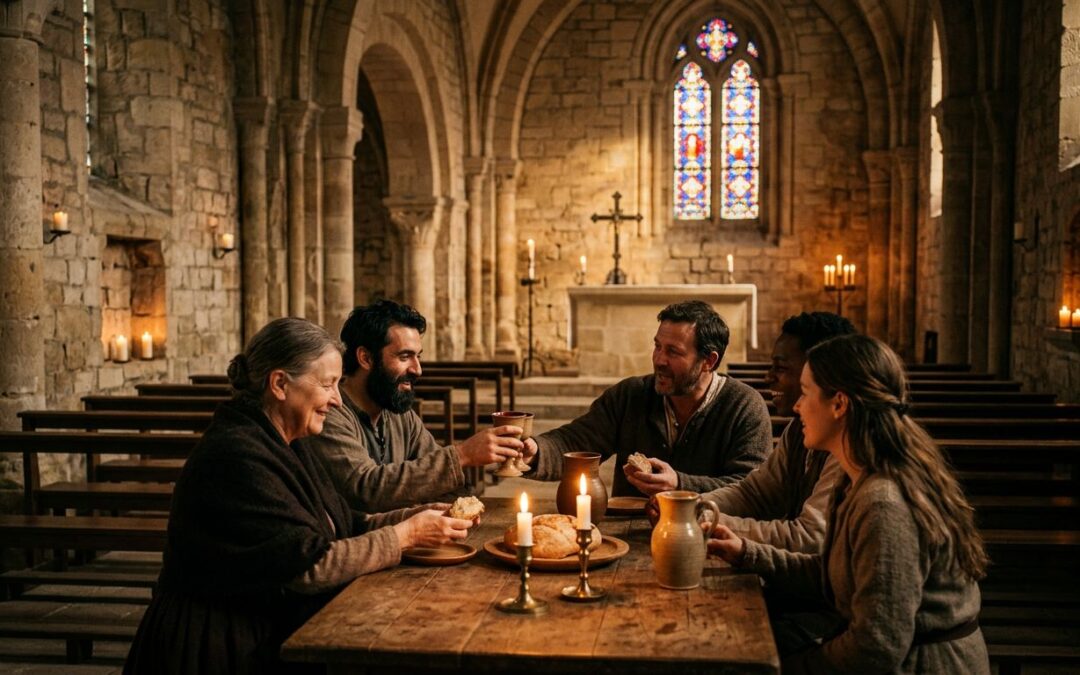
The New Testament does not treat believers as spiritual freelancers. It presents a people, a flock, a body, a household.
That matters, because many Christians want the blessings of church life without the obligations of belonging. They want sermons, but not shepherding. They want fellowship, but not accountability.
Scripture will not let us keep that arrangement. If we read it honestly, it points us toward committed, visible, local church membership.
Acts 2 shows addition, devotion, and shared life
Acts 2:41 says that those who received the word were baptized, and about 3,000 souls were added that day. That language matters. Added to what? Added to the church already gathered in Jerusalem.
Acts 2:42 to 47 tells us what that belonging looked like. They devoted themselves to the apostles' teaching, fellowship, the breaking of bread, and prayers. They met together. They shared possessions. They ate with gladness. They praised God together. The whole picture is one of ordered life, not casual religious attendance.
This is not a crowd that happened to be in the same city. This is a people who knew they belonged to one another. The church had boundaries, shared habits, and a common life. That is the seedbed of church membership, whether a modern church prints a card or not.
Added, devoted, gathered, shared. That is the language of belonging.
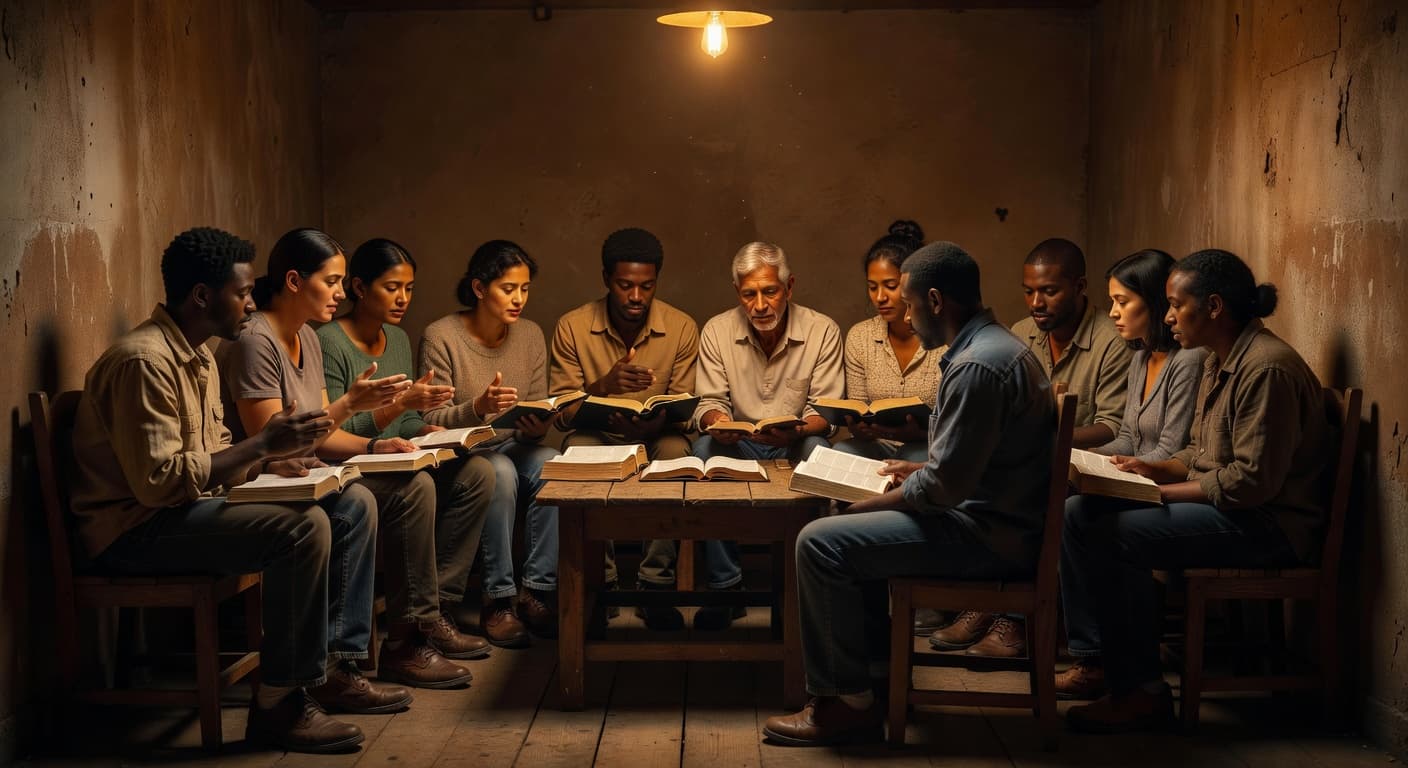
The New Testament gives commands and patterns
The Bible does not hand us a modern membership packet, but it gives us the truths that membership is meant to protect. Some passages command us directly. Others show us a settled pattern that cannot be ignored.
| Passage | What it shows |
|---|---|
| Hebrews 10:24-25 | We are told not to neglect meeting together, but to stir one another up to love and good works. |
| Hebrews 13:17 | Believers are told to obey and submit to leaders who keep watch over their souls. |
| Matthew 18:15-17 | Church discipline assumes a known church that can hear a matter and act on it. |
| Acts 20:28 | Elders are charged to care for a specific flock, not an anonymous crowd. |
| Romans 12:4-5, 1 Corinthians 12 | The church is one body with many members, and each member belongs to the others. |
The force of these passages is plain. Hebrews does not describe isolated Christians floating along on their own. It describes people who gather, encourage, and answer to shepherds. Matthew 18 does not describe private spirituality with no shared authority. It describes a church that can address sin and call people back.
Romans 12 and 1 Corinthians 12 push us even further. We are not spectators at a performance. We are members of a body. A hand does not belong to itself. An eye does not belong to itself. It belongs to the whole body, and the whole body belongs to it. That is the picture Scripture gives us.
Why belonging matters to the body of Christ
A body needs real members
Paul's teaching in Romans 12 and 1 Corinthians 12 makes no room for lone-ranger Christianity. Gifts are given for the good of the whole. Some teach, some serve, some encourage, some lead, some show mercy. None of that works well if everyone stays at a distance.
Church membership gives shape to that reality. It says, "I am here, and I am not here for myself alone." It turns service from occasional volunteering into covenant faithfulness. That is a strong word, and it should be. Christ did not save us to remain detached.
Shepherds need a defined flock
Acts 20:28 is direct. Paul tells the elders of Ephesus to pay careful attention to themselves and to all the flock, which the Holy Spirit has made them overseers. That is shepherd language. Shepherds watch over sheep they know.
1 Peter 5:1 to 3 says the same thing in another way. Elders are to shepherd the flock of God that is among them, not domineering over those in their care, but being examples. That means leadership is real, but it is not tyranny. It is watchful care.
A church without clear belonging makes shepherding hazy. Who is being watched over? Who is accountable? Who should receive correction, comfort, prayer, and protection? A flock that is never named becomes hard to tend. Known belonging is not a bureaucratic trick. It is a pastoral necessity.
Discipline and restoration need a real church
Matthew 18:15 to 17 gives us the pattern. If a brother sins, we go to him. If he refuses to listen, we take one or two others. If he still refuses, we tell it to the church. If he refuses the church, the matter does not stay hidden forever.
That only works if the church is a real, identifiable body. Discipline is not punishment for punishment's sake. It is a serious call to repentance, and it protects the name of Christ. It also protects the sheep. Love speaks plainly when sin starts to rot the middle of the flock.
No one disciplines the air. Discipline requires a church that knows who belongs, who is drifting, and who must be called back.
What about Christians who question formal membership?
We should answer this carefully and honestly. Some faithful believers say the New Testament never commands a formal membership roll, and they are right about the wording. The Bible does not give us a modern membership application or a signed document.
But that does not end the matter. The question is not whether the exact phrase appears. The question is whether the reality appears. The answer is yes.
Scripture gives us added believers, recognized leaders, a visible body, mutual obligation, discipline, and shepherding. Those truths demand commitment. If a church refuses formal membership, it still has to deal with the same biblical realities. It still must know who it is responsible for. It still must shepherd, teach, correct, and restore.
We should also admit that some churches use membership poorly. They make it cold, thin, or merely administrative. That is not a reason to reject membership. It is a reason to recover it in a biblical way. Membership is not salvation. It is not a second gospel. It is a public way of saying, "I belong here, and I am under the care and authority of this local church."
How we should live this out in a local church
If Scripture is this clear, then our response should be clear too.
- We should commit ourselves to a local church where the gospel is preached and the Word is honored.
- We should let our leaders know us, not hide in the crowd.
- We should serve with our gifts, because every member has a part.
- We should stay teachable, even when correction is hard.
- We should pursue peace quickly, because fellowship is too precious to treat lightly.
This is plain obedience. It is not complicated. We do not need more excuses for distance. We need more faithfulness, more transparency, and more willingness to belong where Christ has placed us.
A healthy church is not built by casual observers. It is built by committed saints who know they are part of one body, under one Shepherd, for the glory of one Lord.
Conclusion
The Bible does not present church life as optional attachment. It presents it as belonging, and belonging carries weight. Acts, the Epistles, and the words of Jesus all point us toward a gathered people who are known, cared for, corrected, and encouraged.
So when we ask what the Bible says about church membership, the answer is not vague. Believers belong to a local church, and that belonging should be real, visible, and obedient to Scripture.