
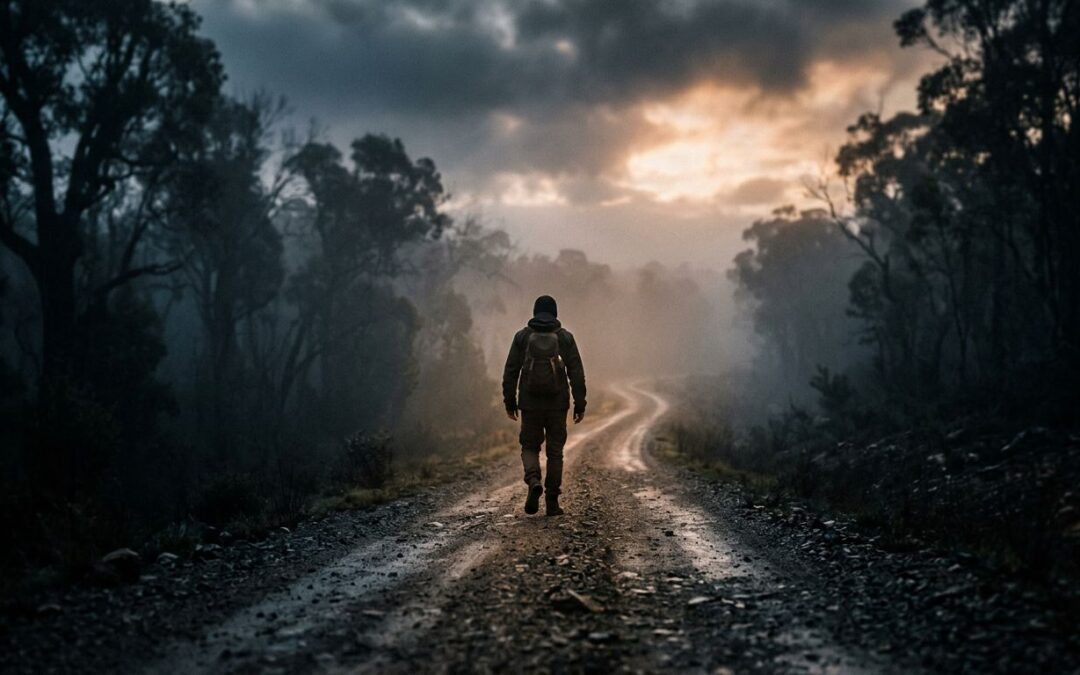
We do not wait for clear skies before we trust God. The command to walk by faith is for the days when the road is foggy, the answers are late, and our feelings keep changing.
Paul’s words in 2 Corinthians 5:7 are plain and demanding. We are to live by what God has said, not by what our eyes can prove. When sight and Scripture disagree, Scripture is the truth that stands.
That is why this matters for decisions, waiting, and anxiety. If we learn to trust God’s promise when circumstances stay unclear, we learn a steadier way to live. We should begin with the meaning of the command itself.
What Paul Meant in 2 Corinthians 5:7
When Paul wrote, “For we walk by faith, not by sight,” he was not giving us a religious slogan. He was describing the way believers conduct their lives. Walk means daily behavior, ordinary steps, real choices. Sight means outward appearance, what looks true in the moment.
That means faith is not pretending facts do not exist. Faith is refusing to let facts take the throne when God has already spoken. We may see delay, pressure, sickness, loss, or confusion. Yet none of those things has the final word over the child of God.
“We fix our eyes not on what is seen, but on what is unseen” (2 Corinthians 4:18).
That verse explains the other side of the same truth. What is seen is temporary. What is unseen is eternal. Faith lives with that conviction. It does not deny the visible world, but it judges the visible world by the word of God.
A clear summary of the phrase appears in this explanation of 2 Corinthians 5:7, and the point is simple. We do not build our lives on appearance. We build them on God’s revealed truth. Hebrews 11:1 says that faith is the assurance of things hoped for, the conviction of things not seen. That is not weakness. That is strength under God.
How Faith Looks in Real Decisions
Faith becomes practical when we have to choose without full clarity. We pray, search the Scriptures, ask for wisdom, and take the next obedient step. James 1:5 tells us to ask God for wisdom, and Proverbs 3:5-6 tells us not to lean on our own understanding. That means we do not wait for perfect certainty before we obey.
We may not know every outcome. We may not know how the door will open. Still, we know enough to move when God has made the path clear. Faith is not reckless. It is obedient. It listens first, then steps.
If we need a fuller teaching on that kind of obedience, we can read stepping out in faith through Romans 12:2. Romans 12:2 calls us to be transformed by the renewing of our minds, and that renewal changes the way we decide. A renewed mind does not panic at the first sign of resistance.
Biblical examples of walking by faith
Abraham went out “not knowing where he was going” (Hebrews 11:8). That is the pattern. God gave a promise first, then Abraham moved. Moses faced Pharaoh with no human advantage, only the word of the Lord. Mary received a hard word from heaven and answered, “Let it be to me according to your word” (Luke 1:38).
None of those people had complete information. All of them had enough revelation to obey. That is what faith does. It takes God at His word before life becomes easy.

Waiting is part of this same walk. Waiting is not wasting. It is obedience in a hidden place. A seed looks buried before it grows, but burial is not the end of the story. So when we do not see immediate movement, we do not call God slow or absent. We keep trusting the promise.
For a short companion on everyday obedience, three practical ways to walk by faith gives a helpful summary. The point remains the same. We keep moving by what God has said, not by what pressure suggests.
Faith When Anxiety Talks Loudly
Anxiety loves the visible. It measures the future by the size of today’s problem. Faith does something better. It looks beyond the trouble and remembers the character of God. Philippians 4:6-7 tells us to bring our requests to God with thanksgiving, and the peace of God will guard our hearts and minds. Psalm 56:3 says, “When I am afraid, I put my trust in you.”
That means fear is not our ruler. It may speak, but it does not decide. We answer anxiety with prayer, with Scripture, and with praise. We do not wait until the feeling leaves before we trust God. We trust God while the feeling is still present.
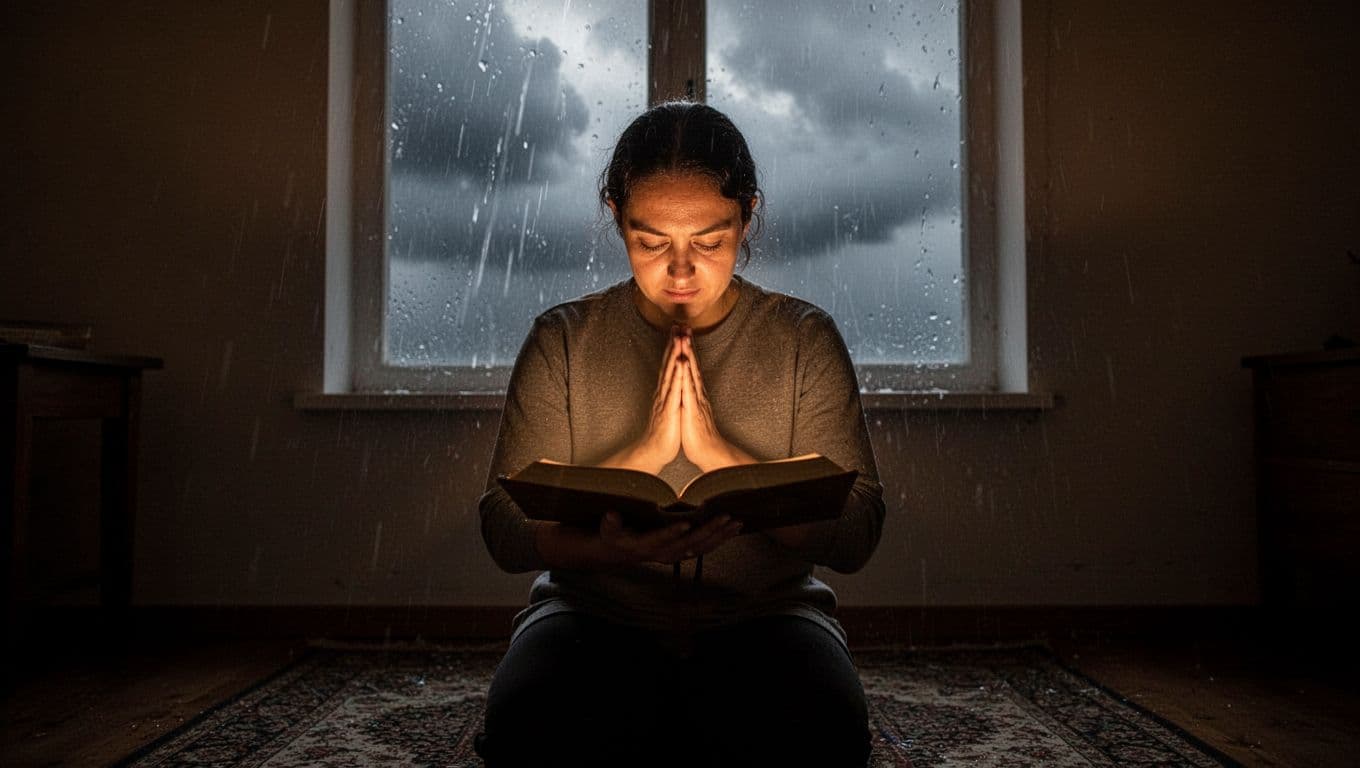
When the storm feels bigger than our strength, battling the storm in faith gives us a picture of steadfast trust under pressure. We are not told to smile at danger. We are told to cling to God in danger. That is a different thing, and it is a holy thing.
So we pray before we panic. We open Scripture before we open the floodgates of fear. We confess God’s promises aloud when our thoughts begin to spiral. Faith does not erase the storm, but it keeps the storm from becoming our master.
Conclusion
To walk by faith is to let God’s word outrank what we see. It is to make decisions with obedience, to wait without despair, and to answer anxiety with trust. That is not vague spirituality. It is the normal life of the believer.
We do not need complete visibility. We need a trustworthy God and a willing heart. When the road ahead is hidden, faith is still enough because God is still faithful.