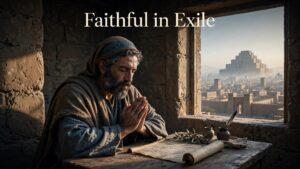
The question of authority of Scripture is not a small question. If the Bible speaks for God, then we are not free to treat it like advice, and if it does not speak for God, then we are left with our own opinions, our own moods, and our own blindness.
That is why this matter cuts so deep. We do not need more religious noise, and we do not need softer words that leave us unchanged. We need to know whether Scripture has the right to rule our minds, correct our hearts, and command our obedience.
The Bible does not leave us guessing. It speaks plainly about what it is, where it comes from, and what it is meant to do.
The Bible Speaks With God’s Own Voice
Scripture claims more than helpfulness. It claims divine authority. "All Scripture is God-breathed" is not poetry for decoration, it is a declaration of origin, and origin matters because what comes from God carries the weight of God.
Paul says in 2 Timothy 3:16-17 that Scripture is useful for teaching, rebuking, correcting, and training in righteousness so that the man or woman of God may be complete and equipped for every good work. That is not the language of a mere religious aid. That is the language of a ruler speaking to those under his care.
Jesus treated Scripture that way. When the devil tempted Him in the wilderness, He answered, "It is written." He did not argue with human opinion. He did not treat the Word of God as one voice among many. He submitted the moment to Scripture, and that is our pattern too.
"All Scripture is God-breathed and is useful for teaching, rebuking, correcting and training in righteousness."
That means the Bible does not wait for our approval before it becomes true. We do not grant Scripture its authority. We recognize the authority it already has.

The Bereans understood this better than many people do. Acts 17:11 says they examined the Scriptures daily to see if what Paul said was true. They did not float above the Word. They measured every message by the Word. That is humility, and it is also wisdom.
God Used Real Men to Write Real Words
The Bible is not a book dropped from heaven with no human fingerprints. God used prophets, apostles, shepherds, kings, historians, and fishermen. Their personalities are real. Their settings are real. Their words carry rhythm and color. Yet behind and through it all, the Holy Spirit was speaking.
Peter says it carefully in 2 Peter 1:20-21. No prophecy of Scripture comes from someone's own interpretation, and no prophecy was ever produced by the will of man. Men spoke from God as they were carried along by the Holy Spirit. That phrase matters. Carried along means directed, moved, governed. The men were not erased, but they were not independent either.
This is where inspiration must be understood rightly. Inspiration does not mean the writers had a warm spiritual feeling. It means God breathed out what He wanted written. The result is Scripture that is fully human in style and fully divine in origin.
Jesus also taught us to honor the seed of the Word. In the parable of the sower, the seed is the Word of God, and the condition of the soil determines whether the Word bears fruit. That tells us something simple and strong. The issue is never whether God's Word is alive. The issue is whether our hearts are ready to receive it.

We do not need to fear the human side of Scripture. God was not trapped by it. He used it. He ruled it. He brought forth a perfect message through real instruments, and that is why Scripture can speak to every kind of person in every kind of place.
Authority Means More Than Inspiration
These words are related, but they are not the same. Authority means Scripture has the right to command us. Inspiration tells us where Scripture came from. Reliability tells us Scripture is true and trustworthy. Sufficiency tells us Scripture gives us all we need for faith and obedience.
That distinction matters because people often praise the Bible without submitting to it. They call it inspiring, helpful, beautiful, and meaningful, then they ignore its commands. That is not honor. That is disguise.
Jesus prayed in John 17:17, "Sanctify them by the truth; your word is truth." He did not say the Word contains truth in a loose and partial sense. He tied truth to the Word itself. If God's Word is truth, then it judges our ideas, not the other way around.
"Your word is truth."
Hebrews 4:12 says the Word of God is living and active, sharper than any two-edged sword, able to judge the thoughts and intentions of the heart. That is authority in action. The Bible does not merely inform us. It exposes us. It shows where we are mixed, proud, hard, or self-deceived.
This is why Scripture is sufficient. We do not need to wait for some private voice to overrule what God has already said. We do not need to treat clear teaching as if it were incomplete. The Bible gives light for the path, and Psalm 119:105 says exactly that. When the Word is clear, we are not free to ignore it.
James 1:22 presses the matter even harder. We are to be doers of the word, not hearers only. The authority of Scripture is not honored by admiration alone. It is honored by obedience.
Scripture Searches Us Before We Search It
When we open the Bible, we often think we are examining it. In one sense, we are. In another, it is examining us. That is the harder truth, and it is the one we need.
The Bible tells us what we are, what we need, what we love, what we fear, and where we are resisting God. It reaches into the hidden places. It does not flatter us. It tells the truth. That is mercy, even when it stings.
Acts 17:11 gives us a pattern again. The Bereans received the word with eagerness, and they searched the Scriptures daily. They were eager and careful at the same time. They were not lazy, and they were not proud. They wanted truth more than novelty.
That same spirit is needed now. If a teaching, impression, or tradition cannot stand under Scripture, then it should not rule us. Romans 12:2 calls us to be transformed by the renewing of our minds, and that renewing is not vague. It is tied to God's truth pressing into our thoughts until our thinking changes.
The Bible also speaks to the whole person. Our minds are renewed, our desires are corrected, and our actions are brought under God's order. That is why understanding spirit, soul, and body matters, because Scripture does not only inform the intellect. It reforms the inner life.
Living Under the Word’s Rule
When Scripture has authority, our response cannot be half-hearted. We read it to hear God. We study it to understand God. We obey it because God has spoken.
A few simple commitments put that truth into daily practice:
- We read Scripture with a willing heart, not a defensive one.
- We compare every teaching with the written Word of God.
- We obey the part we already understand before asking for more.
- We let Scripture shape our habits, our speech, and our private choices.
This is where steps to living a Christ centered life stop being an idea and become a way of life. Galatians 2:20 is not a slogan for wall art. It is a death to self and a life under Christ's rule, and the Bible is the means by which that rule keeps pressing into us.
When we sit under Scripture day after day, we stop asking, "What do I prefer?" and start asking, "What has God said?" That question changes everything. It changes our reading. It changes our decisions. It changes the way we respond to correction. It changes the kind of people we become.
Conclusion
The Bible does not ask for permission to be authoritative. It already is. It comes from God, it speaks truth, it corrects error, and it trains God's people for obedient life.
We do not honor Scripture by praising it only. We honor it by trusting it, submitting to it, and letting it rule what we believe and how we live. That is the plain answer to the question of authority of Scripture.
If we want to walk with God, we begin where He has spoken. We open the Word, we receive it, and we obey it with a willing heart.