
If we miss the Great Commission, we miss the shape of Christian life itself. Jesus did not leave His people with a side project. He gave us a command after His resurrection, and that command still governs the church.
Too many people split the mission into pieces. Some focus on evangelism only, some on baptism only, some on teaching only. The Bible joins them together, and it does not allow us to pull them apart. We begin where the command begins, with the risen Christ and His authority.
The Risen Christ Speaks With Authority
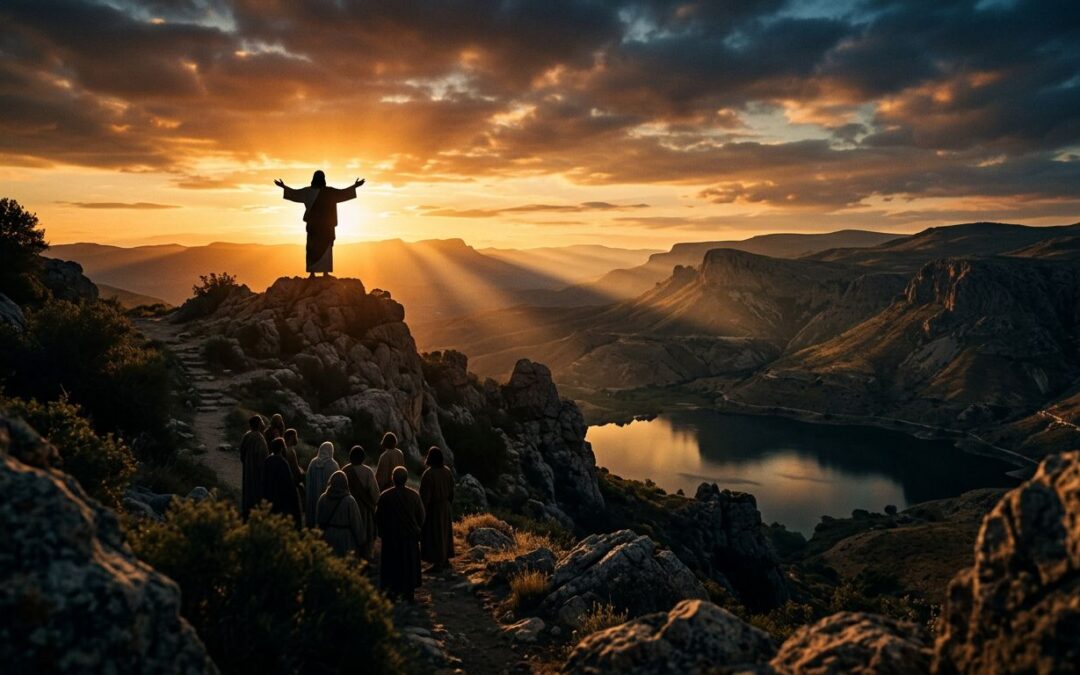
In Matthew 28:18-20, Jesus meets His disciples on a mountain in Galilee after the resurrection. This is not a passing remark before He leaves. It is the King speaking after He has conquered death.
He says, "All authority in heaven and on earth has been given to me." That line matters because the mission rests on His rule, not our energy. If Christ has all authority, then we have no right to treat His command as optional, delayed, or reserved for a few gifted people.
"All authority in heaven and on earth has been given to me."
The mission also includes His promise, "I am with you always, to the end of the age." That means the church does not go out alone. We go under authority, and we go with presence. The Great Commission begins with power that is already His and ends with help that is already promised.

The command is not fragile. It does not depend on mood, culture, or convenience. Jesus is risen, reigning, and speaking, and that settles the matter.
What Jesus Actually Commanded
Jesus does not center the mission on a travel plan. He centers it on making disciples. "Go" shows movement. "Baptizing" shows belonging. "Teaching them to observe all that I have commanded you" shows the goal, which is obedient followers of Christ.
We must not shrink the command into one activity. A church can proclaim Christ and still fail if it never teaches obedience. It can teach doctrine and still fail if it never calls sinners to repentance. The Bible will not let us divide what Jesus joined.
| Part of the mission | What Scripture shows | What we must not confuse it with |
|---|---|---|
| Evangelism | We announce Christ and call for repentance and faith. | It is not the same as full spiritual formation. |
| Baptism | We baptize believers in the name of the Father, Son, and Holy Spirit. | It is not a substitute for repentance or teaching. |
| Discipleship | We teach believers to observe all Jesus commanded. | It is not a one-time event. |
| Obedience | We walk in what Christ commands. | It is not optional. |
The phrase "all nations" also matters. The mission is not tribal, private, or small. It reaches every people group, every culture, every place where Christ is not named. The Great Commission is wide because the mercy of Christ is wide.
Evangelism Proclaims Christ
Luke 24:46-49 fills in the content of the message. Jesus says the Scriptures had to be fulfilled, the Christ had to suffer and rise, and "repentance and forgiveness of sins should be proclaimed in his name to all nations, beginning from Jerusalem." Evangelism is not spiritual small talk. It is a real announcement about Jesus, His death, His resurrection, and His saving rule.
Acts 1:8 says the disciples will receive power from the Holy Spirit and be witnesses in Jerusalem, Judea, Samaria, and to the end of the earth. A witness does not invent the news. A witness speaks what he has seen and heard.
That is our pattern. We proclaim Christ plainly. We call men and women to repent and believe. We tell the truth about sin, judgment, the cross, and the empty tomb. We do not soften the message until it loses its edge. We also do not add human tricks to make the gospel stronger. The gospel is already strong. It is the power of God for salvation.
Evangelism opens the door, but it does not finish the work. A first hearing is not the same as a mature life of faith. The Great Commission is larger than the moment of response, because Jesus wants disciples, not merely decisions.
Baptism and Teaching Belong in the Same Work
Matthew 28 does not place baptism at the edge of the mission. It puts baptism inside the mission. New believers are baptized "in the name of the Father and of the Son and of the Holy Spirit," which means baptism is a public identification with the triune God and with the people of God.
It is not a badge for spiritual elites. It is the first open act of obedience after faith. Acts 2 gives the same pattern. Peter preached, the people received the word, and "those who received his word were baptized" (Acts 2:41). Then they devoted themselves to the apostles' teaching, fellowship, breaking of bread, and prayers. The order matters.
We do not baptize apart from gospel faith, and we do not leave new believers without teaching. The church must form people, not merely count them. That is why discipleship small groups matter. The ordinary, repeated, face-to-face work of Scripture, prayer, questions, and correction is where many believers learn to obey Jesus in real life.
Baptism says, "I belong to Christ." Teaching says, "I will keep following Christ." The two belong together. When the church separates them, it weakens both.
The Holy Spirit Gives the Church Boldness
The Great Commission is impossible without the Holy Spirit. Jesus told the disciples to wait for "the promise of my Father" in Luke 24:49, and Acts 1:8 says power would come upon them. We should not miss that order. First comes promise, then power, then witness.
The church does not spread the gospel by personality, pressure, or religious noise. We speak with courage because the Spirit works through the word of Christ. We pray, we preach, we listen, and we trust God to do what only He can do.
This is where the local church matters. The mission is not a lone believer acting alone. It is a body of baptized disciples learning, praying, and sending together. Paul tells Timothy to "entrust to faithful men who will be able to teach others also" (2 Timothy 2:2). That is generational discipleship. One faithful life teaches another, and that life teaches another.
A church that takes Jesus seriously will train people in Scripture, patience, doctrine, and service. The CFC School of Ministry program is one example of biblical training for godly living. It is not for show. It is for faithful obedience.
Obedience Is the Test of Real Discipleship
Jesus did not say, "Teach them to admire what I commanded." He said, "teach them to observe all that I have commanded you." That word "observe" means keep, guard, obey, and live by it. Here is the hard truth: if we preach Christ and refuse His words, we have not made disciples.
John 14:15 cuts through every excuse, "If you love me, you will keep my commandments." Love for Christ is not proven by emotion alone. It is proved by obedience. That is why the Great Commission is never finished at conversion. It reaches into homes, habits, conversations, money, forgiveness, and endurance.
We see this mission in ordinary places. We speak of Christ in our homes. We answer questions with Scripture. We welcome new believers into fellowship. We call for baptism, teach sound doctrine, and keep people close enough to be corrected. We also remember that disciples are not made in a hurry. Growth takes time, but it must be real growth.
- We proclaim the gospel plainly.
- We baptize believers without delay.
- We teach the whole counsel of God.
- We expect obedience, not mere interest.
That is the pattern Jesus gave. Nothing less will do.
Conclusion
The Great Commission is not a church slogan. It is the risen Lord's command, and it binds the whole church. Evangelism announces Christ, baptism identifies believers with His name, discipleship teaches obedience, and the Spirit gives power for the work.
When we read the passage carefully, the shape of the mission becomes plain. We do not choose between going, baptizing, and teaching. We hold them together, because Jesus held them together. And we do it under His authority, with His promise, until His work is finished.