

Church unity is not merely a soft idea for polite believers; it is a foundational gospel issue, and Scripture treats it with the utmost gravity.
When local congregations are divided, Christ’s name is spoken of carelessly. However, when believers are one in truth and love, the world witnesses a reality that only Christ can produce. This connection between the invisible church, which includes all true believers throughout history, and the visible church, which meets in local assemblies, demonstrates the power of a unified witness.
We often confuse church unity with silence, total agreement on secondary issues, or simply having a compatible personality. The Bible provides a better path, and it begins with Jesus himself.
Key Takeaways
- Unity is rooted in Christ: Biblical unity is not the result of human consensus, shared personality, or uniformity in style, but is a supernatural reality established by Christ and maintained by the Holy Spirit.
- Truth and love are inseparable: True unity requires both the clarity of Scripture and the grace of Christ; without truth, unity is merely a fragile truce, and without love, truth becomes harsh and destructive.
- Humility is essential for peace: Because believers are imperfect, maintaining harmony requires the humility of Christ, characterized by forgiveness, patience, and a willingness to prioritize others over personal pride.
- Diversity serves the body: The variety of spiritual gifts among members is a divine design intended to build up the church, rather than a threat to harmony that should be suppressed.
Unity Begins with Christ, Not Preference
Jesus prayed for our oneness before He went to the cross. In John 17, He asked the Father that all believers would be one, so the world would know that the Father sent the Son. This reveals that church unity is not a peripheral concern, but a fundamental part of the witness of the body of Christ.
Paul echoes this sentiment in Ephesians 4. There is one body, one Spirit, one hope, one Lord, one faith, one baptism, and one God and Father of all. This list does not describe a fragile peace built on shared taste or human consensus. Instead, it describes a people supernaturally joined to the same Christ.
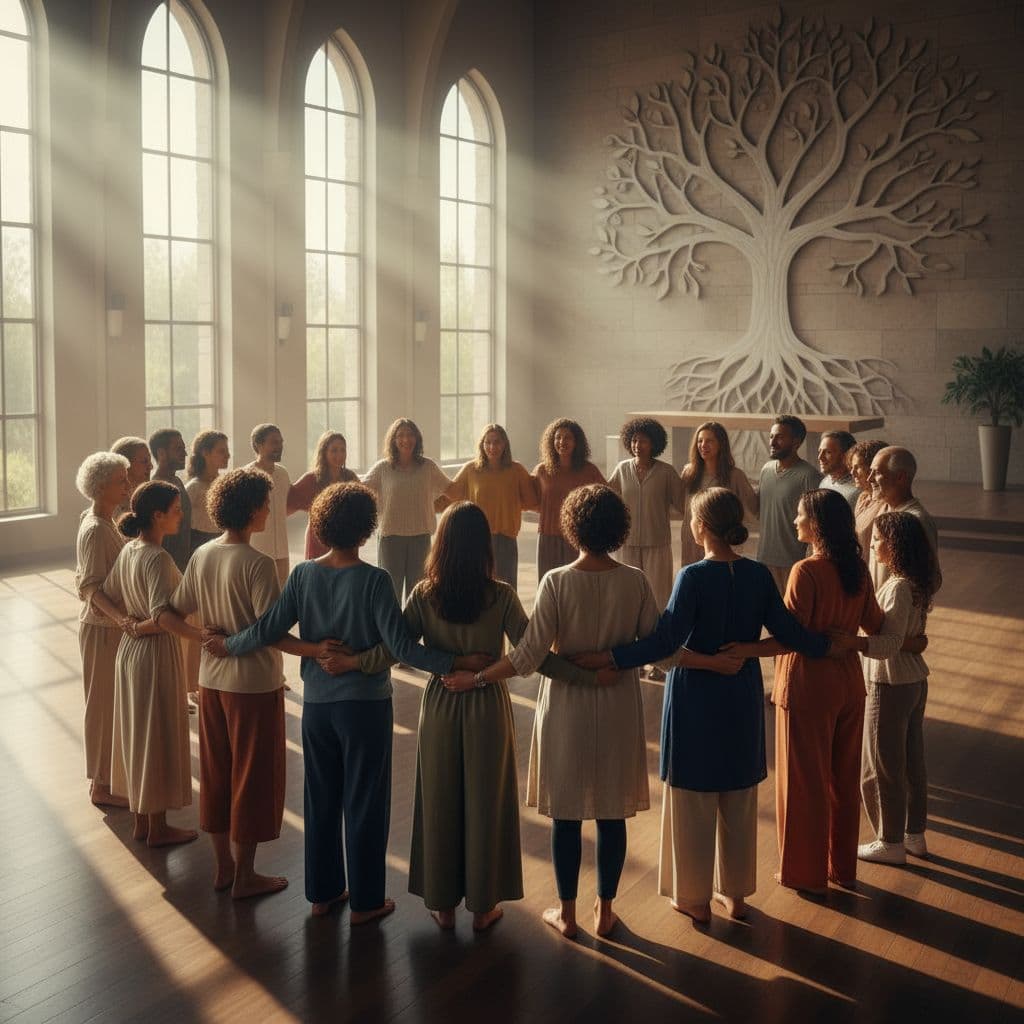
What matters here is simple. We do not create unity by seeking uniformity in music, style, or personal preference. We do not need everyone to agree on secondary issues to experience a shared life in the Gospel. Rather, we work to maintain the unity the Holy Spirit has already given to those who belong to Jesus.
That is why true church unity is stronger than personality and deeper than mere preference. If we recognize Christ as head of the church, then our common life must begin there. If Christ is not first, no amount of friendliness or social cohesion will hold a congregation together for long.
Truth and Love Must Stay Together
Paul’s appeal in 1 Corinthians 1:10 is plain. Drawing from the New Testament, he pleads with the church to be of the same mind and judgment, insisting there should be no divisions among them. But he is not calling for empty agreement. He is calling for a shared submission to the truth of Christ.
That matters, because unity without truth is not biblical unity at all. It is a truce. It may look calm for a moment, but it cannot last. On the other hand, truth without love becomes harsh, proud, and hard to live with. The Bible refuses both errors, urging us to maintain a consistent theological vision that rejects the compromise of truth and the absence of grace.
Ephesians 4:15 gives us the balance we need. We are to speak the truth in love, demonstrating the same love that characterizes our Savior. Both components matter. Truth guards the church from error, while love keeps truth from becoming a weapon.
Biblical unity never asks us to make peace with falsehood.
So we do not hide doctrine in order to keep a crowd calm. We do not soften Scripture until no one feels corrected. We do not call disagreement unity when the issue is really obedience. The church stays healthy when truth is spoken clearly and love is practiced honestly.
That means hard conversations are not a failure of unity. Sometimes they are the path to it. If we love one another, we will not leave one another in confusion.
Humility Makes Peace Possible
Philippians 2:1-4 cuts straight to the heart. Paul tells us to do nothing from selfish ambition or empty conceit, but in humility to count others more significant than ourselves. That is not weakness. That is Christlike strength under the rule of God.
Jesus showed us this first. He did not cling to status. He took the form of a servant, and He went low for our sake. If the Son of God walked in humility, then pride has no place in the church.
Colossians 3:12-15 presses the point even harder. We are to put on compassion, kindness, humility, meekness, patience, and forgiveness. We are to bear with one another. We are to let the peace of Christ rule in our hearts. That is not sentimental language. It is a command for real church life, where people offend, misunderstand, and disappoint one another.
Church unity grows where humility lives. Pride keeps score, but humility keeps seeking peace. While some traditions, such as those influenced by Charles Fillmore at Unity Village, emphasize affirmative prayer and the realization of a general divine nature within all people, biblical unity is distinct. It is not found in a shared inner spark but is rooted specifically in the humility of Christ and the objective authority of the Word of God.
That is why foundational truths for spiritual growth matter so much. We do not become humble by accident. We become humble when the Word confronts us, corrects us, and teaches us to think less of our own status and more of Christ’s honor.
Forgiveness belongs here too. Forgiveness does not deny sin, but it refuses to keep revenge alive. It fosters reconciliation and opens the door to restoration when repentance is real. In a church marked by humility, people do not drag wounds around like trophies. They bring them before the Lord and deal with them in truth to maintain the peace that Christ died to secure.
The Spirit Forms One Body
1 Corinthians 12 provides one of the clearest pictures in all of Scripture regarding the body of Christ. The church functions as one body with many members. The hand is not the foot, and the eye is not the ear, yet no part can say to another part that it has no need of the other.
That perspective destroys pride and eliminates unhealthy comparison.
Some believers possess visible talents, while others serve in quiet places that often go unnoticed. Some teach, some pray, some organize, and others care for children, open their homes, or show up when the work is difficult. Through the distribution of various spiritual gifts, the Spirit equips every individual for the building up of the church. This diversity is not a threat to our harmony; rather, it is part of a divine design.
Acts 2:42-47 illustrates this same truth in action within the early church. That local congregation devoted themselves to the apostles’ teaching, fellowship, the breaking of bread, and prayers. Their life together was not random, as it remained centered on the Word, the table, and prayer. That is where true unity took root.

Photo by Caleb Oquendo
This is why small group Bible study matters. A smaller circle gives believers room to hear Scripture, ask honest questions, pray for one another, and practice patience in real time. It is one thing to say we value fellowship, but it is quite another to sit down, open the Bible, and let the Word shape our speech and our habits.
The church does not become one by accident. The Spirit joins us to Christ, and then He teaches us how to live as one unified body.
Leaders Must Guard the Flock
Pastors and those in positions of church leadership carry a real responsibility here. They cannot build unity by avoiding truth, and they cannot protect the flock by feeding the flesh. Paul tells us in 2 Timothy 2:24-25 that the Lord’s servant must not be quarrelsome, but kind to everyone, able to teach, patient, and gentle in correction.
That is a serious word for leaders. Gentleness is not weakness; it is strength under control. By following an apostolic pattern of ministry, a shepherd demonstrates that they do not need to win every argument to be effective. A shepherd who opens the Word, names sin clearly, and corrects with patience is doing the work of Christ.
Leaders must also refuse the shortcuts that divide churches and create fractures across denominations. They must not play favorites, they must not entertain gossip, and they must not use the pulpit to settle personal scores. When Matthew 18 calls for private correction, they must honor that order instead of rushing to public pressure.
Healthy leadership keeps a few steady commitments:
- preach the Word without softening it
- correct error with patience and tears, not pride
- pray with people, not only about them
- protect the flock from division and hidden sin
That kind of shepherding helps people trust one another under Scripture. It also keeps leaders from building little camps around themselves. The church belongs to Christ, not to any man.
When leaders hold the line with humility, the whole body benefits.
Every Member Can Strengthen the Church
Church unity is not pastor-only work. Every member shapes the atmosphere of the church through words, attitudes, and choices. Ephesians 4:29 tells us to speak only what builds up. Ephesians 4:31-32 tells us to put away bitterness, wrath, anger, clamor, slander, and malice, and to be kind, tenderhearted, and forgiving.
That is plain enough. Gossip tears down. Complaining spreads fast. Hidden resentment poisons fellowship. On the other side, careful speech, quick repentance, and quiet service help us live in one accord, which ultimately strengthens the whole church.
We help unity when we do simple things faithfully. We speak to people instead of about them. We ask forgiveness when we are wrong. We assume the best before we assume the worst. We show up for worship, prayer, and service, not only when it is easy. We guard our mouths because careless words can wound a body that Christ bought with His blood.
That is where biblical discipleship training matters for ordinary believers as well. We need more than inspiration. We need formation. We need the Word of God and the depth of Scripture to train our conscience, our speech, and our loyalties so that we stop living as isolated individuals and start living as members of one household.
A church becomes strong when its people stop asking, “What do I get out of this?” and start asking, “How can I serve the body?” That is not a small change. It is the path of maturity.
Frequently Asked Questions
Does biblical unity require that everyone in the church agrees on every secondary issue?
No, biblical unity does not demand uniformity in secondary preferences or secondary doctrinal matters. Instead, it calls for a shared submission to Christ and a commitment to maintain the peace the Spirit has already established among those who hold to the primary truths of the Gospel.
How can a church handle hard conversations without destroying its unity?
Hard conversations are often a necessary path to true unity rather than a failure of it. By speaking the truth in love—as instructed in Ephesians 4:15—believers can address sin, error, or confusion with both theological clarity and genuine, Christlike grace.
What role does leadership play in fostering a unified congregation?
Leaders are responsible for guarding the flock by preaching the Word without compromise and correcting errors with patience and gentleness. They foster unity by refusing to play favorites, avoiding gossip, and modeling the same humility they expect from the rest of the congregation.
How can an individual member contribute to the unity of their church?
Every member shapes the atmosphere of the church by choosing to speak words that build up rather than tear down. By practicing forgiveness, assuming the best of others, and actively serving the body, individual believers help move the community away from individualism and toward a collective, mature life in Christ.
Conclusion
The Bible does not teach a shallow peace that avoids hard questions. Instead, it promotes church unity that is rooted in Christ, guarded by truth, shaped by love, and sustained by the Holy Spirit.
That means we do not hold the community together with mere charm or forced silence. We hold it together by bowing to the same Lord, submitting to the same Word, and walking with one another in humility and forgiveness. This is the path Jesus prayed for, and it remains the primary mission of the gospel as we build a healthy church today.
The church does not become one by ignoring truth or compromising its message. It becomes one by faithfully obeying Christ together.