

The Bible does not treat God’s power as a side note. It puts it in the first chapter, in the first acts of creation, and in the repeated testimonies of his people.
We live among weak things. Bodies fail, plans break, nations shake, and hearts grow fearful. But Scripture keeps bringing us back to one plain truth, God is not weak, God is not unsure, and God is not threatened by what threatens us.
That matters because if we get God’s power wrong, we get everything else wrong. We either shrink him into a helper or fear the world as though it were stronger than he is. The Bible refuses both errors, and we should too.
The Bible Starts With God’s Absolute Power
Genesis opens with a God who speaks, and the world comes into being. There is no struggle, no contest, no rival. “And God said, ‘Let there be light,'” and there was light. That is not poetry only, it is revelation. God creates by his word, which means his power is not borrowed, measured, or limited by anything outside himself.
That same truth runs through the rest of Scripture. When Job finally sees the Lord clearly, he says, “I know that you can do all things” (Job 42:2). Job had asked hard questions, but in the end he did not meet a weak god. He met the One who rules what Job could never control.
“Our God is in the heavens; he does all that he pleases” (Psalm 115:3).
That verse is blunt, and it should be. God’s power is not a tool sitting beside him. It is bound up with who he is. He acts according to his will, and his will is never blind, never corrupt, never frustrated. We do not worship a force of nature. We worship the Lord who made nature.
This is why biblical faith is never the same as optimism. Optimism says things may work out. Scripture says God reigns. That is a stronger ground, and a far safer one. When we remember that, our fear loses its throne.
Creation, Judgment, and Rescue Show the Same Lord
God’s power is not only seen in the first chapter of Genesis. It appears in the flood, in the plagues of Egypt, at the Red Sea, and in every act where God both judges evil and saves his people. He is never passive. He acts in holiness.
When Israel stood trapped between Pharaoh and the sea, they had no strategy left. That is the point. Exodus 14 shows a people with no earthly way forward, and then the Lord makes a way through waters that should have stayed closed. The same power that judges Egypt also delivers Israel. God does not separate his power from his righteousness.
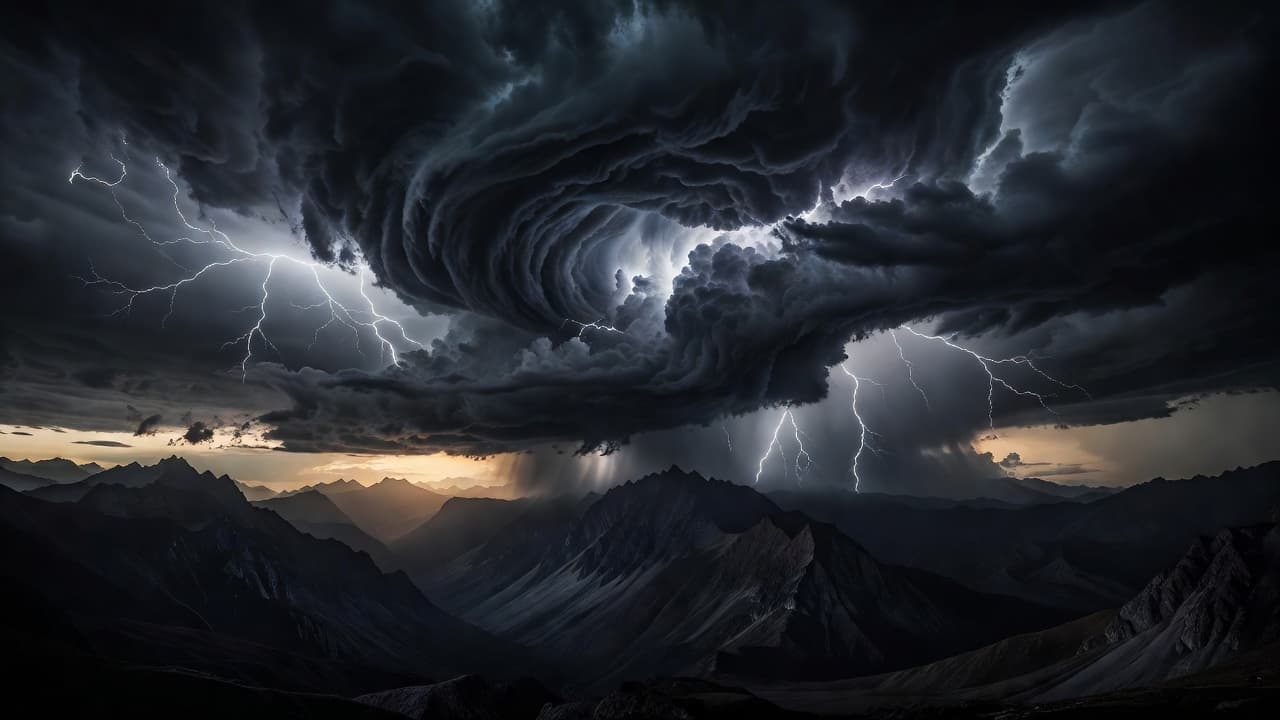
The story is repeated again and again. Fire falls on Mount Carmel in 1 Kings 18, and the false prophets are silenced. Daniel is brought through a lion’s den. Jeremiah is kept alive in the middle of national collapse. These are not random miracles. They are signs that the Lord rules over creation, kings, beasts, fire, and history itself.
We should not miss the order of these events. God’s power never acts apart from God’s purpose. He does not flash strength for show. He acts to expose idols, defend his name, and rescue those who trust him. That is why the Psalms so often join power with mercy. “The Lord is gracious and merciful, slow to anger and abounding in steadfast love” (Psalm 145:8). His power is holy power.
The storm is real, but it is not ultimate. The sea is deep, but it is not sovereign. The Lord stands over all of it, and that should steady our hearts.
Jesus Reveals God’s Power With Authority and Mercy
If we want to see God’s power clearly, we must look at Jesus. The Gospels do not present him as a wonder-worker detached from the Father. They present him as the Son who acts with divine authority. He heals the sick, casts out demons, stills storms, and raises the dead, and each act says something about the God who sent him.
When Jesus calms the wind and waves in Mark 4, the disciples ask, “Who then is this?” That is the right question. The sea obeys him because creation knows its Maker. When Jesus calls Lazarus from the tomb in John 11, death itself yields. That is not mere influence. That is power over the last enemy.
And yet the Gospels keep showing us that God’s power is not cold. Jesus touches lepers, receives children, and has compassion on the crowds. His power is not harsh domination. It is sovereign mercy.
“Nothing will be impossible with God” (Luke 1:37), the angel told Mary before the birth of Christ. That sentence sits at the doorway of the Incarnation, and it matters. The virgin birth is not a myth dressed up in religious language. It is a declaration that God can do what no human power can do. He can bring life where there is no life.
Then comes the cross, and here many stumble. The cross looks like weakness, but it is the power of God at work in judgment and salvation. Christ was not overpowered. He laid down his life willingly. Then the resurrection showed what the cross had won. Paul calls Jesus “declared to be the Son of God in power by his resurrection from the dead” (Romans 1:4). The resurrection is not decoration on the gospel. It is the public display of God’s power over sin, death, and the grave.
So when we speak of God’s power, we do not mean brute force. We mean the mighty, holy, saving authority of God revealed in Jesus Christ.
Prayer Meets the Power of God
The Bible does not give us God’s power so we can admire it from a distance. It gives us God’s power so we can pray with confidence and obey without fear. Scripture never separates God’s greatness from our dependence. In fact, it teaches the opposite. The greater God is, the more serious prayer becomes.
Paul says, “Now to him who is able to do far more abundantly than all that we ask or think” (Ephesians 3:20). That is not a poetic flourish. It is a direct claim about the Lord who hears prayer. We often ask small because we think small. The Bible pushes us higher. God is able, and his ability exceeds our imagination.
James also says, “The prayer of a righteous person has great power as it is working” (James 5:16). That does not mean prayer is magic. It means prayer reaches a living God who acts. We do not pray into the air. We pray to the One who rules the air, the earth, and every human heart.
“My grace is sufficient for you, for my power is made perfect in weakness” (2 Corinthians 12:9).
That word to Paul changes the way we think about weakness. God does not wait for us to become strong before he works. He often shows his power most clearly in our weakness, our limits, and our helplessness. Then no one can pretend the victory came from us.
That is good news for weary believers. We do not have to perform strength for God. We bring our weakness to him honestly, and we ask him to do what only he can do. That is faith. That is humility. That is the shape of real dependence.
We Respond With Trust, Obedience, and Praise
Once we see God’s power clearly, our response cannot be casual. We either trust him, or we quietly distrust him. There is no middle place where the heart stays neutral. The Bible presses us toward a living response.
We trust God’s word when our feelings argue back. Scripture is more solid than fear, and God’s promises are more steady than our circumstances.
We obey him even when the way is hard. Pharaoh’s army looked stronger than Israel’s obedience, but the Lord proved otherwise. Human power always looks loud before God acts.
We bring our needs to him in prayer, not because he is unaware, but because he invites his people to ask. Prayer is not a last resort. It is one of the plain marks of faith.
We also praise him. Praise is the proper answer to power. When we rehearse who God is, our hearts stop treating him like a small helper and start honoring him as Lord.
The Bible never tells us to believe in our own inner strength. It tells us to believe in God. That is not a small shift. It is the whole difference between pride and faith.
Conclusion
The Bible tells us that God’s power is absolute, holy, and saving. It rules creation, judges evil, raises the dead, and strengthens weak people who call on his name.
So when fear rises, we do not answer it with guesses. We answer it with Scripture, with prayer, and with trust in the Lord who does all that he pleases. That is the plain comfort of the Bible, and it is enough for every day.