
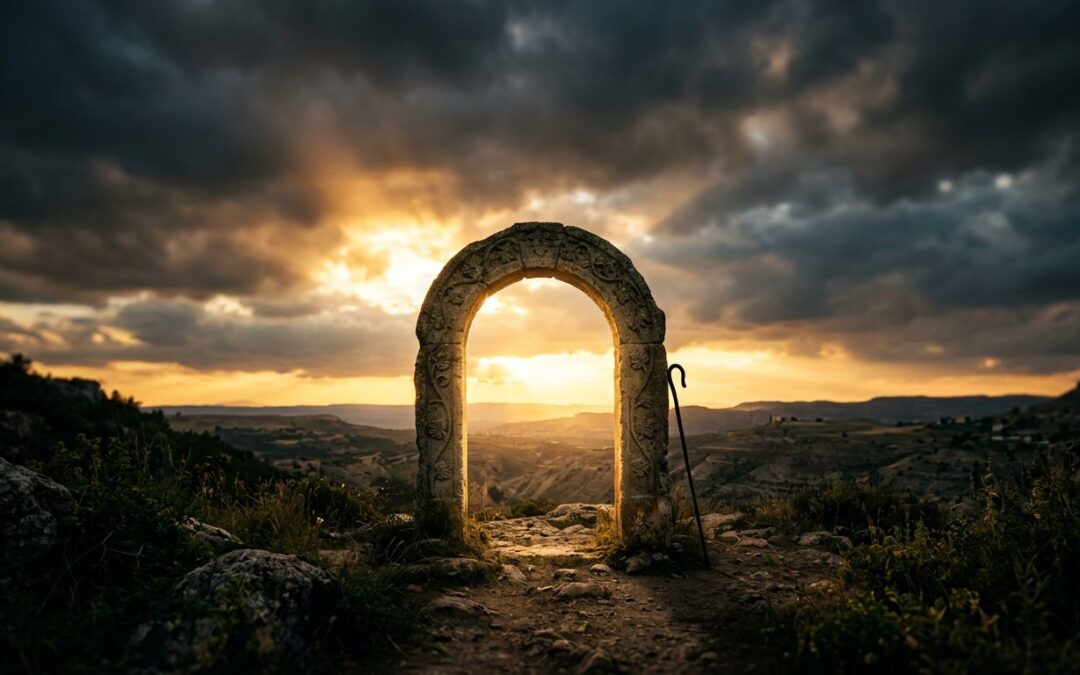
The Kingdom of God is not a religious slogan, a place we reach after death, or a political plan for fixing the world. It is the rule of God breaking into human history through Jesus Christ, calling us to repent, believe, obey, and wait for the day when Christ will reign openly over all things.
Many people speak about the kingdom without knowing what the Bible actually says about it. Jesus did not treat the kingdom as a minor teaching. He announced it, explained it, demonstrated its power, and commanded His disciples to seek it first.
When we understand the Kingdom of God, we understand the message of Jesus more clearly. We also understand what it means to live as people who belong to Christ.
Key Takeaways
- The Kingdom of God is God's active rule over creation, not merely a place in heaven.
- Jesus announced that the kingdom had come near through His presence and ministry.
- We enter the kingdom through repentance, faith, and the new birth, not through religious performance.
- Kingdom citizens submit to God's authority and display His character through obedience.
- The kingdom is present now, but it will be fully revealed when Jesus returns.
The Kingdom Is God’s Rule Over All Things
A kingdom requires a king, authority, subjects, and a realm where that authority is exercised. The Kingdom of God is the rule of God over His creation. It is not limited to a building, a nation, or a particular location. Wherever God rules, His kingdom is present.
The Bible begins with God as Creator and King. He made the heavens and the earth, established order, and gave humanity responsibility under His authority (Genesis 1:26-28). Sin brought rebellion into that order. Humanity did not stop being God's creation, but we rejected His right to rule our lives.
This is the central problem behind sin. Sin is not only a mistake or a weakness. Sin is rebellion against the King. We want God's gifts while refusing God's authority. We want forgiveness without surrender, blessing without obedience, and heaven without a King.
The Kingdom of God addresses this rebellion. Through Jesus Christ, God restores His rule in the lives of people who willingly submit to Him. This restoration doesn't mean that every human being automatically becomes a faithful citizen. The Bible calls us to repent and believe because the kingdom demands a response.
The kingdom is also greater than our personal religious experience. God remains King over the entire universe, whether people acknowledge Him or not. Psalm 103:19 says that the Lord has established His throne in the heavens and that His kingdom rules over all.
We don't make God King by believing in Him. He already is King. Faith changes our position toward His rule. We stop resisting the rightful King and begin to live under His authority.
The question isn't whether God is King. The question is whether we are willing to live as His subjects.
This truth corrects a common misunderstanding. The Kingdom of God is not mainly about receiving whatever we want. It is about God's will being done in us and through us. Jesus taught us to pray, "Your kingdom come, your will be done, on earth as it is in heaven" (Matthew 6:10).
The Kingdom Was Promised in the Old Testament
The Kingdom of God didn't begin when Jesus was born in Bethlehem. The Old Testament repeatedly promised that God would establish His righteous rule through a coming King.
God made a covenant with David and promised that one of David's descendants would receive an everlasting throne (2 Samuel 7:12-16). Israel's kings failed in many ways, but God's promise did not fail. The promise pointed beyond every temporary king to the Messiah, the Son of David.
Daniel saw a vision of earthly kingdoms rising and falling. Then he saw "one like a son of man" receiving everlasting dominion, glory, and a kingdom, so that people from every nation would serve Him (Daniel 7:13-14). Unlike human kingdoms, this kingdom would never pass away.
Daniel 2:44 gives the same promise in another form. God would establish a kingdom that would never be destroyed. It would break the power of every competing kingdom and remain forever.
The prophets also connected God's coming rule with justice, peace, righteousness, and restoration. Isaiah spoke of a child who would sit on David's throne and establish His kingdom with justice and righteousness forever (Isaiah 9:6-7). Micah described the nations coming to learn the ways of the Lord (Micah 4:1-4).
These promises gave Israel hope while they lived under oppression, exile, and foreign rule. The people waited for the day when God would act, defeat His enemies, restore His people, and establish the reign of the Messiah.
Jesus entered this story as the promised King. His ministry was not disconnected from the Old Testament. He was the One the prophets anticipated. When we read about the Kingdom of God in the Gospels, we are seeing God's long-promised reign arrive through the person of Jesus Christ.
Jesus Announced That the Kingdom Had Come Near
The first recorded words of Jesus in Mark's Gospel describe the kingdom: "The time is fulfilled, and the kingdom of God is at hand; repent and believe in the gospel" (Mark 1:15).
This announcement contained both promise and command. The promised time had arrived. God's reign was breaking into history through Jesus. Because the kingdom had come near, people had to repent and believe.
Jesus didn't present the kingdom as a distant theory. He showed what God's rule looks like. He healed the sick, cast out demons, forgave sins, welcomed sinners, restored the broken, and confronted religious pride. His miracles were not performances. They were signs that the King had authority over sickness, darkness, sin, and death.
When Jesus cast out demons, He said that the Kingdom of God had come upon those who witnessed it (Matthew 12:28). The defeat of demonic power showed that God's rule had invaded enemy territory. Satan remained active, but his authority was being broken by the greater authority of Christ.
Jesus also taught that the kingdom is worth more than every earthly possession. In Matthew 13, He compared it to treasure hidden in a field and a pearl of great value. The person who finds the treasure sells everything to obtain it. This is not a command for us to purchase salvation. It is a picture of value. When we see the kingdom clearly, nothing else deserves first place.
The Kingdom of God also welcomes people whom society often rejects. Jesus received children, touched lepers, spoke with foreigners, ate with tax collectors, and called sinners to repentance. The kingdom is open to every person who comes to God through faith, but it never approves the sin that keeps people from God.
This is where the message of Jesus confronts us. We cannot claim to want the kingdom while rejecting the King. We cannot separate the benefits of Christ from the authority of Christ. The gospel offers forgiveness, but it also calls us under the rule of Jesus.
Jesus is not merely a helper we add to our existing plans. He is the King who demands our full allegiance.
The Kingdom Is Present Now and Still Coming
The Bible presents the Kingdom of God as both present and future. This isn't a contradiction. The kingdom has arrived through Christ, but it has not yet been revealed in its complete and final form.
Jesus could say that the kingdom had come near because He, the King, was present. His authority was active. His words carried divine authority. His works displayed the power of God. People could enter the kingdom by responding to Him.
At the same time, Jesus taught His disciples to pray for the kingdom to come. If the kingdom were already complete in every sense, there would be no reason to pray for its arrival. We still live in a world where sin, death, injustice, and rebellion remain. God's rule is real, but the final removal of every enemy is still ahead.
Jesus described this present and future reality through His parables. In the parable of the wheat and weeds, good and evil exist together until the final judgment (Matthew 13:24-30, 36-43). In the parable of the mustard seed, the kingdom begins in a small way and grows. In the parable of the leaven, its influence spreads through the whole measure of dough.
These pictures teach us not to despise small beginnings. Jesus began with a message, a few disciples, and no earthly army. Yet His kingdom has reached people in every generation and among nations across the earth.
The present kingdom changes how we live now. Romans 14:17 says that the kingdom of God is not a matter of eating and drinking, but of righteousness, peace, and joy in the Holy Spirit. That passage addresses disputes over food and special days. Paul points us back to what matters most. Kingdom life is not proved by arguments over minor practices. It is shown through righteousness, peace, and joy produced by the Holy Spirit.
The future kingdom gives us hope. Jesus will return, judge the living and the dead, defeat every enemy, and reign openly. Revelation 11:15 declares that the kingdom of the world has become the kingdom of our Lord and of His Christ, and that He will reign forever.
We live between the kingdom's arrival and its final completion. We obey the King now while waiting for the day when every eye will see His authority.
Entering the Kingdom Requires Repentance and New Birth
Jesus spoke plainly about who can enter the Kingdom of God. Religious background is not enough. Family heritage is not enough. Moral effort is not enough.
When a religious leader named Nicodemus came to Jesus, the Lord told him, "Unless one is born again he cannot see the kingdom of God" (John 3:3). Jesus later said that a person must be born of water and the Spirit to enter the kingdom (John 3:5).
Nicodemus was a respected teacher of Israel. He had knowledge, status, and religious discipline. Yet Jesus told him that he needed a new birth. This destroys the idea that we enter God's kingdom by improving our behavior while leaving our hearts unchanged.
The new birth is the work of the Holy Spirit. We are spiritually dead in sin and unable to produce the life God requires by our own strength. The Spirit gives new life, opens our hearts to truth, and turns us toward God. We respond with repentance and faith, but salvation begins with God's grace.
Repentance means more than feeling sorry. It means turning from rebellion and turning toward God. We stop defending our sin, stop calling darkness light, and stop treating Jesus as an accessory to our lives. Faith receives Christ as Savior and submits to Him as Lord.
Jesus also warned that not everyone who uses religious words belongs to the kingdom. In Matthew 7:21, He said that not everyone who says, "Lord, Lord," will enter the kingdom of heaven, but the one who does the will of His Father.
This doesn't teach salvation by human works. Scripture is clear that we are saved by grace through faith, not by our own accomplishments (Ephesians 2:8-9). It teaches that genuine faith produces obedience. A person who claims Christ while continually rejecting His commands has misunderstood both faith and the kingdom.
We don't enter the kingdom because we have earned a place. We enter because God saves us through Christ. Yet the grace that saves us also changes us. The King does not forgive us so we can remain loyal to our old master.
Kingdom Citizens Live Under Kingdom Authority
The Kingdom of God changes our priorities, decisions, relationships, and use of possessions. Jesus said, "Seek first the kingdom of God and his righteousness" (Matthew 6:33). This command places the kingdom above anxiety about food, clothing, money, and tomorrow.
Seeking the kingdom first doesn't mean neglecting work, family, or ordinary responsibilities. It means placing every responsibility under God's rule. We work as people who belong to God. We raise families under His Word. We handle money as stewards, not owners. We make decisions by asking what honors the King.
Kingdom citizens live by a different standard than the surrounding culture. Jesus described this life in the Sermon on the Mount. We love our enemies, bless those who curse us, forgive others, refuse hypocrisy, pursue purity, and keep our word (Matthew 5-7).
These commands are not a ladder we climb to earn God's favor. They are the character of people who have received the King's mercy. We don't forgive because evil is unimportant. We forgive because God has forgiven us in Christ. We don't pursue holiness to impress God. We pursue holiness because the King has claimed us for Himself.
The kingdom also changes our relationship with other believers. We are not independent subjects competing for attention. We are one people under one King. Pride, division, gossip, and unforgiveness contradict the rule we claim to honor.
Jesus gave His disciples a mission to announce the gospel of the kingdom to the nations (Matthew 24:14). The church doesn't build God's kingdom through political control or human force. We proclaim the gospel, make disciples, teach obedience, serve people, and trust God to give the growth.
Kingdom power is not the same as worldly power. Jesus said that His kingdom was not of this world in the sense that it did not arise from worldly systems or weapons (John 18:36). His servants don't fight to establish His reign through violence. The King advances His rule through truth, sacrifice, the Holy Spirit, and transformed lives.
This doesn't make the kingdom weak. The cross looked like defeat, but it was the place where Jesus bore sin and conquered death. The resurrection proved that the King could not be held by the grave.
The Kingdom Will Be Completed When Christ Returns
The Bible gives us a clear future hope. Jesus Christ will return, and His kingdom will be revealed in fullness.
Jesus spoke often about His return and the final judgment. In Matthew 25, He described the Son of Man coming in glory and separating the nations like a shepherd separates sheep from goats. The righteous inherit the kingdom prepared for them, while those who rejected God face judgment.
Paul taught that Christ must reign until He has put every enemy under His feet. The last enemy to be destroyed is death (1 Corinthians 15:25-26). We have not reached that day yet. Death still wounds families, sin still corrupts society, and evil still causes suffering. But none of these enemies will remain forever.
The future kingdom is not an escape into emptiness. Scripture promises resurrection, justice, renewed creation, and the visible presence of God with His people. Revelation 21 describes a future where death, mourning, crying, and pain are no more.
This hope gives strength during present suffering. We don't obey Christ because obedience always produces immediate comfort. We obey because the King is faithful and His promised kingdom is certain.
The kingdom will also expose every false claim to authority. Human rulers have limited power. Wealth cannot purchase immortality. Nations rise and fall. Every earthly throne has an expiration date. Christ alone receives an everlasting kingdom.
Until that day, we remain faithful. We proclaim the gospel, resist sin, serve others, and wait for the return of Jesus. Our work is not empty because the King sees it, and our future is secure because the kingdom belongs to Him.
Conclusion
The Kingdom of God is God's rightful rule, revealed through Jesus Christ, received through repentance and faith, and completed when Christ returns. It is present wherever the King is honored, yet we still wait for the day when His authority will be visible over all creation.
We don't merely study the kingdom as a doctrine. We respond to it. We submit our lives to Jesus, seek His righteousness first, and live as faithful citizens under His authority. The King has come, the King is reigning, and the King is coming again.