
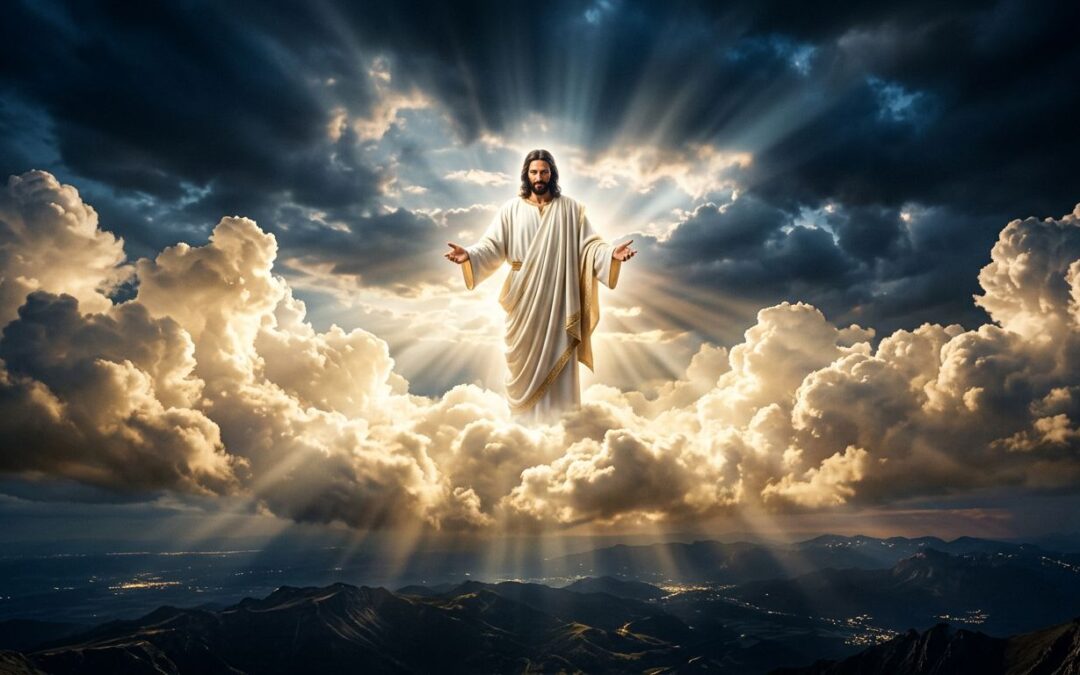
The return of Jesus Christ is not a symbol, a religious metaphor, or a distant possibility. It is a promise spoken by Jesus, repeated by the apostles, and secured by the Word of God. As the ultimate event in human history, the Second Coming remains a foundational pillar of the faith. Christ came once in humility to redeem sinners, and He will come again in glory to gather His people, judge the world, and reign as King.
We may differ over some details of end-times chronology, but we cannot afford confusion about the central truth. The return of Jesus Christ is certain. Because He is coming back, we must live by faith, walk in holiness, remain watchful, and keep proclaiming the gospel.
Key Takeaways
- Jesus promised that His Second Coming will be personal, visible, and glorious.
- No person knows the exact day or hour of His coming.
- His return will include resurrection, gathering, judgment, and the establishment of the full Kingdom of God.
- Faithful Christians who follow Jesus Christ differ over the order of some end-times events, but they agree that He will return.
- The right response is watchfulness, holiness, hope, faithful service, and obedience.
Jesus Promised That He Would Return
The promise of the Second Coming begins with Jesus Himself. On the night before the cross, He spoke comfort to His troubled disciples, framing His departure as a vital part of the New Covenant. He said, "I go to prepare a place for you. And if I go and prepare a place for you, I will come again, and receive you unto myself" (John 14:2-3, KJV).
Jesus did not tell His disciples that death would end everything. He did not leave them with a vague hope that good ideas would continue after He was gone. He promised to come again and receive His people to Himself. The hope of the church is not merely a place called heaven. Our hope is Christ Himself.
After Jesus rose from the dead, He ascended into heaven while His disciples watched. Two angels then said, "This same Jesus, which is taken up from you into heaven, shall so come in like manner as ye have seen him go into heaven" (Acts 1:11, KJV). Notice the force of those words: this same Jesus. The One who was crucified, buried, and raised bodily is the One who will return.
The apostles preached this promise without embarrassment. Paul called it "the blessed hope, and the glorious appearing of the great God and our Saviour Jesus Christ" (Titus 2:13, KJV). John recorded Jesus' words in the Book of Revelation: "Behold, I come quickly" (Revelation 3:11, KJV), and the book closes with the church crying, "Even so, come, Lord Jesus" (Revelation 22:20, KJV).

The return of Jesus Christ is therefore not an optional teaching added to Christian faith. It is part of the gospel hope. We worship a risen Lord who is coming again.
For further reflection on this promise, we can read these biblical insights on the second coming, which connect Christ's return with the church's call to spiritual readiness.
His Return Will Be Personal, Visible, and Glorious
The Bible gives us no reason to expect a hidden, private, or merely spiritual return of Jesus. His coming will be personal because Jesus Himself will come. It will be visible because the world will know what has happened. It will be glorious because the Son of God will no longer appear in the humility of Bethlehem or the suffering of Calvary.
Regarding the nature of this event, Matthew 24 provides a striking metaphor: "For as the lightning cometh out of the east, and shineth even unto the west; so shall also the coming of the Son of man be" (Matthew 24:27, KJV). Lightning is not seen by one secret group while everyone else remains unaware. Christ's appearing will carry public authority and unmistakable glory.
A few verses later, Jesus described the scale of His arrival: "Then shall appear the sign of the Son of man in heaven: and then shall all the tribes of the earth mourn, and they shall see the Son of man coming in the clouds of heaven with power and great glory" (Matthew 24:30, KJV). The language is direct. The Son of Man comes. He comes in the clouds of heaven. He comes with power and great glory, and the nations will see Him.
The Book of Revelation gives us another vivid picture. Jesus appears as the faithful and true King, riding in judgment, with the name "KING OF KINGS, AND LORD OF LORDS" (Revelation 19:11-16). His return will reveal exactly who He is, whether people have honored Him or rejected Him.
This matters because many false teachings try to reduce Jesus to a mere teacher, moral example, or spiritual influence. The returning Christ will not ask the world to vote on His authority. He will come as Lord.
The return will also be sudden. Paul wrote that the day of the Lord so cometh as a thief in the night (1 Thessalonians 5:2, KJV). A thief does not announce the hour of arrival. Christ's coming will be certain, but its exact timing will not be placed in our hands.
No One Knows the Day or Hour
Jesus plainly warned His disciples against date-setting. He said, "But of that day and hour knoweth no man, no, not the angels of heaven, but my Father only" (Matthew 24:36, KJV). He repeated the warning in Matthew 24:42: "Watch therefore: for ye know not what hour your Lord doth come."
This is not a minor instruction. It corrects every attempt to calculate the date of Christ's return through secret formulas, newspaper headlines, numerical codes, or prophetic speculation. If Jesus said no one knows the day or hour, we have no authority to claim knowledge He did not give.
We should also distinguish between recognizing the season and naming the date. In Matthew 24, Jesus described wars, famine, earthquakes, and the preaching of the gospel as signs of the coming that would characterize the end of the age. While some of these prophecies were fulfilled in the destruction of Jerusalem in AD 70, Jesus also spoke of events that transcend that specific historical context. When He mentioned that these things would come to pass before this generation passed away, He underscored the urgency for every generation to remain ready. These events call us to sobriety, but they do not give us permission to set a calendar date.
The apostles taught the same balance. Paul said the day would come unexpectedly, yet he also told believers not to live in darkness or spiritual sleep (1 Thessalonians 5:1-6). Watchfulness does not mean panic. It means that we live prepared because we know the Master may return at any time.
The warning against spiritual deception is also serious. Jesus said, "Take heed that no man deceive you" (Matthew 24:4, KJV). He cautioned that false prophets would arise, and some would perform signs and wonders to lead the unwary astray. The presence of spiritual excitement does not prove that a message is true. Every prophecy, vision, and teaching must be tested by Scripture.
We can read additional end-time prophecies and teaching about the Lord's coming, but the Bible must remain our final authority. We don't need a secret date. We need a faithful life.
The Return Includes Resurrection, Gathering, and Judgment
The return of Jesus Christ brings more than a dramatic appearance in the sky. Scripture connects His coming with the resurrection of the dead, providing a physical foundation for our hope, along with the gathering of believers, the judgment of humanity, and the public establishment of His reign.
Paul wrote to the church at Thessalonica, "For the Lord himself shall descend from heaven with a shout, with the voice of the archangel, and with the trump of God" (1 Thessalonians 4:16, KJV). He then said that the dead in Christ would rise first, followed by living believers who would be caught up together with them to meet the Lord.
This passage is the primary biblical foundation for what many Christians call the rapture. Believers disagree about where this event fits within the larger end-times timeline. We should discuss those differences carefully, but we should not lose the promise itself: the Lord will gather His people, and we will be with Him.
The resurrection gives Christian hope a tangible reality. Paul explained that the dead will be raised incorruptible and that mortality will put on immortality (1 Corinthians 15:52-54). God does not save only our thoughts or memories. He will redeem His people completely.
Christ's return also brings divine judgment. Jesus said that all who are in the graves will hear His voice and come forth, "they that have done good, unto the resurrection of life; and they that have done evil, unto the resurrection of damnation" (John 5:28-29, KJV). Matthew 25:31-46 describes the Son of Man sitting on His throne to separate the nations, highlighting the certainty of the Day of Judgment.
This final judgment will expose the truth about every life. Religious appearance will not hide rebellion, and human success will not purchase innocence. Only those who belong to Christ, forgiven by His grace and transformed by His Spirit, will be cleared in the final judgment.
Jesus will also reign. Revelation 11:15 declares, "The kingdoms of this world are become the kingdoms of our Lord, and of his Christ; and he shall reign for ever and ever" (KJV). We can consider this promise through a message about Christ returning as King of kings. The Kingdom of God will not collapse, change hands, or pass away.
Christians Differ on the Order of End-Times Events
Sincere Christians who honor the Bible do not agree on every detail of end-times chronology. Some hold a pre-tribulation view of the rapture, while others place the gathering of believers during or after the Great Tribulation. Some expect a literal thousand-year Millennium reign of Christ on earth, commonly called premillennialism. Others understand these passages in a different way, including amillennial and postmillennial interpretations.
These differences should lead us to humility, not hostility. We must hold firmly to what Scripture clearly teaches and be careful when presenting an interpretation as though every faithful Christian must accept it. While we observe the clear fulfillment of the New Covenant in Christ, we recognize that it supersedes the temporary shadows of the Old Covenant, yet we must remain cautious when arranging prophetic timelines.
The Bible clearly teaches that Jesus will return, the dead will be raised, believers will be gathered to Him, evil will be judged, and Christ will reign in righteousness. These foundational truths do not depend on our ability to arrange every prophetic passage into one universally accepted timeline.
Matthew 24:29-31 says that Christ comes after a period of tribulation and gathers His elect. First Thessalonians 4:16-17 describes believers meeting the Lord in the air. Second Thessalonians 2 speaks of rebellion and the Antichrist. Revelation presents judgment, resurrection, the reign of Christ, and the final defeat of Satan. Christians have reached different conclusions about how these passages relate in sequence.
We should study every passage in context, avoid careless predictions, and keep the main hope before us. We are not saved by having a perfect chart of future events. We are saved by the grace of God through faith in Jesus Christ. A prophetic view that produces pride, fear, or division has missed the spirit of the New Testament.
Our disagreements over chronology must never become an excuse for disobedience. Whatever our position, the command remains the same: watch, pray, endure, and remain faithful to Jesus.
Christ’s Return Calls Us to Holiness and Watchfulness
The Bible never gives prophecy merely to satisfy curiosity. Every promise about the future carries a command for the present. Because the Second Coming of Jesus Christ is a certainty, we must ask whether we are living as people who truly expect to meet Him.
Jesus used the parable of the ten virgins in Matthew 25:1-13 to teach readiness. Five were wise and carried oil for the bridegroom's arrival. Five were foolish and were unprepared when the cry came at midnight. The difference was not that some had heard about the bridegroom and others had not. All ten knew he was coming. Only five were ready when he arrived.
That warning reaches beyond church attendance and religious vocabulary. We can speak about Jesus' return while remaining careless about sin, prayer, forgiveness, truth, and obedience. Biblical watchfulness is not staring at the sky while neglecting our responsibilities. It is faithful obedience in ordinary life.
We must remain vigilant in our spiritual walk, particularly as we look toward the events described in Matthew 24. This passage warns believers to be watchful for the mark of the beast and other signs of the end times. We are called to discern the truth and remain grounded in Scripture so we are not led astray by the spirit of the age.
Peter asked, "What manner of persons ought ye to be in all holy conversation and godliness?" (2 Peter 3:11, KJV). He connected the coming day of the Lord with holy conduct, spiritual seriousness, and the expectation of new heavens and a new earth where righteousness dwells.
John gave the same practical response: "Every man that hath this hope in him purifieth himself, even as he is pure" (1 John 3:3, KJV). Hope in Christ's return does not make us careless. It makes us clean. It moves us to repent instead of defend sin, forgive instead of hold bitterness, and obey instead of delay.
We should remain watchful in several clear ways:
- We should keep our faith in Christ, not in political power, wealth, signs, or human leaders.
- We should turn away from known sin, because the returning King is holy.
- We should continue in prayer and the Word, since spiritual neglect makes the heart dull.
- We should serve faithfully, using what God has entrusted to us.
- We should stay awake to deception by false prophets, testing every message by Scripture.
Jesus said, "Blessed is that servant, whom his lord when he cometh shall find so doing" (Luke 12:43, KJV). The faithful servant is not the one who predicts the date. The faithful servant is the one who keeps doing the Master's will.
His Return Gives Us Hope and Strength for Today
The return of Jesus Christ is a warning to the rebellious world, but it is comfort for those who belong to Him. Jesus told His disciples, "Let not your heart be troubled" (John 14:1, KJV), and then He promised to come again. The Second Coming is not bad news for the redeemed; rather, it is the blessed assurance that faith will eventually become sight.
Paul used Christ's return to comfort grieving believers. After teaching about the resurrection and the gathering of the saints, he wrote, "Wherefore comfort one another with these words" (1 Thessalonians 4:18, KJV). The resurrection is not merely a theory for a classroom. It is comfort for families who have buried believers, strength for Christians facing persecution, and courage for everyone who feels the weight of this present age.
This hope also strengthens our witness. Jesus told His disciples to be His witnesses to the ends of the earth after receiving the power of the Holy Spirit (Acts 1:8). We do not know when He will return, so we must not delay the work He gave us. We pray for the lost, preach the gospel, care for the suffering, and point people to the cross, the resurrection, and the promise of Jesus Christ.
Second Peter 3:9 says that the Lord is not willing that any should perish, but that all should come to repentance. His patience is mercy, not weakness. Every day before His return is another day in which sinners may turn to God.
The church must therefore reject two errors. We must not ignore the return of Christ, and we must not use prophecy to stir fear without pointing people to salvation. The message is clear: repent, believe the gospel, and remain faithful to Jesus.
Frequently Asked Questions
Is the return of Jesus a literal, physical event?
Yes, the Bible describes the Second Coming as a personal and visible event where Jesus will return in the same way He ascended into heaven. It is not merely a spiritual metaphor, but a bodily return where He will be revealed to the entire world in power and glory.
Can we predict the exact time of Christ’s return?
No, Jesus explicitly stated that no one knows the day or the hour of His coming, as that knowledge belongs to the Father alone. Attempts to calculate a specific date through codes or prophetic formulas contradict Scripture and are discouraged by the command to remain watchful and ready at all times.
Why do Christians hold different views on end-times events?
While there is universal agreement among believers that Christ will return, there are different interpretations regarding the chronological order of events like the tribulation and the millennium. These differences arise from various ways of understanding prophetic passages, but they should not divide the church or distract from the central focus of living faithfully for Christ.
How should a believer respond to the promise of the Second Coming?
The expectation of Christ's return should motivate believers to live in holiness, watchfulness, and active service. Rather than being consumed by fear or curiosity about the future, Christians are called to purify their lives, share the gospel, and faithfully perform the work the Lord has entrusted to them.
Conclusion
The Bible affirms that Jesus Christ will return personally, visibly, and in glory. This Second Coming marks the culmination of history, where He will raise the dead, gather His people, judge evil, and establish His eternal reign. While the biblical accounts utilize profound apocalyptic imagery to describe these events, the ultimate promise remains firm. Even as believers hold varying perspectives on the timing of Armageddon and the restoration of all things, we look toward the New Jerusalem with confidence.
We do not know the day or the hour of His return. We do know the One who is coming. That truth calls us to faithfulness, holiness, watchfulness, and hope while we wait for our risen Lord.
The first disciples saw Jesus ascend into heaven, and the angels promised He would return in the same way. Our response remains the same as the final prayer of the early church: "Even so, come, Lord Jesus."