
First Samuel traces Israel's transition to kingship through Samuel's leadership, Israel's demand for a king, Saul's failure, and David's anointing. The central issue is obedience to God: a human king could govern Israel faithfully only while remaining under the authority of Israel's true King.
We must keep that truth before us. In 1 Samuel 8, Israel asked for a king like all the nations, seeking security despite God's past deliverance. To understand their request, we must begin with the failure of Samuel's sons and the condition of Israel's heart.
Kingship in 1 Samuel Began With Failed Judges
First Samuel begins before Israel has a national monarchy. Through Eli's household, the loss and return of the ark, and Samuel's prophetic ministry, the book establishes that God's holiness governs His people. Neither religious position nor inherited responsibility gives anyone permission to disregard Him.
Joel and Abijah Corrupted Justice
When Samuel grew old, he appointed his sons Joel and Abijah as judges at Beersheba. But 1 Samuel 8:1-3 records that they pursued dishonest gain, accepted bribes, and perverted justice.
Israel's elders had a legitimate grievance. Samuel's sons weren't walking in their father's ways, and the people needed righteous judgment.
We must acknowledge that failure plainly. Godly parents cannot obey God on behalf of their children, and spiritual responsibility cannot be passed down as though faithfulness comes with a family name.
The Elders Wanted Israel to Resemble the Nations
The elders came to Samuel at Ramah and requested "a king to judge us like all the nations" (1 Samuel 8:5).
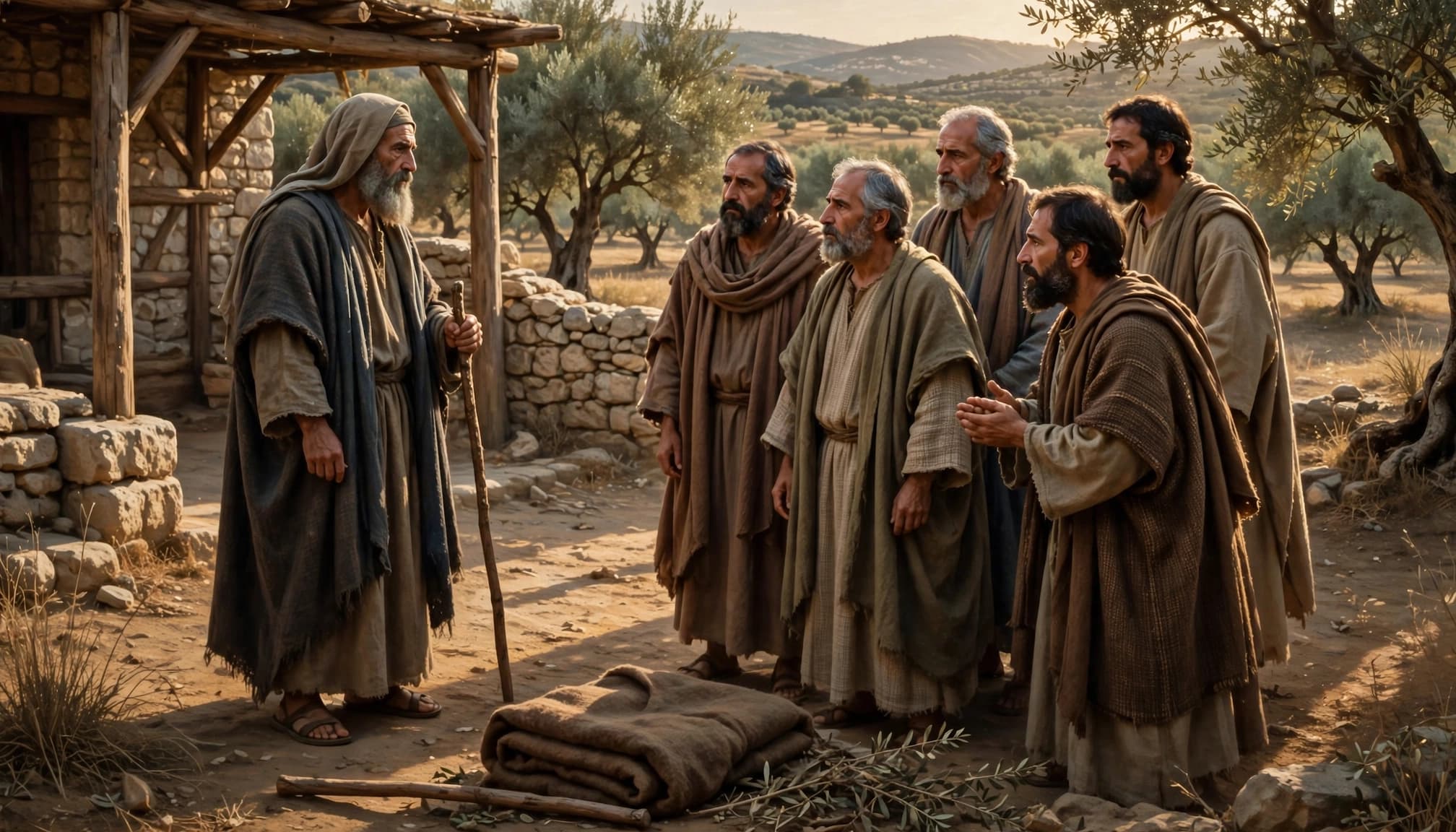
Their proposed remedy exposed another problem. They wanted the surrounding nations to determine what Israel's leadership should look like.
Samuel was displeased and prayed. God identified the deeper rejection in 1 Samuel 8:7: the people were refusing His reign over them. Their complaint involved Samuel's household, but their rebellion reached beyond Samuel.
Samuel Warned That the King Would Take
In 1 Samuel 8, Samuel described the burden their desired monarchy would impose. The king would take sons for military service and royal labor. He would take daughters for household service, along with fields, vineyards, servants, and animals.
He would also claim a tenth of their grain and flocks. The people seeking security would discover that royal power could consume the households they wanted protected.
The Hebrew mishpat, meaning judgment or established practice connects their desire for judgment with the king's manner of ruling. They wanted justice, but Samuel warned them about the practices of royal authority.
The Hebrew verb lakach, meaning to take occurs four times in the warning. The repetition presses the consequence upon the hearer: royal demands would reach into family, property, labor, and livelihood.
The word eved, meaning servant or slave describes their resulting condition. English translations express this as becoming the king's servants or slaves.
Samuel's warning reaches beyond taxation: the people demanding a king would themselves become subject to his claims.
We must distinguish this warning about royal exploitation from God's instructions for righteous kingship. Samuel wasn't declaring that every abuse he listed was morally acceptable.
God Had Already Defended His People
Israel wanted a king who would lead them and fight their battles. Yet Yahweh had already fought for them without a royal army under a human king.
At Mizpah, Yahweh thundered against the Philistines and threw them into confusion (1 Samuel 7:10). The account describes the Philistines' defeat and God's hand against them throughout Samuel's days (1 Samuel 7:13).
The victory at Mizpah continued an established Biblical truth. Joshua 10:42 attributes Israel's victories to the Lord fighting for His people.
Samuel testified that fear of Nahash the Ammonite led the people to demand a king (1 Samuel 12:12). The threat was real, but their fear led them to distrust Yahweh, the King they already had.
We must receive the spiritual correction. Visible leadership has its place, but leadership cannot replace dependence upon God. You can desire competent government while still refusing to trust the Lord, and Israel's request exposed that refusal.
God Permitted Kingship Under His Authority
Kingship Was Already Included in God’s Promises
God had promised that kings would come through Abraham (Genesis 17:6), through Sarah (Genesis 17:16), and through Jacob (Genesis 35:11).
These promises establish that kingship itself wasn't inherently sinful. Israel's guilt came from demanding a king while rejecting God's present rule and wanting to be "like all the nations."
God permitted their request without approving their unbelief. Permission doesn't make a sinful motive righteous. He remained sovereign over the institution they demanded and continued calling both king and people to obey Him.
Deuteronomy Placed the King Under God’s Law
Deuteronomy 17:14-20 required an Israelite king whom the Lord chose.
The king couldn't multiply horses, wives, or excessive silver and gold. He had to write his own copy of God's law and read it throughout his life. His heart wasn't to rise above his fellow Israelites.
Deuteronomy 17 required a limited monarchy, with royal authority subject to God's law. This limited monarchy kept the king a brother among God's people, accountable to the same Lord.
We must understand the order. The throne didn't authorize the king to rewrite God's commands. His responsibility was to govern while hearing and obeying them.
Saul Became Israel’s First National King
Anointing and Public Selection Established Saul’s Position
Samuel anointed Saul in 1 Samuel 10:1. His public identification followed through casting lots.
First Samuel 10:17-27 traces the selection through casting lots, narrowing the choice to Benjamin, the Matrites clan, and Saul son of Kish. Yet Saul was hiding among the baggage, and God disclosed where he could be found.

When Saul stood before them, he was taller than the people from his shoulders upward. His appearance impressed the assembly, but appearance couldn't establish obedience.
Samuel recorded the rights and duties of kingship in a book and placed it before the Lord. This limited monarchy kept royal authority accountable to God's law.
Victory Confirmed Saul’s Leadership
In 1 Samuel 11, the Spirit of God came upon Saul, and he led Israel to defeat Nahash and rescue Jabesh Gilead. His beginning included genuine divine empowerment.
Who, then, was technically Israel's first king? Saul was the first king of the national monarchy established through Samuel. Abimelech had earlier been made king at Shechem (Judges 9:6), but his violent, local rule wasn't the national kingship inaugurated under Saul.
That distinction allows us to acknowledge the earlier title without confusing the two accounts.
Saul Lost His Kingship Through Disobedience
Saul Refused God’s Command Under Pressure
First Samuel 13:8-14 records Saul offering the burnt offering rather than continuing to wait as instructed.
His soldiers were scattering, and the Philistine threat was growing. Saul treated those pressures as grounds for taking matters into his own hands. Samuel declared that Saul's kingdom wouldn't continue.
The judgment concerned the continuation of his royal house. Saul remained on the throne for a time, but his descendants wouldn't inherit an enduring dynasty.
We must hear the warning: pressure doesn't release a servant of God from obedience.
Saul Rejected God’s Word Concerning Amalek
In 1 Samuel 15:1-28, Saul spared Agag and the best livestock despite God's command. He then defended the animals as intended sacrifices.
Samuel declared that obedience mattered more than sacrifice. Because Saul had rejected God's word, God rejected him as king.
Saul's failure was repeated resistance to God's authority. Earlier victory and spiritual empowerment didn't excuse later rebellion.
The Holy Spirit's empowerment never gives us permission to disregard the Lord's commands. We must continue yielding to Him rather than using yesterday's calling to defend today's disobedience.
David’s Anointing Changed the Direction of Kingship
Samuel later anointed David while Saul still occupied the throne. The Lord directed Samuel beyond outward appearance and toward the heart. The Spirit of the Lord came upon David, and the book began tracing the life of the king God had chosen.
David's victory over Goliath continued the earlier testimony that deliverance belonged to the Lord. Saul possessed the throne, but the future king trusted God's power against the enemy.
Yet he didn't immediately receive the kingdom. He endured Saul's hostility and refused opportunities to kill him. God's promise didn't authorize him to secure the throne through murder.
First Samuel ends with Saul's death, before the future king takes the throne. That ending matters. The book exposes the failure of Israel's first national king while preparing for the reign of another.
We must allow that waiting to correct ambition. Divine calling doesn't give anyone freedom to ignore God's commands while pursuing its fulfillment.
Later Kings Confirmed Samuel’s Warning
The monarchy's later history demonstrated the danger Samuel described. Solomon accumulated horses, extraordinary wealth, and many wives. His wives drew his heart toward other gods.
Those actions violated the restrictions God had placed upon kingship. Royal success didn't protect Solomon from spiritual unfaithfulness.
Under Rehoboam, the people's burden became a point of confrontation. His harsh response helped bring about the separation described in our teaching on Israel's divided kingdom.
We must distinguish God's faithfulness from a ruler's conduct. God could preserve His purposes while judging the king who disobeyed Him.
Neither David's dynasty nor Solomon's achievements placed the royal household beyond correction. Samuel's warning remained relevant because a throne could magnify a ruler's disobedience and spread its consequences throughout the nation.
God’s Royal Promise Leads to Jesus Christ
In 2 Samuel 7:8-16, God promised David an enduring house and throne. That promise carried Israel's royal hope beyond Saul's failure.
Our teaching on the Davidic covenant follows this promise while preserving the king's accountability. God would discipline wrongdoing within David's royal line. Covenant privilege never made sin acceptable.
The New Testament identifies the fulfillment plainly. Luke 1:32-33 declares that Jesus receives David's throne and reigns over an everlasting kingdom.
Jesus is the greater David, the true King whose obedience never fails. We follow that connection because later Scripture identifies Him, without pretending every detail was already explained to David.
The promise concerns God's appointed royal house and its fulfillment in Christ. It isn't a guarantee that you will gain wealth, influence, or a lasting position. Our confidence belongs in the King God provided, and our response must be faithful submission to Him.
Kingship Never Replaced Obedience
First Samuel teaches that Israel's transition to kingship left the deepest requirement unchanged: God's people and their leaders must hear His word and obey Him. Saul's failure and David's calling both remain under that authority.
We trust Jesus Christ as the promised King, and we submit to His rule. The account calls us to surrender the heart that wants God's protection while resisting His commands.