
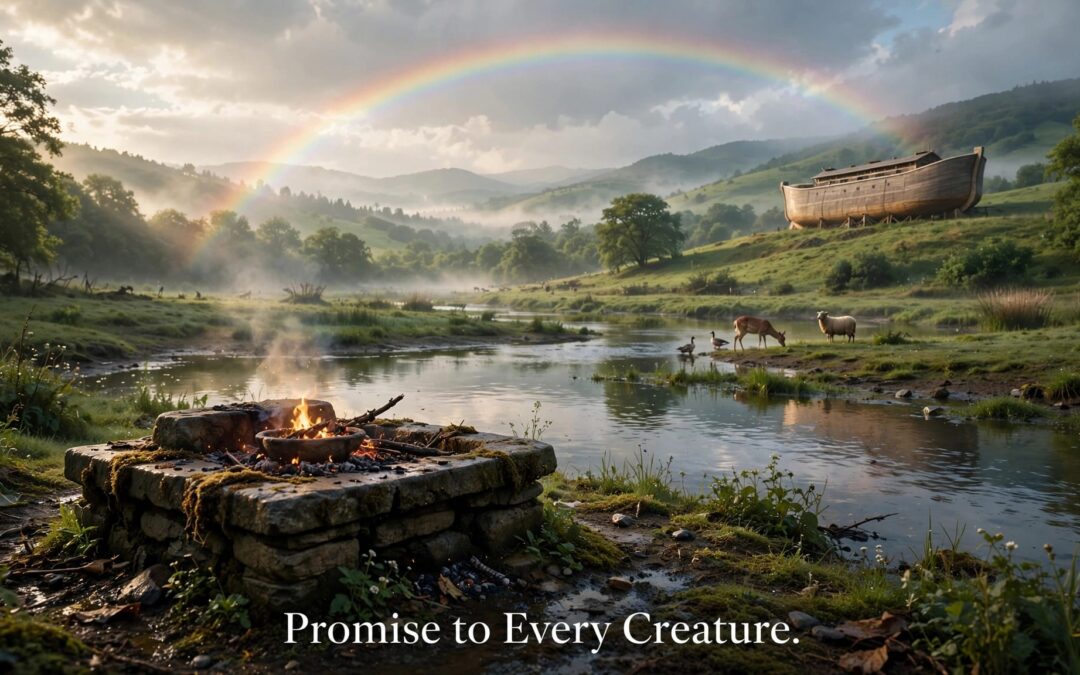
The Noahic covenant is God's promise that He will never again destroy all flesh and the earth through a flood. He made that promise to Noah, Noah's descendants, and every living creature, extending it beyond one family to the world God preserved.
We must understand both the mercy and the limits of that promise. God preserved life without declaring sin harmless or removing humanity's need for salvation.
We begin with Noah's worship after the waters receded.
Key Takeaways
- God established His covenant with Noah, his descendants, and the animals, without making its fulfillment depend on their obedience.
- The rainbow is God's appointed sign that He remembers His everlasting covenant.
- Preservation doesn't mean freedom from judgment, and receiving the benefits of this covenant doesn't mean a person has received salvation through Jesus Christ.
After the Flood, Noah Worshiped God
The Altar Came Before the Rainbow
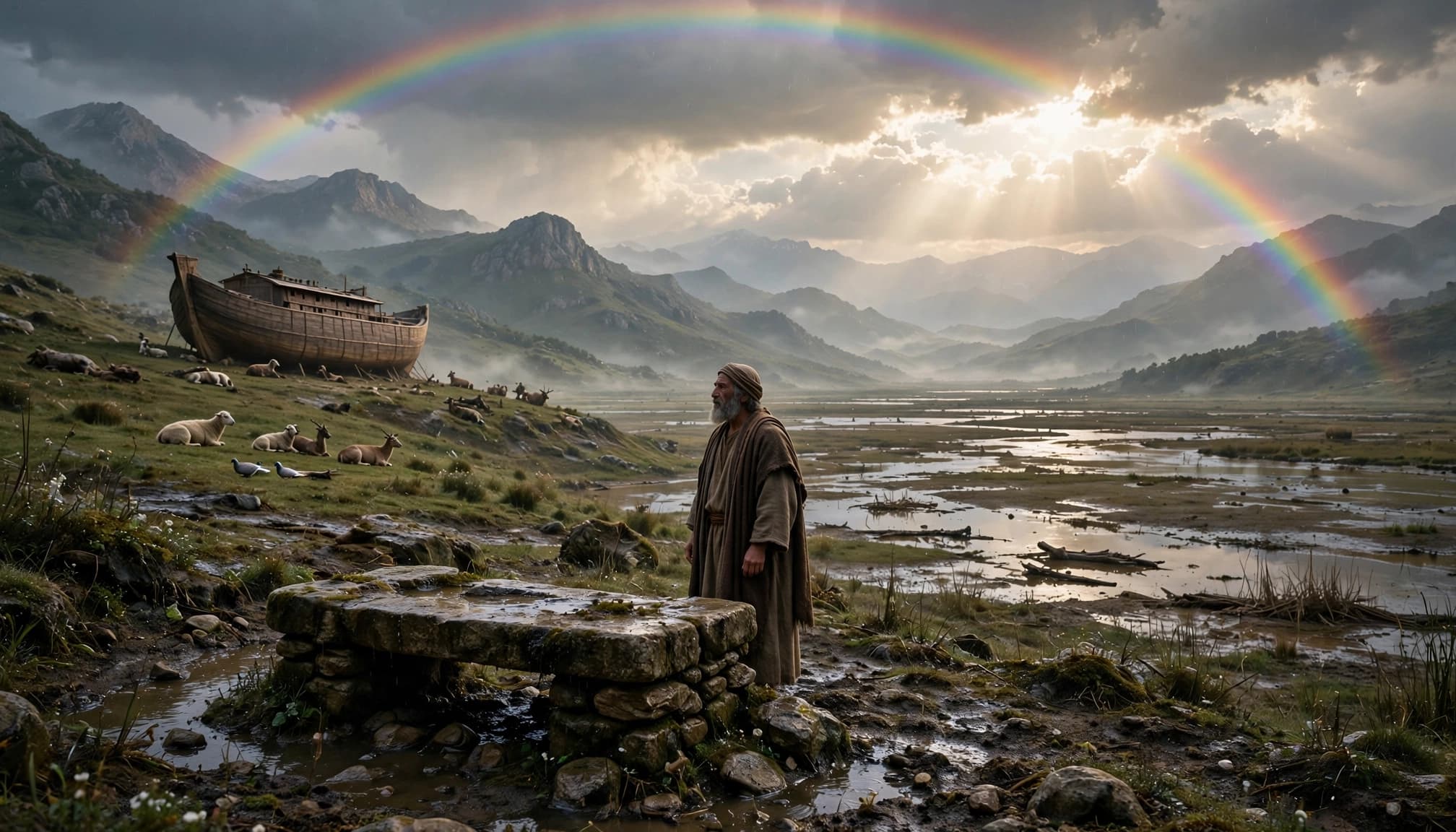
Genesis 8:20-22 records Noah building an altar and offering burnt offerings from clean animals and birds. His deliverance led him to worship the Lord who had brought him through judgment.
The Lord received the pleasing aroma and declared that He wouldn't again curse the ground because of humanity or strike every living thing as He had done. God also promised the continuation of seedtime, harvest, seasons, day, and night while the earth remains.
Mercy Did Not Mean Humanity Had Changed
God made this declaration while acknowledging that the human heart remained inclined toward evil. The flood had judged wickedness, but humanity still needed deliverance from sin.
Noah's offerings also belong within God's earlier provision. Genesis 7 describes clean animals entering in sevens, male and female, commonly understood as seven pairs. The familiar picture of only two of every animal leaves out this distinction.
We see God's patience with sinners without confusing His patience with approval of sin.
The Noahic Covenant Includes Every Living Creature
God Names the Recipients
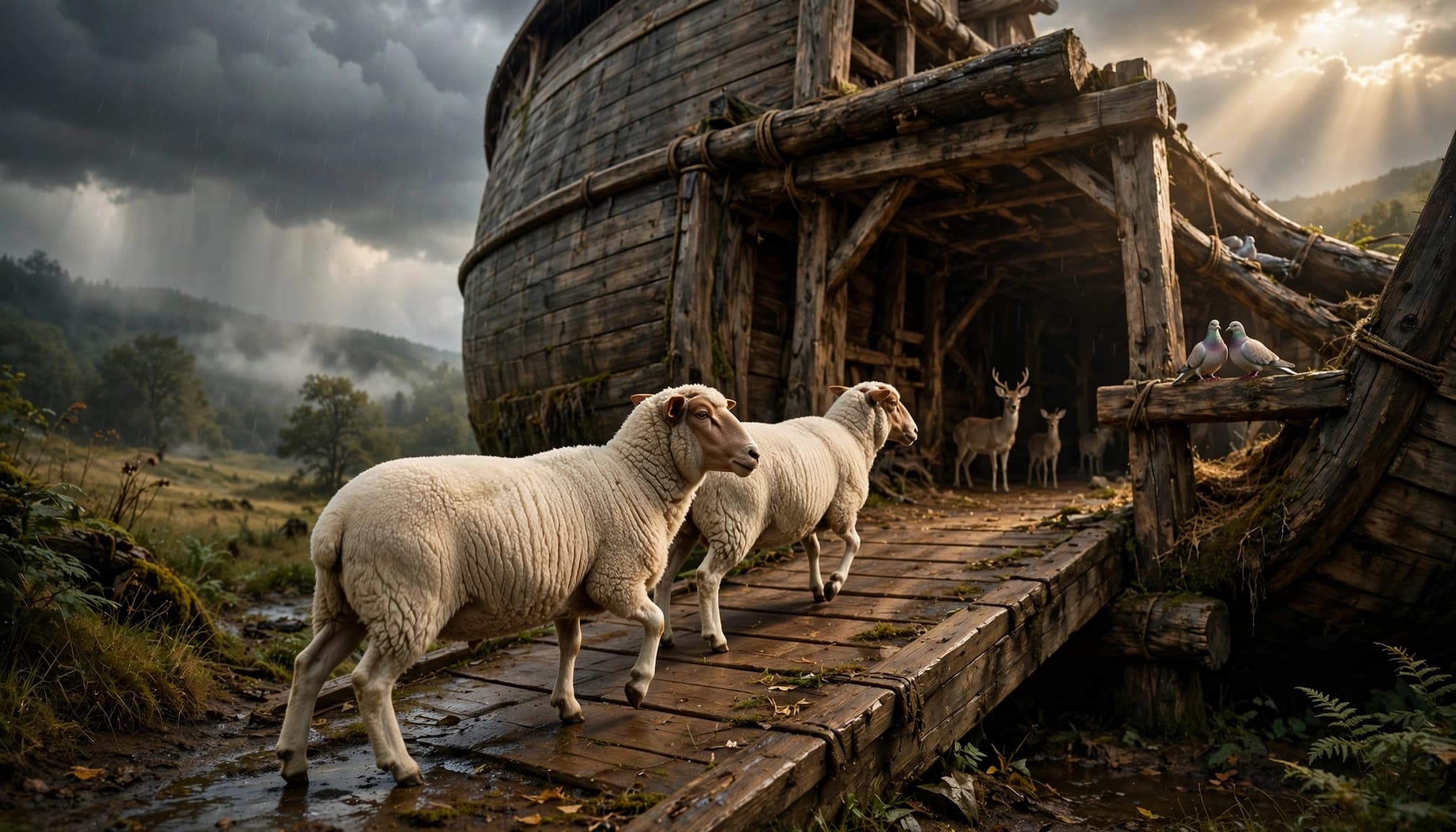
In Genesis 9:8-17, God speaks to Noah and his sons, then includes their descendants and every living creature that came out of the ark. Birds, livestock, and the beasts of the earth are expressly included.
The word covenant appears seven times in these ten verses. The expression every living creature appears five times. This repetition settles the question of whether animals belong within the promise. God Himself includes them.
The animals don't confess faith, perform a ceremony, or promise obedience. They receive the protection God declares.
God States the Promise
Verse 11 gives the covenant's central commitment: floodwaters will never again cut off all flesh, and a flood will never again destroy the earth.
This promise concerns the preservation of earthly life. Animal inclusion doesn't mean animals need redemption in the same way sinful people do. It means God's care reaches the living world He created.
God establishes this covenant. Noah and his family aren't given a condition they must fulfill to keep this particular promise in force. Its fulfillment rests upon God's faithfulness, not the continuing righteousness of Noah's household.
We must receive that distinction without adding conditions God didn't attach.
God’s Commands Still Govern Human Life
Fruitfulness and Respect for Life
Genesis 9:1-7 gives instructions before the covenant declaration. God commands Noah's family to be fruitful, multiply, and fill the earth.
He permits animals to be eaten but forbids eating flesh with its blood, its life. This restriction honors life as belonging to God and treats blood as sacred. Permission to use animals for food doesn't make life meaningless. God gives the provision and sets its boundaries.
We must distinguish these commands from the flood promise. The people remain accountable to God, even though their obedience isn't the condition that keeps the earth from another destroying flood.
Human Life Bears God’s Image
Genesis 9:6 connects accountability for murder with humanity's status as made in the image of God. It requires an accounting for human blood and authorizes capital punishment for shedding human blood.
Human life has a distinction that animal life doesn't share. We must care for living creatures without erasing the particular dignity God gives people.
This also means the covenant can't be used to excuse violence. God preserves the world while continuing to hold people accountable for what they do within it. Mercy never cancels His authority.
The Rainbow Declares That God Remembers
God appoints the rainbow as the sign of His covenant. He places His bow in the clouds and says that He will look upon it and remember the everlasting covenant between Himself and every living creature.
God's remembering doesn't mean He becomes distracted and needs help recalling His words. It means He remains faithful to the commitment He has made. The sign directs our attention to His declared promise.
We don't need to invent hidden meanings for every color. Scripture gives the meaning of the rainbow, and that meaning is enough: God has bound Himself to preserve the earth from another flood of this kind.
Notice who provides the sign. Noah doesn't build it, earn it, or maintain it. God creates the sign of His own promise.
When you see a rainbow, remember what God said rather than placing your own promise into the sky. It doesn't guarantee that your home will never flood, that storms will never kill, or that suffering has ended. Its assurance is definite, and we honor God by receiving it as He gave it.
The Flood Promise Doesn’t Cancel Future Judgment
A local flood doesn't break this covenant. The promise concerns the destruction of all flesh and the earth, not the absence of every future flood.
Henry Morris, in The Lasting Noahic Covenant, argues that God has kept this promise for more than 4,000 years. He also argues that interpreting the original flood as merely local creates a problem because destructive local floods have continued. That is his argument for the global reading of the account.
The wider Biblical witness affirms God's authority over the waters. Job 38:8-11 describes Him setting limits for the sea. Psalm 104:6-9 likewise speaks of waters restrained by His appointed boundary.
But we must finish the thought. 2 Peter 3:5-7 recalls the world's destruction by water and declares that the present heavens and earth are reserved for fire at the day of judgment.
God's restraint is never permission to continue in rebellion. The promise rules out another judgment by a destroying flood; it doesn't rule out judgment itself.
Preservation Prepares the Way for Redemption
Covenant Labels Must Remain Under Scripture
Christians don't classify every covenant passage alike. Some covenant theologians place Noah within the unfolding Covenant of Grace; others distinguish its common-grace or creation-preserving purpose. The term covenant of grace is a later theological classification, not a label used in Genesis 8-9.
The covenant-theology discussion concerning Noah raises the animal question directly. Michael Horton's broader discussion names fallen Adam, Seth, Abraham, and David as human covenant partners. Yet Noah's covenant expressly includes creatures that don't exercise saving faith.
We therefore must distinguish universal benefits from personal salvation. Even when theologians classify Noah's covenant as part of the covenant of grace, preservation doesn't itself save. Everyone benefits from God's preservation, but everyone must still respond to the gospel.
The Preserved World Still Needs Jesus
Cornerstone describes Noah's promise as a covenant of preservation, protecting the world within which God's promise concerning the woman's Seed would unfold. That connection places preservation within God's larger purpose without making every detail a hidden symbol.
God establishes His covenant with Noah, while the account of Abraham later describes God cutting a covenant. These differences deserve attention, but terminology alone doesn't settle every theological classification.
We must also distinguish Noah's promise from the New Covenant in Jesus. Noah's covenant preserves earthly life. The New Covenant brings forgiveness and inward renewal through Jesus' blood. Christ's shed blood secures this saving work.
The preserved earth still contains sinful hearts. We need Christ's saving work and the Holy Spirit's work within us, producing willing obedience to God.
Noah’s Failure Didn’t Change God’s Promise
Later in the chapter, Noah plants a vineyard, drinks wine, becomes drunk, and lies uncovered inside his tent. Scripture records his failure plainly. His earlier obedience didn't make him incapable of later sin.
Ham sees his father's nakedness and tells his brothers. Shem and Japheth cover Noah while refusing to look upon him. When Noah awakens, he pronounces a curse upon Canaan, Ham's son, and speaks blessings concerning Shem and Japheth.
We must stay with what the passage says. It records drunkenness and dishonor, but it doesn't explain every detail readers have proposed. It gives no basis for claims about skin color or racial superiority.
Noah's failure didn't cause God to withdraw the rainbow promise. That promise rested upon God's commitment. Still, Noah's conduct remains a warning: past obedience doesn't excuse present disobedience.
The proper response to failure is repentance. We depend upon the Holy Spirit, confess wrongdoing without defending it, and return to obedience. God's faithfulness should humble us, never make us careless.
Frequently Asked Questions
What is the Noahic covenant?
The Noahic covenant is God's promise that a flood will never again destroy all flesh and the earth. God made it with Noah, his descendants, and every living creature.
What does the rainbow mean in the Noahic covenant?
The rainbow is the sign God appointed for His covenant. It reminds us of His promise to preserve the earth from another destroying flood.
Does the Noahic covenant mean there will be no more floods or judgment?
No. The promise rules out another flood that destroys all flesh and the earth, not every local flood or future judgment. Scripture says the present heavens and earth are reserved for judgment by fire.
Does the Noahic covenant save people from sin?
No. It preserves earthly life, but it doesn't bring forgiveness or salvation. People still need the saving work of Jesus Christ.
Trust God’s Promise Without Misusing His Mercy
The Noahic covenant teaches us to trust the God who names His promise, names its recipients, and appoints its sign. Every living creature benefits from His restraint, and the rainbow directs our attention to His faithfulness.
We receive that assurance without confusing preservation with forgiveness or patience with permission to sin. Our confidence in God's faithfulness belongs alongside repentance and obedience through Jesus Christ.
God has kept His word concerning the flood. We can trust what He has said without adding to it or taking away the response His mercy calls for.