
Second Kings recounts the judgment of both kingdoms after God's people repeatedly rejected His covenant, commands, and warnings. Assyria conquered the Northern Kingdom around 722 BCE. Later, Babylon under Nebuchadnezzar II conquered Judah, destroyed Jerusalem, and began the Babylonian exile.
We must receive Scripture's spiritual judgment alongside its history: God's patience never makes disobedience acceptable. Yet judgment didn't cancel His faithfulness or destroy His promise. Begin by distinguishing the two kingdoms and their separate conquests.
Israel’s exile involved two kingdoms
After the division recorded in 1 Kings, Israel was the Northern Kingdom, with Samaria as its capital. Judah was the Southern Kingdom, with Jerusalem as its capital.
Our teaching on Israel's divided kingdom follows the earlier rebellion that brought that separation.
These dates establish the sequence of conquest, deportation, return, and rebuilding of the Second Temple.
| Date | Kingdom or people | Conqueror and outcome |
|---|---|---|
| Around 722 BCE | Northern Israel | Assyria conquered Samaria and deported inhabitants. |
| 597 BCE | Judah | Nebuchadnezzar II captured Jerusalem and deported Jehoiachin (Jeconiah). |
| 587/586 BCE | Judah | Babylon destroyed Jerusalem and Solomon's Temple. |
| 582 BCE | Remaining Judeans | Another Babylonian deportation followed. |
| 539/538 BCE | Babylonian exiles | Cyrus conquered Babylon, then permitted return. |
| 516 BCE | Returned Judeans | The Second Temple was completed. |
How many exiles were there? In this account, two major national exiles involved multiple deportations.
Chabad's presentation of Jewish tradition also describes four exiles: Babylon, Media/Persia, Greece, and Rome/Edom. Egypt belongs to an earlier bondage, outside that fourfold count. This traditional framework draws on Daniel's four beasts and rabbinic interpretation, and differs from the historical deportations in 2 Kings. In the four exiles framework, Rome's association with Edom is interpretive, not a description of Babylon's conquest of Judah.
The Assyrian exile carried the Northern Kingdom away
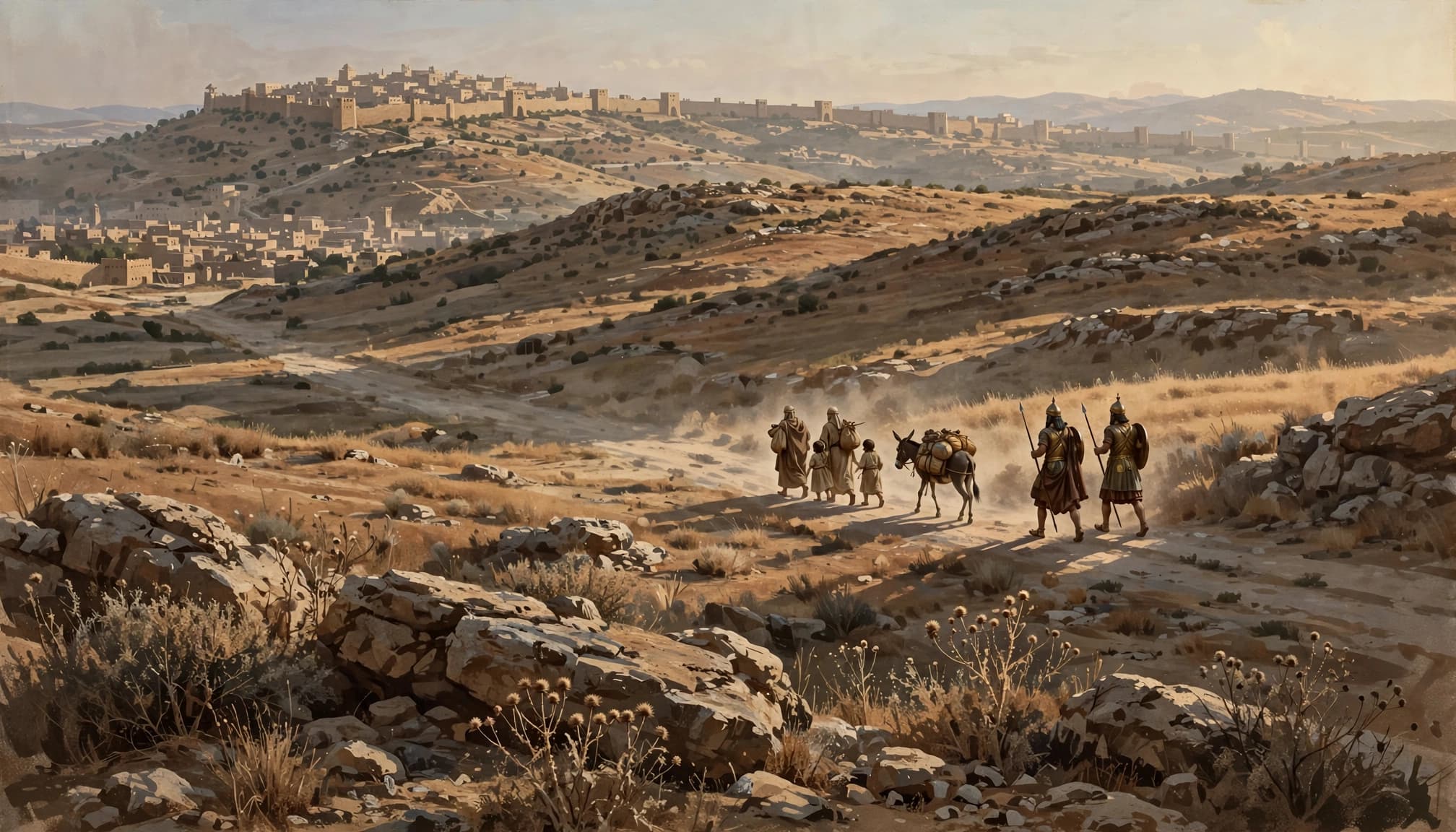
Hoshea’s rebellion ended in conquest
Hoshea was Israel's last king. While serving under Assyrian rule, he withheld tribute and sought Egyptian support. Shalmaneser V besieged Samaria, and the city fell around 722 BCE. Sargon II later claimed the conquest in his royal records.
Second Kings gives the political circumstances, but it also gives God's explanation. Israel had persistently served other gods and refused correction. The history of Assyrian deportation concerns the removal of part of the population, not the disappearance of every Israelite.
The northern tribes didn’t all vanish
Deportees were settled in Halah, along the Habor River in Gozan, and in Median cities. Assyria also brought foreign populations into Samaria.
The expression "Lost Tribes" describes the loss of a distinct northern kingdom and the difficulty of tracing many deported groups afterward. It doesn't mean every northern Israelite vanished without descendants. Some remained, some became absorbed into other populations, and others maintained connections with Judah.
We must distinguish what Scripture records from later speculation. Second Kings gives no permission to identify modern nations as particular tribes without evidence.
Babylon destroyed Jerusalem in stages
Jehoiachin surrendered in 597 BCE
Nebuchadnezzar II, ruler of the Neo-Babylonian Empire, captured Jerusalem in 597 BCE. He deported King Jehoiachin, also called Jeconiah, with his household, officials, soldiers, and skilled workers, beginning Judah's Babylonian captivity.
The often-repeated figure of 7,000 refers to fighting men. Second Kings also names 1,000 craftsmen and smiths and gives a broader total of 10,000 captives. These figures shouldn't be collapsed into one count.
The British Museum's Babylonian Chronicle tablet records this campaign. Its account places Jerusalem's capture in Nebuchadnezzar's seventh year, on the second day of Adar, followed by the appointment of a king of his choosing. That king was Zedekiah.
Zedekiah’s rebellion preceded the destruction
Zedekiah later rebelled against Babylon. Nebuchadnezzar II returned with his forces, who besieged Jerusalem and broke through its defenses.
In 587/586 BCE, Babylon burned the temple, palace, and houses and broke down Jerusalem's walls. Zedekiah watched his sons being executed, was blinded, and was taken to Babylon.
Another deportation followed in 582 BCE, recorded in Jeremiah rather than the closing account of 2 Kings.
The destruction reached beyond the royal household. Historical estimates place Judah's population before the campaigns near 110,000 and afterward between 15,000 and 40,000. Archaeologist Avraham Faust has argued for an even sharper collapse, possibly leaving about 10 percent of the earlier population.
Exile meant grief and continuing community
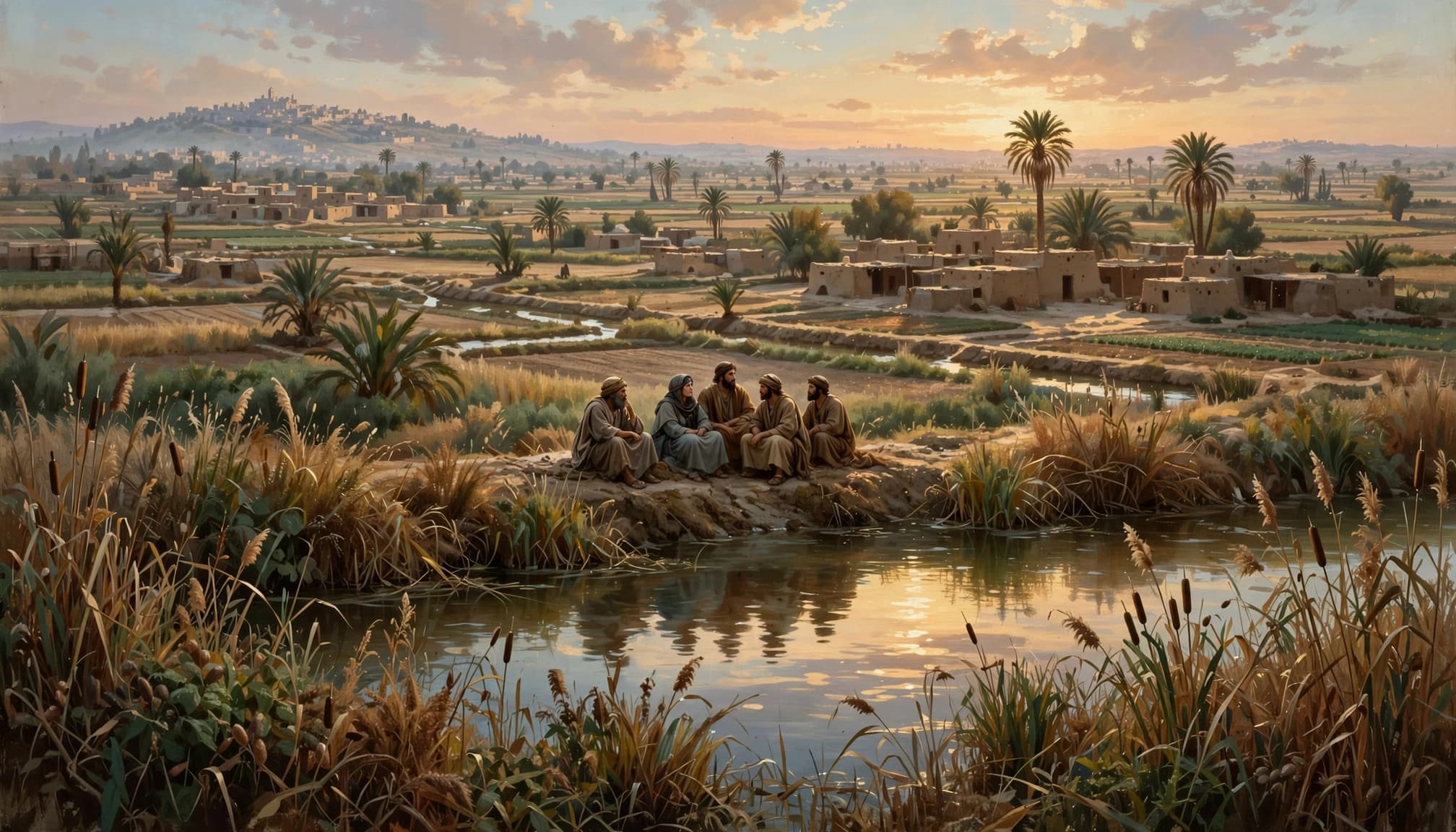
The Babylonian exile brought displacement, bereavement, lost property, and separation from the temple. The psalm remembering Zion beside Babylon's rivers gives voice to that grief. We must recognize their suffering before applying exile to our own circumstances.
During the Babylonian captivity, deportees continued living as families and communities. Ezekiel ministered among exiles at Tel-Abib beside the Chebar canal, within Babylonia's agricultural canal region near Nippur.
Jeremiah 29 instructed the captives to build houses, plant gardens, raise families, and seek the welfare of the city. God's promise required faithful living through a long wait. It didn't promise immediate escape or personal prosperity.
Jehoiachin's captivity has evidence outside Scripture. The Babylonian ration tablets identify Jehoiachin, known as Jeconiah, king of Judah, and record provisions for his five sons.
Over the exilic and Persian periods, Torah instruction, Sabbath, circumcision, household devotion, and communal prayer gained importance. Aramaic language and script also became influential. These developments didn't all begin at one moment.
Many Jews remained in the east after return became possible, forming part of the wider Jewish Diaspora. Iraqi, Persian, Bukharian, Georgian, and Mountain Jewish histories belong to this Diaspora, though their origins and migrations weren't identical.
God named the sin before judgment fell
Idolatry was a refusal of God’s authority
Second Kings presents the Northern Kingdom's fall to Assyria and Judah's later fall to Babylon as distinct judgments, each following persistent covenant rebellion. The people rejected God's statutes, followed worthless idols, worshiped heavenly bodies, and practiced what He had forbidden. Their conduct included divination and the sacrifice of children.
God repeatedly warned them through His prophets. They continued to resist after instruction and correction.
We must hear that order. Judgment followed persistent resistance to God's word. The people had received His deliverance, but they wouldn't remain faithful to the God who delivered them.
Our teaching on remembering God's commands follows this responsibility: remembered blessing must produce continuing allegiance.
Religious activity didn’t establish obedience
Judah possessed Jerusalem, the temple, and David's royal line. None of those privileges gave the people permission to disregard God.
Hezekiah's deliverance from Assyria demonstrated God's power. Josiah's reforms demonstrated a serious response to God's word. Yet earlier deliverance and later reforms didn't erase the accumulated guilt described in the book, including Manasseh's idolatry and bloodshed.
We must let this examine our devotion. Public worship, ministry, and spiritual gifts don't make willing disobedience acceptable. As Spirit-filled believers, we remain responsible to hear and obey the Holy Spirit.
This judgment concerns the sins Scripture identifies. It doesn't authorize us to accuse every suffering person of hidden rebellion.
Seventy years belonged to God’s appointed time
Jeremiah promised restoration when seventy years were completed for Babylon. The closing account in Chronicles, Ezra's opening, and Daniel's prayer all connect restoration with that prophetic word.
The dates behind the seventy years require attention. Jerusalem's destruction in 587/586 BCE and the return from exile in 538 BCE are fewer than seventy years apart.
Two timelines help explain the language: Babylonian dominance can be reckoned approximately from 609 to 539 BCE. The period between the temple's destruction around 586 BCE and its completion in 516 BCE was roughly seven decades. The prophecy concerns Babylon's appointed period and God's restoration, not an identical absence for every captive.
Daniel answered Jeremiah's promise with confession and intercession. Daniel's four-beast vision is linked in one traditional reading to the "four exiles" framework, which includes Edom. Edom wasn't a power in Second Kings. Gabriel's answer to Daniel introduced seventy sevens, commonly understood as seventy groups of seven years, and addressed sin, atonement, righteousness, and Jerusalem's future.
We shouldn't reduce that answer to the first return under Persia. The prophetic horizon reaches beyond the ending of Babylonian rule.
Jeremiah's promise required the exiles to remain faithful during the wait. Removing the waiting changes the promise they actually received.
Return restored worship and preserved hope
Cyrus the Great defeated Babylonian forces at Opis and conquered Babylon in 539 BCE. According to Ezra, he permitted Judean exiles to return and rebuild the Lord's house in 538 BCE.
The history of the Babylonian exile distinguishes deportation under Babylon from return under Persian rule. The return from exile didn't restore an independent Davidic kingdom, and many Jewish communities remained in the Diaspora. Judah became the Persian province commonly called Yehud Medinata.
Work on the Second Temple began around 537/536 BCE. After opposition and delay, work resumed in 520 BCE under Zerubbabel and Joshua, and the Second Temple was completed in 516 BCE.
Second Kings itself ends earlier, with Jehoiachin released from prison and receiving provision at Babylon's royal table. Jerusalem remains ruined, yet David's line hasn't disappeared.
We recognize hope there without pretending the judgment never happened. The later Biblical witness carries David's promised kingship forward to Jesus Christ. His saving work addresses the sin that military rescue, political independence, and rebuilt walls cannot remove.
God preserves His promise while holding His people accountable.
Key Takeaways
- Israel's exile involved Assyria's conquest of the Northern Kingdom and Babylon's repeated deportations from Judah.
- Second Kings names idolatry, rejected warnings, and covenant disobedience as the reasons for judgment.
- God's promise continued through captivity, but restoration required waiting, repentance, and renewed obedience.
The historical sequence matters because God's warnings and promises were spoken to real people facing real consequences. We understand the spiritual instruction more faithfully when we keep those circumstances before us.
Frequently Asked Questions
What was the difference between the Assyrian and Babylonian exiles?
Assyria conquered the Northern Kingdom and Samaria around 722 BCE. Babylon later conquered Judah and deported its people in several campaigns.
When did the Babylonian exile begin?
Babylonian deportations began when Nebuchadnezzar II captured Jerusalem and deported Jehoiachin in 597 BCE. Babylon destroyed Jerusalem and Solomon's Temple in 587/586 BCE, and another deportation followed in 582 BCE.
Why did Judah go into exile?
Second Kings connects Judah's judgment with persistent covenant rebellion, idolatry, and resistance to God's warnings. The account doesn't authorize us to treat every person's suffering as proof of hidden rebellion.
How long did the Babylonian exile last?
The dates depend on which events are counted: Judeans returned in 538 BCE, while the Second Temple was completed in 516 BCE. The period from Jerusalem's destruction around 586 BCE to the Temple's completion was roughly seven decades, but no single timeline describes every captive's absence.
When did the Judeans return and rebuild the Temple?
According to Ezra, Cyrus permitted the Judean exiles to return in 538 BCE, and work on the Second Temple began around 537/536 BCE. After a delay, construction resumed in 520 BCE, and the Temple was completed in 516 BCE.
God’s Faithfulness Calls for Obedience
This history teaches that God's people cannot separate His promises from His authority. He warned, He judged, and He preserved hope according to His word.
We must receive both the warning and the mercy. Faithful devotion requires obedience, and no past blessing gives us permission to resist what God is saying.
When Scripture exposes a rival loyalty, surrender it. God's faithfulness calls for a faithful response.