Your words, thoughts, and actions are seeds, and those seeds will produce a harvest. But if you've sown bad seed, repentance is still available, and the Father's welcome is still real.
In this third teaching on reaping what you sow, we see both the seriousness of our choices and the mercy of God toward those who return to Him. That principle begins with what is being planted long before the harvest appears.

Gratitude and Encouragement Are Seeds
Our gathering began with thanksgiving for ordinary blessings: air conditioning, a ceiling fan, a roof overhead, and transportation. A momentary interruption in electricity became a reminder to thank the Lord for things that are easy to overlook.
We also heard how Sister Kelly received kindness after a broken water tank forced her out of her condo. Rosa, a hotel employee, helped her settle in with her two dogs, asked about church, and welcomed opportunities for prayer.
When Rosa later needed encouragement during recovery from surgery, Kelly wanted to return that care. We prayed over a card for her, asking the Holy Spirit to minister healing and encouragement.
That is sowing beyond money. Someone gives kindness in a difficult season, and that kindness becomes an opportunity for others to give love in return.
Good Seed Takes Time to Grow

Our teaching on sowing to the Spirit reaches beyond finances. Words, attitudes, prayers, and actions matter because the nature of the seed determines the kind of harvest it produces.
There is a time to sow, a waiting period, and a time to reap. During that waiting period, roots are developing underground where you cannot see them. The absence of visible growth doesn't mean nothing is happening.
We cultivate good seed through prayer, seeking the Lord, and receiving His Word. Jesus warned in Matthew 13:22 that the cares of this world and the deceitfulness of riches choke the Word.
The waiting period requires faithfulness. Discouragement must not persuade you to abandon what God has planted.
Haman’s Pride Became Hatred
Esther became queen after Vashti was removed. Mordecai, Esther's relative and guardian, was at the king's gate when he learned of a plot against the king. He reported it through Esther, and the king's life was protected.
Haman, meanwhile, received a position above the other officials. He expected honor, and Mordecai's refusal to bow filled him with anger.
Esther 3:5-6 shows how far that anger reached. Haman wanted more than Mordecai's death. He sought the destruction of all the Jewish people throughout the kingdom.
Pride had become hatred, and hatred had become a plan to destroy an entire people.
We also warned about wisdom in what Christians post and repost online. The enemy will use what he can against God's people. Words and actions deserve care because their consequences can reach beyond the person who first speaks or acts.
Faithfulness Was Honored and Evil Was Exposed
Mordecai urged Esther to intervene. Approaching the king without being summoned could cost her life, yet she called for a three-day fast and went before him. The king received her, and she invited him and Haman to a banquet.
Haman left pleased with himself, but seeing Mordecai ruined his satisfaction. He arranged for gallows to be built for the man he hated.
Then the king could not sleep.
The royal records were read, and the king discovered that Mordecai had never been rewarded for exposing the assassination plot. In Esther 6:6-12, Haman assumed the king wanted to honor him. Instead, he had to lead Mordecai through the city and proclaim the king's honor upon him.
At the next banquet, Esther exposed Haman's plan. Esther 7:3-10 records the reversal: Haman was executed on the gallows he had prepared for Mordecai.
Mordecai later received authority, and Esther received Haman's estate. Haman reaped the evil he had planned. Mordecai's faithful service was remembered, and others benefited from Esther's courage.
The Prodigal Wanted Blessings Without the Father
The younger son in Luke 15:11-24 asked for his inheritance, gathered his possessions, and left for a distant country.
We identified pride, selfishness, rebellion, disrespect, and foolishness in his choices. He wanted what his father could give him while choosing a life away from his father's influence.
He spent recklessly. Then a severe famine came.
He had not prepared for the money to run out or for conditions around him to change. Eventually, he was feeding pigs and longing for their food, while no one gave him anything.
The people around him during his spending were no help in his hunger. His choices had brought him into need, humiliation, and loneliness.
But the story did not end in that field.
Repentance Changed His Direction
Luke 15:17 gives the turning point: "he came to himself."
The son recognized his condition, remembered his father's house, and accepted responsibility. He prepared to confess his sin and return without demanding his former privileges.
Biblical repentance changes direction. Feeling ashamed of the consequences is different from humbling yourself before God and turning back to Him. The son got up and went home.

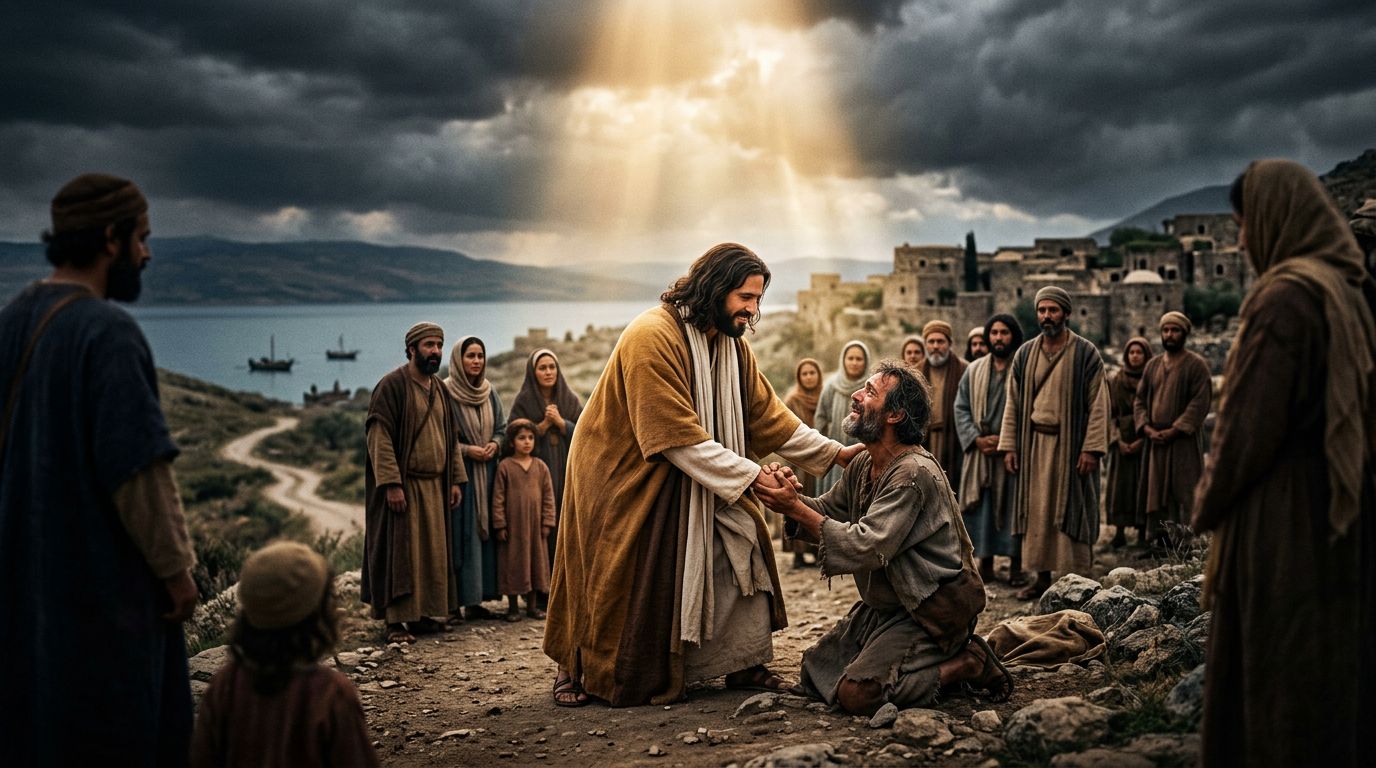
His father saw him while he was still far away, ran to him, embraced him, and received him with compassion. The welcome restored his place in the family, and celebration followed.
We proclaim that same hope to those who have wandered. The Father allows a choice, yet His mercy remains available to the one who returns. Shame does not have to keep you away from Him.
Our response is prayer and surrender to God, with an honest confession and a heart willing to obey.
Righteous People Can Still Be Wronged
We must keep this teaching clear: suffering is not proof of personal wrongdoing.
People can live faithfully and still suffer because of another person's evil. Some will not receive the justice or reward they expected during this life. That does not mean God has forgotten them.
We believe there is an eternal accounting before the Lord. We also pray that those who have done wrong will repent, because judgment is real and mercy is available through Jesus Christ.
For loved ones who have wandered, we continue praying that they will come to their senses and return.
Keep Sowing With a Repentant Heart
Mordecai remained faithful, Haman continued in evil, and the prodigal humbled himself and returned. Our choices matter, and repentance remains the way back when those choices have been wrong.
We close by asking the Lord to forgive bad seed, guard our hearts and minds, and help His Word produce good fruit. Keep sowing good seed. The Father receives those who come home to Him.