
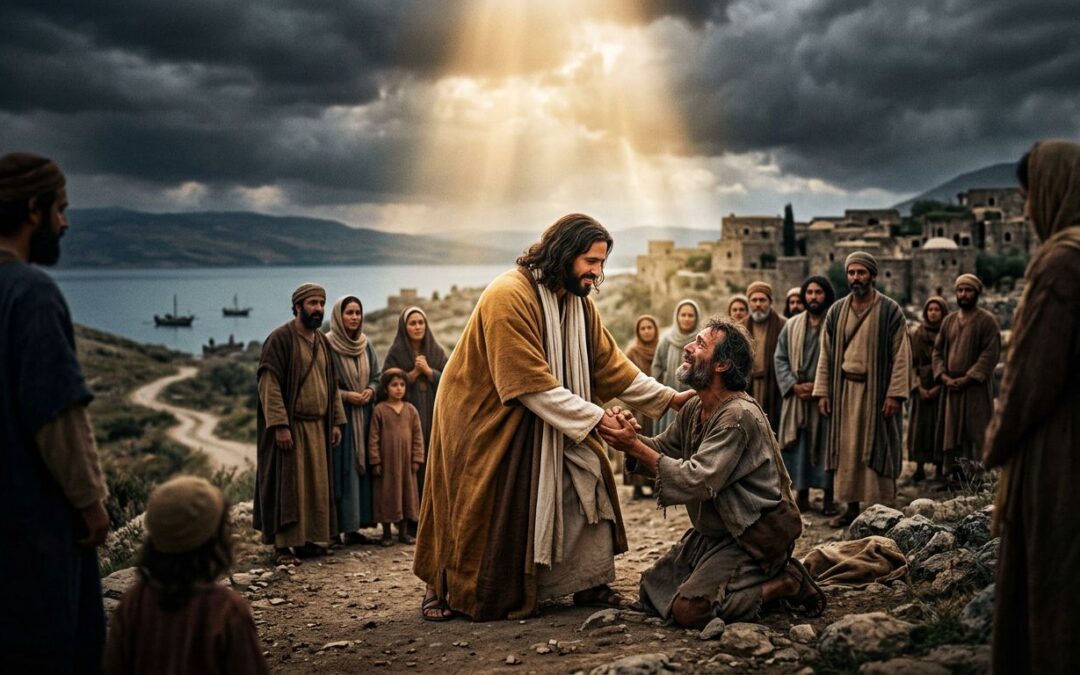
During His public ministry, Jesus miracles served a specific purpose rather than acting as mere displays to entertain curious crowds. Through healing the sick, casting out demons, calming storms, feeding the hungry, and raising the dead, He revealed exactly who He is and the core objectives of His mission.
When we read the Gospel accounts carefully, we see that every miracle carries significant meaning. The miracles of Jesus reveal His divine authority, His deep compassion, the arrival of God's kingdom, and the urgent need for faith and repentance. Ultimately, these wonders point us beyond the event itself to the Savior who performed them.
Key Takeaways
- Jesus miracles reveal His divine authority and confirm His identity as the promised Messiah.
- His acts of healing and restoration show God's profound compassion toward suffering people.
- These miraculous signs serve as clear evidence that God's kingdom has arrived through the ministry of Christ.
- Miracles are intended to point toward Jesus, rather than serving as replacements for faith, obedience, and truth.
- The resurrection of Jesus stands as the central miracle on which the entire Christian message is built.
Miracles Reveal Who Jesus Is
The Gospel writers never present Jesus miracles as random displays of power; instead, they consistently connect His works to His identity. Jesus healed, delivered, and restored because He is the Son of God and the promised Messiah. Through His divine power, He demonstrated that He is the Son of God, sent to redeem His people.
In Mark 2, friends lowered a paralyzed man through a roof so Jesus could heal him. Before telling the man to rise, Jesus said, "Son, thy sins be forgiven thee" (Mark 2:5, KJV). The religious leaders objected because they understood that only God can forgive sins. Jesus then healed the man visibly and publicly. The physical healing confirmed the authority of His unseen declaration, proving that the Son of Man has authority on earth to forgive sins.
While the Gospel of John explicitly uses miraculous signs to point to Jesus, the Synoptic Gospels also highlight His authority through every work He performed. John makes this purpose clear by noting that Jesus did many things, but the miraculous signs recorded in his Gospel were written so that we may believe Jesus is the Christ, the Son of God, and have life through His name (John 20:30-31).

When Jesus performed the act of calming the storm in Mark 4, the disciples asked, "Who then is this, that even the wind and the sea obey him?" Their question is the proper response. We aren't meant to stop at amazement; we must ask what the miracle of calming the storm reveals about Christ.
Ultimately, He has authority over disease, demons, sin, and death. He also possesses total authority over nature. No human teacher possesses such capabilities. Jesus' miracles identify Him as more than a prophet who speaks for God; they reveal the Lord who acts with God's own authority.
The Miracles Show the Compassion of Christ
Jesus' power was never separated from His mercy. He did not treat suffering people as props in a public demonstration. He saw them, listened to them, touched them, and responded to their need. These Jesus miracles were not just displays of authority, but profound expressions of His character.
Matthew 14:14 says that when Jesus saw a great crowd, he was moved with compassion toward them, and he began healing the sick. The crowd was not a group of religious celebrities. They were ordinary people carrying pain, sickness, confusion, and need. Jesus had compassion on them.
He touched a leper in Matthew 8:1-4, even though leprosy brought social separation and ceremonial uncleanness. He stopped for blind Bartimaeus in Mark 10. He restored the ear of the high priest's servant when Peter struck him during Jesus' arrest (Luke 22:50-51). These details matter because they show us the character of the One who possesses such divine power.
Jesus does not possess divine power at the expense of compassion. He is both powerful and compassionate.
The miracles also show that God's mercy reaches people others overlook. Jesus performed various faith healings for women, foreigners, the poor, the demonized, and those whose conditions had made them outcasts. He praised the faith of a Roman centurion in Matthew 8 and healed the daughter of a Gentile woman in Matthew 15.
We must not turn these accounts into a promise that every person will receive immediate physical healing in this life. The Bible records faithful people who suffered, and the apostles themselves experienced weakness and persecution. Still, the miracles give us a true picture of Christ's heart. He is not indifferent to human suffering.
For this reason, we can bring our needs to Him honestly. We pray for recovery because Jesus has shown mercy to the sick. We also submit to God's wisdom because our hope is not limited to present health. The same Christ who demonstrated His authority by healing the sick promises the final resurrection of His people.
Jesus’ Miracles Announce God’s Kingdom
Jesus' miracles were signs that God's reign had entered human history. When John the Baptist asked whether Jesus was the promised One, Jesus answered by pointing to His works: the blind received sight, the lame walked, lepers were cleansed, the deaf heard, and the poor had the gospel preached to them. These acts of healing the sick, casting out demons, and having raised the dead were definitive proof of His identity (Matthew 11:4-5).
These works correspond to the promises found in Isaiah 35 and Isaiah 61. Jesus was not merely claiming to fulfill prophecy with words. His works showed that the promised salvation was arriving through Him.
When Jesus cast out demons, He declared that the kingdom of God had come upon His hearers (Matthew 12:28). His authority over evil was evidence that Satan's rule was being confronted. When He fed the 5000 in the wilderness, He showed God's provision and reminded us of the Lord who fed Israel in the wilderness.
The kingdom was present in Jesus, but its final fullness had not yet arrived. We still live in a world where sickness, grief, death, and injustice remain. Christians therefore live with both confidence and expectation. We have seen the King's authority in the miracles of Scripture, and we wait for the day when death will be destroyed forever.
This keeps us from two errors. We do not deny God's power, and we do not demand that every promise about the coming kingdom be completed immediately. Jesus' miracles are miraculous signs that act as previews of restoration. They show what He will finally accomplish when He makes all things new.
The healing of Lazarus in John 11 illustrates this truth. Lazarus came out of the tomb, but he eventually died again. The Jesus miracles provide hope, yet this specific act served as a sign pointing to the greater resurrection and life that He alone gives. The miracle restored one man for a time, but Christ's resurrection secured eternal life for all who belong to Him.
Miracles Call for Faith, Not Spectacle
Many people witnessed Jesus miracles and still refused to repent. The scribes observed His authority, yet they accused Him of performing exorcisms by the power of Satan (Mark 3:22). Herod wanted Jesus to perform a sign for mere entertainment, but Jesus refused to satisfy his idle curiosity (Luke 23:8-9).
This distinction is essential. Biblical faith is not a demand that God perform on command. Faith trusts the character of God and receives His truth. While Jesus miracles serve to confirm the message, a person can witness a supernatural event and remain hardened against God.
At other times, Jesus connected physical restoration with the individual's trust. The woman with the issue of blood reached out to Him, and Jesus told her that her faith had made her well (Mark 5:25-34). These faith healings illustrate that trust is not a force that controls God, but a posture that comes to Christ rather than turning away. Bartimaeus cried out persistently, believing Jesus could restore his sight, and Jairus continued trusting Jesus even after hearing the tragic news that his daughter had died. We do not believe because we have mastered a spiritual technique; we believe because Jesus is trustworthy.
We should also notice that Jesus healed people who could not display impressive faith. He raised the widow's son in Luke 7 because He had compassion on the grieving mother. He healed the man at Bethesda in John 5 without recording an explicit request for a miracle from the man himself. These faith healings show that the power was in Jesus, not in human performance.
A true response to Jesus miracles is worship, repentance, and obedience. If we admire the power but reject the Lord, we have missed the true meaning of His mission.
The Cross and Resurrection Give the Miracles Their Meaning
The miracles of Jesus cannot be separated from His death and resurrection. While healing is a mercy, forgiveness remains our deepest need. Bread may feed the body, but Christ is the Bread of Life. Lazarus was raised from the tomb, but Jesus rose in victory over death and never returned to the grave.
The Gospel of John emphasizes these miraculous signs because they ultimately point toward the cross. At Cana, Jesus turned water into wine, and His disciples began to believe in Him. This act, the water into wine miracle, served as the first of the miraculous signs performed by Christ. Similarly, the feeding of the 5000 led Jesus to teach that He Himself is the true bread from heaven. Following the feeding of the 5000, Jesus walked on water, a powerful demonstration of His authority over creation. By walking on water, He proved that He was more than a mere provider of food; He was the Son of God.
In the Gospel of John, Lazarus serves as the final sign leading to the passion, which culminates in the resurrection of Jesus. This event prepared the way for His declaration, "I am the resurrection, and the life."
The greatest sign is not a temporary change in circumstances, but the resurrection of Christ itself. Paul writes that if Christ has not been raised, Christian faith is empty and believers remain in their sins (1 Corinthians 15:17). The resurrection is the foundation of the gospel.
This truth provides us with a proper perspective. We may ask God for healing, provision, protection, and deliverance. We should pray with confidence because Jesus is Lord. Yet, we must never treat a miracle as more important than reconciliation with God through Christ.
Some Christians believe miraculous gifts continue in the church today, while others believe certain sign gifts belonged especially to the apostolic age. Christians often differ on this question, but every faithful view must submit to Scripture. No present claim, testimony, or experience has the authority to add to the Gospel or replace the written Word.
The miracles in Scripture remain certain signs. They tell us who Jesus is, what He has done, and what He will ultimately complete.
What Jesus’ Miracles Require From Us
We are not meant to read the accounts of Jesus miracles as distant stories with no claim on our lives. Instead, these events call us to trust Jesus, obey His words, and bring our suffering before Him. His public ministry was never simply about providing physical relief; it was about initiating a profound spiritual transformation in the hearts of those He encountered.
When Jesus healed the paralytic, He exposed the deeper problem of sin. When He cleansed the leper, He showed that no defilement is beyond His power. When He delivered the demon-possessed, He showed that evil does not have the final authority. Every miracle presses the same question upon us: Will we receive Jesus as He truly is?
We must refuse the shallow faith that follows Jesus only when He gives us what we want. John 6 records crowds searching for Jesus after He fed them, but many turned away when His teaching became difficult. They wanted bread, but Jesus offered Himself.
The right response is not to chase signs. It is to follow the Savior to the cross, trust His finished work, and obey Him when obedience costs us. We pray for miracles, but we also pray for holiness. We ask for relief, but we also ask for repentance. We seek God's help, but we do not use God's gifts as an excuse to avoid God's commands.
Jesus' miracles give courage to the suffering, warning to the unbelieving, and hope to those who wait for redemption. They remind us that our present troubles are not stronger than our Lord. While these signs offer glimpses of His power, the resurrection of Jesus remains the ultimate hope that validates all other miracles, reminding us that the final answer to suffering is found in the return of Christ and the resurrection of the dead.
Frequently Asked Questions
Why did Jesus perform miracles during His ministry?
Jesus did not perform miracles for entertainment or to satisfy curiosity. His wonders served as purposeful signs to reveal His divine authority, show His compassion for the suffering, and announce that the kingdom of God had arrived through Him.
Do the miracles of Jesus prove He is the Messiah?
Yes, the miracles were clear evidence that Jesus was the promised Messiah who fulfilled Old Testament prophecies. By healing the sick, casting out demons, and raising the dead, He demonstrated power over nature, sin, and death that only God possesses.
Should we expect physical healing whenever we pray?
While the Gospels show that Jesus cares deeply for human suffering, the Bible does not promise immediate physical healing in every instance. Instead, the miracles point us to the ultimate hope of the final resurrection, teaching us to trust in God's wisdom regardless of our current circumstances.
How should we respond to the miracle accounts in the Gospels?
A true response to Jesus' miracles is worship, repentance, and faith. Rather than seeking signs for our own benefit, we are called to trust the Savior who performed them and to follow His teachings with obedience.
Conclusion
The Jesus miracles reveal His divine authority, mercy, and the arrival of His kingdom. These acts confirm that He is the promised Messiah, but they also demand more than mere amazement from those who witness them. They call us to believe, repent, worship, and obey.
We can bring every need to Christ because He cares deeply for suffering people. From the compassion He showed in healing the sick to the transformative power of the resurrection of Jesus, His works serve as bookends to a ministry defined by grace. We can trust Him even when healing comes slowly or not in the way we hoped, because His greatest promise is the gift of eternal life through His death and resurrection.
The miracle stories begin with human need, but they always point us toward Jesus. He is the ultimate sign we must not miss.