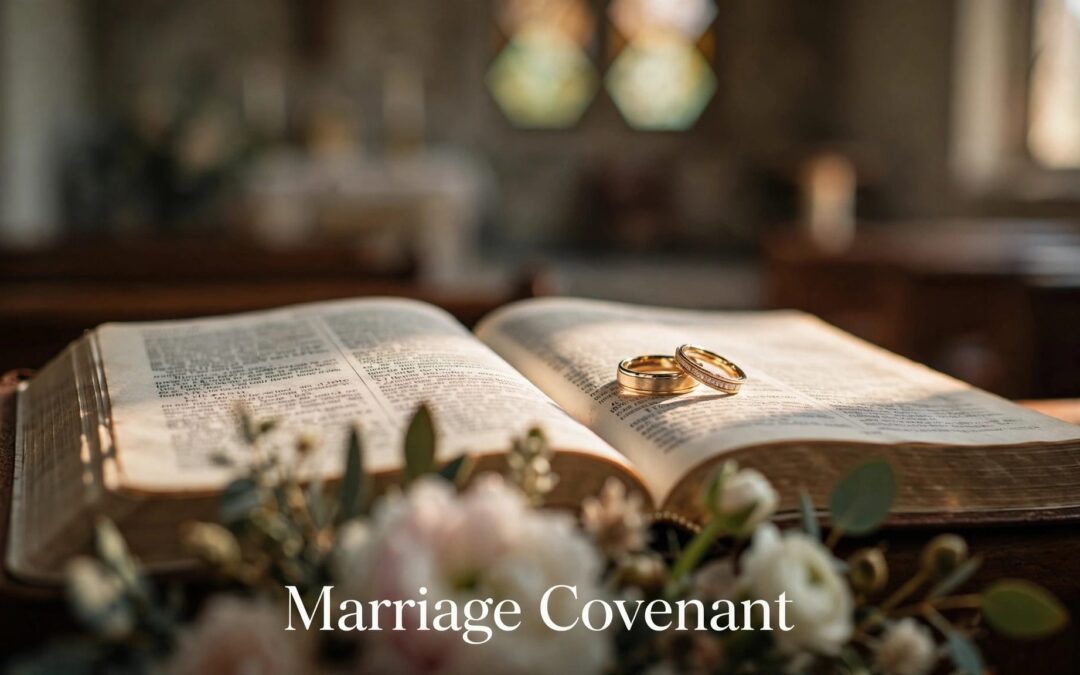
Scripture teaches that a marriage covenant is a lifelong commitment between a husband and wife, made before God and accountable to Him. The wedding vows are a permanent commitment, binding two people to faithfulness, including the days when obedience costs more than either person expected.
We must understand what God calls marriage before deciding how to live within it. Feelings matter, but feelings cannot carry the authority that belongs to God's Word. The foundation begins with the One who established marriage.
Key Takeaways
- Marriage joins a husband and wife in a lifelong covenant before God.
- Covenant faithfulness requires truthful speech, sexual purity, sacrificial love, repentance, and forgiveness.
- Marriage points to Christ's love for His church, and covenant language must never become permission to conceal abuse.
A Marriage Covenant Binds Spouses Before God

Covenant Means a Solemn Commitment
The Hebrew word berith, meaning covenant, can describe an agreement, treaty, or binding arrangement. The word alone doesn't make every covenant identical. We must understand the relationship and obligations described in the passage.
In marriage, covenant means that a husband and wife have pledged themselves to one another before God. Their promise reaches beyond particular tasks or possessions.
A contract commonly defines services, property, conditions, and sometimes an ending date. Marriage includes legal responsibilities, but its Biblical purpose is a lifelong union. A spouse is a person entrusted to your care, never a service you replace when dissatisfied.
God Joins Two People as One Flesh
Jesus said in Matthew 19:6, "What therefore God has joined together, let no man separate."
Jesus brought the question of marriage back to Genesis 2, the creation account He appealed to in Matthew 19. God established the union, and human convenience doesn't have authority to redefine His purpose.
Becoming one flesh includes bodily union, but it also reaches into loyalties, decisions, burdens, and responsibilities. Both spouses bear God's image. Neither becomes less valuable because the other is stronger, earns more, or speaks more forcefully.
God’s Faithfulness Gives Covenant Its Meaning
God's covenants reveal His character. He speaks, He commits Himself, and He remains faithful to His Word.
In Exodus 19:5, God calls Israel to hear His voice and keep His covenant. Covenant relationship includes belonging, but it also includes obedience.
Jeremiah 31:31-34 and Hosea 2:18-20 speak of forgiveness, inward transformation, and faithfulness through covenant and marriage language. These promises concern God's relationship with His people. We shouldn't turn them into guarantees that every troubled marriage will recover.
They do reveal the character Christian spouses are called to display. God's faithfulness never makes Him indifferent to evil. His mercy calls people to return, and His holiness confronts their rebellion.
That means faithful love must have room for correction. We cannot claim to reflect God's covenant love while refusing God's command to repent.
Breaking Faith Is Serious Before God
Malachi Confronts Marital Treachery
Malachi 2:14-16 identifies the wife as a companion and covenant partner. The Lord witnessed that relationship, yet husbands were dealing treacherously with their wives.
God wasn't impressed with religious activity that existed alongside marital betrayal. The public offering didn't cancel the private wrongdoing.
"I hate divorce" is a familiar rendering of Malachi 2:16. We must hear that warning within the passage's condemnation of treachery and violence. It calls us to defend faithful marriage, never to protect the reputation of someone harming a spouse.
An Oath Requires More Than Good Intentions
Psalm 15:4 describes a Godly person who keeps an oath even when keeping it hurts. Faithfulness doesn't disappear when obedience becomes inconvenient.
C. S. Lewis, in Mere Christianity, describes the promise-breaking involved in marital infidelity as perjury. Adultery violates more than sexual boundaries. It betrays a solemn promise.
Hidden pornography, secret romantic messages, financial deception, and ongoing contempt also violate the faithfulness marriage requires. These sins aren't all identical, and they don't automatically carry identical consequences. Each must be brought into the light rather than defended.
Marriage Points to Christ and His Church
Christ Defines Sacrificial Love
In Ephesians 5:31-32, Paul repeats the creation teaching about becoming one flesh, then explains the mystery concerning Christ and the church.
Marriage bears witness to a greater relationship. A husband's love must be measured by Christ's self-giving love, and both spouses remain accountable to the Lord.
Christ's unconditional love is self-giving and holy, never a license to control or sin. Authority never permits cruelty. Submission never requires cooperation with sin. Jesus gives Himself for His people; He doesn't teach husbands to satisfy pride at their wives' expense. Our teaching on Christian marriage and covenant faithfulness applies that responsibility to the home.
Whole-Life Devotion Requires Holiness
Gary Thomas's Sacred Marriage presses a searching question about marriage's purpose: does God intend more than our personal happiness, including our growth in holiness?
That question should lead us to repentance. Marriage exposes selfishness that must be surrendered to Christ. It never makes another person's violence a necessary instrument of spiritual growth.
Roman Catholic teaching describes marriage as a sacrament and a sign of God's covenant love. Its Code of Canon Law, in canon 1055, calls marriage a "partnership of the whole of life"; canon 1057 describes spouses giving and accepting one another through consent.
Our teaching rests on Scripture's authority and the Holy Spirit's power to produce obedient, faithful love.
Keeping the Covenant Requires Daily Obedience
Pray Together and Respond to the Holy Spirit

We encourage married couples to pray together daily, even when the prayer is brief. Bring temptation, resentment, financial pressure, and decisions before the Lord.
The Holy Spirit empowers obedience, but spiritual language cannot replace repentance. A person can pray loudly and still refuse correction at home. We must yield when He exposes pride, dishonesty, or harshness.
Pray for your spouse without turning prayer into a sermon against your spouse. Ask God to correct your own conduct. Then obey what His Word requires.
Guard Speech and Keep Promises
Proverbs 18:21 says, "Death and life are in the power of the tongue." Divorce threats must never become weapons during an argument.
A blanket rule against ever mentioning divorce, however, can silence someone facing betrayal or danger. We should reject manipulation while allowing truthful conversations about serious wrongdoing.
Some couples write and sign a covenant document to remember their vows. That can help, but a signature doesn't produce faithfulness. Keep the promises already spoken: tell the truth about money, reject secret relationships, confess wrongdoing without excuses, and give your spouse undivided attention.
Encourage other couples toward the same obedience. Support their marriage by refusing to excuse either spouse's sin.
Covenant Faithfulness Never Excuses Abuse
Physical violence, sexual coercion, stalking, threats, and controlling behavior require serious action. Seeking protection is consistent with telling the truth about evil.
If you are in immediate danger, get to safety and contact emergency services. Seek help from trustworthy people who will take the danger seriously, including appropriate civil authorities and church leaders.
We must never demand that someone conceal abuse so a marriage appears intact. The person committing abuse is responsible for that wrongdoing.
Grace doesn't erase consequences, and reconciliation requires more than an apology. Repentance must become visible through changed conduct, accountability, and respect for necessary boundaries. One spouse cannot manufacture another person's repentance.
Our responsibility as a church is to uphold marriage while protecting the vulnerable and confronting sin. Those responsibilities belong together. A person who reports danger needs protection and patient care, not pressure to restore appearances.
Biblical Covenant and State Law Are Different
Arizona, Arkansas, and Louisiana offer a legal designation called covenant marriage. That designation isn't the same thing as the Biblical meaning of marriage.
Arizona's covenant-marriage statute requires premarital counseling addressing marriage's lifelong seriousness. Arkansas legal-aid guidance also describes counseling requirements before filing for divorce within that state's covenant-marriage system.
A Christian couple doesn't need that special designation for their vows to carry responsibility before God. An ordinary marriage license doesn't make faithfulness optional, and a covenant-marriage designation cannot produce spiritual obedience.
The law addresses civil obligations. Scripture addresses the heart and conduct of the people who made the promise.
Questions About the Marriage Covenant
Does Forgiveness Immediately Restore Trust?
Forgiveness and restored trust aren't identical. Believers must refuse vengeance and bitterness, but trust depends on demonstrated truthfulness.
After betrayal, we should expect accountability, honest answers, and sustained changes in conduct. Demanding immediate trust while resisting correction contradicts repentance. The wounded spouse must not be pressured to pretend the harm never happened.
Does Lifelong Commitment Make Every Divorce Question Simple?
No. Jesus addressed sexual immorality, and Paul addressed abandonment by an unbelieving spouse. Christians differ on some questions concerning divorce and remarriage.
We must handle those questions through careful Scriptural counsel, with truth and safety fully considered. A slogan cannot resolve every circumstance, and neither lifelong commitment nor mercy gives anyone permission to excuse ongoing evil.
Honor the Promise Before God
The marriage covenant calls a husband and wife to faithful love under the lordship of Jesus Christ. That faithfulness reaches into private conduct, costly obedience, honest repentance, and practical care.
We must hold together what Scripture holds together: lifelong commitment and holy conduct. Neither spouse has permission to betray the covenant while demanding that the other protect its appearance.
Bring your marriage before the Lord in truth. Ask the Holy Spirit to expose what needs repentance, and obey Him in the next clear responsibility.