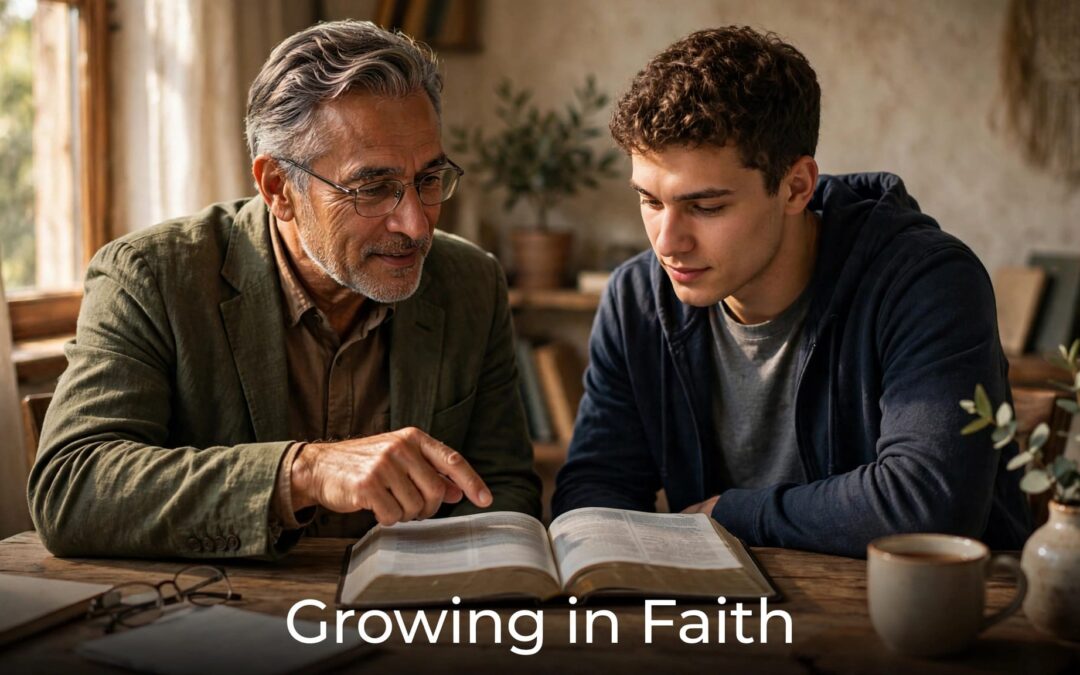
Mentoring new Christians begins with opening Scripture together, praying together, and showing what obedience to Jesus looks like in daily life. We help a new believer grow by pointing that person toward dependence on Christ, while refusing to take the place that belongs to Him.
A new Christian needs patient instruction and a Godly example to support spiritual formation in everyday life, plus room to ask honest questions without shame. A healthy mentoring relationship supports the believer's relationship with God and encourages dependence on Christ, without taking His place. Whether you're preparing to mentor someone or looking for guidance yourself, God's Word must govern the relationship.
Key Takeaways
- Christian mentoring should strengthen a believer's relationship with Jesus, understanding of Scripture, and willingness to obey Him.
- A healthy relationship includes clear expectations, prayer, accountability, and healthy boundaries that protect both people.
- Spiritual maturity grows through faithful practice, including studying Scripture, receiving correction, and serving alongside other believers.
Christian Mentorship Begins With Following Jesus
A Christian mentor is a spiritually mature believer who walks alongside another person as a spiritual mentor, helping them follow Jesus, apply Scripture, and grow in spiritual maturity. We must keep that purpose clear.
Follow the Biblical pattern
Paul instructed Timothy to pass on what he had received to faithful people who could teach others in 2 Timothy 2:2. Truth was received, lived, and entrusted to another generation.
Likewise, Titus 2:3-5 describes older women teaching younger women how to live faithfully. Biblical mentoring brings instruction into ordinary responsibilities, relationships, and choices.
This means we must give new believers more than correction. We should pray beside them, serve beside them, and show how God's Word reveals God's heart and directs our ordinary choices.
Understand the mentor’s responsibility
These relationships have different purposes.
| Relationship | Main purpose |
|---|---|
| Christian mentor | Helps another believer apply Scripture and follow Jesus. |
| Licensed counselor | Provides professional care within an area of clinical training. |
| Life coach | Helps someone clarify goals and pursue practical action. |
| Peer friend | Offers mutual companionship, support, and shared life. |
A mentor can offer spiritual encouragement without having the training to treat mental illness or trauma. Spiritual maturity includes knowing our limits. When professional care is needed, prayer and appropriate treatment can continue together.
Find a Mentor Through Faithful Church Life
Relationships grow through faithful contact. We recommend this approach for new believers seeking a mentor and for mature Christians helping them connect.

- Participate in a small group Bible study, prayer gathering, or service team where you can become known in your church community beyond a Sunday greeting.
- Observe mature believers over several weeks. Notice how they handle disappointment, correction, commitments, and people who cannot offer anything in return.
- Build a simple connection through conversation after church or by serving together. Trust needs time to grow.
- Ask for a time-bounded commitment instead of an undefined one.
- Establish expectations together before treating the relationship as ongoing discipleship.
A clear invitation can be simple: "Would you meet once a month for three months for prayer, Bible study, and discipleship? Then we could decide whether to continue."
This gives both people something they can willingly accept. An open-ended request can feel heavier than you intend.
We shouldn't assume the senior pastor must personally mentor every new Christian. A faithful believer who knows Scripture, lives under accountability, and has time to invest may be the right person.
Discern Character Before Trusting Counsel
Spiritual language alone doesn't establish spiritual maturity. Discernment begins by weighing a person's teaching and conduct against Scripture.
Look for fruit and teachability
Before entering a mentoring relationship, consider these questions.
- Does this person explain Scripture in context and welcome honest questions?
- Is there evidence of humility, patience, repentance, and faithfulness in ordinary relationships?
- Does this person respect healthy boundaries that protect trust and encourage connection with the wider church?
A mature believer doesn't need to appear beyond correction. Someone who can acknowledge a mistake demonstrates something a new Christian needs to learn: repentance belongs throughout the Christian life.
Keep every voice under Scripture
No mentor has authority above God's Word. Teaching about Jesus, salvation, holiness, and the Holy Spirit must agree with Scripture, rather than rest on personality or claimed revelation.
We should welcome spiritual gifts while refusing manipulation. "God told me" must never become permission to control another person's money, relationships, or conscience.
A faithful mentor can admit, "We need to study that further," instead of inventing an answer. Our teaching on recognizing God's voice keeps Scripture central while encouraging prayer and Godly counsel.
Respect your mentor, but don't place that person on a pedestal. Only Jesus deserves unquestioning allegiance.
Set Expectations Before the First Meeting
We recommend meeting once or twice a month for 60 to 75 minutes. Begin with a three-to-six-month commitment, then evaluate whether continuing would serve the believer's growth. This is a practical arrangement, not a Biblical command.
Agree on frequency, duration, location, and focus. Reading one Bible book together gives the one-to-one meeting direction and helps you apply Scripture personally. A small group Bible study can complement this work, but it can't replace it. Choose a suitable, accountable setting and set reasonable limits for messages and calls.
Discuss confidentiality before sharing personal struggles and prayer requests. Privacy matters, but nobody should promise secrecy about abuse, threats, or immediate danger. Explain that limit plainly.
The mentee also carries responsibility. Arrive with a Bible and notebook, bring two or three thoughtful questions, speak honestly, and report back on how you applied previous counsel.
Meetings can include grief and frustration without becoming repeated venting sessions. Listen carefully, then return to truth, prayer, and the next faithful response. Compassion and accountability belong together.
Teach Scripture and Pray Together
When mentoring new Christians, teach habits they can continue without us. Reading, applying, and praying support spiritual formation between meetings. Start with a brief check-in, read and discuss a passage in context, choose one response to practice, and pray together.

Read for understanding and obedience
Begin with a short passage and read it aloud. Identify who is speaking, who is being addressed, and what the surrounding passage says before discussing personal application.
Ask, "What does this reveal about God? What must be believed? What must change?" Let the new believer answer instead of supplying every explanation immediately.
Use study notes after reading the passage itself. Write down questions that need further attention. Finish with one clear response, whether repentance, forgiveness, thanksgiving, or a practical act of obedience.
Salvation is God's gift through faith in Jesus Christ. We obey because we belong to Him; obedience doesn't purchase forgiveness.
Pray with dependence on the Holy Spirit
A spiritual mentor must first spend time with Jesus personally. We cannot teach dependence on God while neglecting Him ourselves.
Model plain, sincere prayer. Thank God for what the passage reveals, confess what it exposes, and ask for strength to obey. Then invite your mentee to pray aloud without pressure to sound experienced.
We believe in the baptism in the Holy Spirit, spiritual gifts, and praying in tongues. Our teaching on the Holy Spirit's work connects His empowering presence with holiness and service. Never pressure someone to imitate another person's spiritual expression.
Correct Gently and Make Room to Serve
New believers need correction, but it must reflect Christ's character. Galatians 6:1 tells spiritual believers to restore someone caught in trespass with gentleness while watching themselves.
Gentleness doesn't excuse sin. It rejects pride, humiliation, and the belief that we could never fall. Discernment means listening to the whole situation, naming what Scripture names, and helping the believer respond wisely through repentance and practical change.
The church community gives new Christians opportunities to serve alongside mature believers. They can tell someone what Jesus has done, help with a simple assignment, and learn faithfulness by serving beside mature believers. Responsibility should match readiness, with instruction and oversight.
Jesus commanded us to "make disciples of all the nations" and teach them "to observe all things that I have commanded you" in Matthew 28:19-20.
Our teaching on the Great Commission follows that same direction. We train believers to obey Jesus and serve His people. The goal is a disciple who follows Christ faithfully, rather than someone who needs our approval for every decision.
Questions About Mentoring New Christians
Should a Christian mentor be the same gender?
We recommend same-gender mentoring for ongoing one-on-one spiritual discipleship. Titus 2 gives a clear pattern of older women teaching younger women, and this arrangement helps protect emotional boundaries.
That recommendation doesn't forbid appropriate teaching across genders in church or group settings. Personal conversations still need accountability. Married people should avoid secretive communication or emotional intimacy that undermines their marriage. Boundaries protect trust before a problem develops.
What if following Jesus brings painful losses?
Following Christ can involve real sacrifice, including rejection from family or the loss of familiar relationships. We must listen, pray, and offer practical fellowship rather than minimize their suffering.
In Matthew 19:29, Jesus promises a hundredfold and eternal life to those who leave homes, family, or lands for His name's sake. We should present His promise as encouragement to remain faithful, never as a formula guaranteeing immediate financial gain.
Keep the Goal Before You
Mentoring new Christians requires faithful example, sound teaching, and prayerful dependence on the Holy Spirit. We help believers grow when we open Scripture honestly, correct gently, and give them room to practice obedience.
Begin with a clear commitment and keep Jesus at the center of every meeting. A faithful mentor helps another believer become ready to follow Him even when the mentor isn't present.