Joy in difficult times comes from Jesus, even when your circumstances give you no reason to feel happy. At Kingdom Builders, we heard that truth throughout worship, testimony, and Julie Laporta's message from Scripture.
You can acknowledge the hurt and still praise God. That conviction began with thanksgiving for His protection and continued through a call to walk by the Spirit.

Key Takeaways
- Joy comes from Jesus and can remain when happiness and pleasant circumstances fade.
- Psalm 118:24 calls believers to rejoice in the day the Lord has made, even amid trouble.
- A "yet praise" is praise offered while hardship remains, as Habakkuk 3:17-18 describes.
- Praise can take many forms, and Christians can turn their attention back to God without waiting for their feelings to change.
Biblical Boundaries Keep Restoration in View
Our community began with gratitude for protection after strong winds swept through Northern Kentucky. The opening speaker recalled standing in the kitchen with her daughter Emmy while relatives sheltered elsewhere, grateful that their damage was limited to a shutter.
That gratitude also brought joy into the opening speaker's reflection on Biblical boundaries, another kind of protection. She described boundaries as guardrails for our walk with Him, warning that self-centered thinking can turn protection into division, especially within families.

Temporary distance may be needed for peace and protection. Her emphasis was that restoration should remain our desire and that we should preserve love. We cannot control another person's choices, but we can take responsibility for our responses and refuse bitterness.
Identity in Christ Shapes Healthy Boundaries
The opening encouragement connected Godly boundaries with knowing who you are in Christ, which gives Christians a foundation for maintaining them. People-pleasing and fear of conflict make boundaries difficult to maintain; confidence in what Jesus says about you gives them a firmer foundation.
Four Scriptures anchored that encouragement:
- Ephesians 2:10 declares that believers are His workmanship.
- Romans 8:1 speaks of freedom from condemnation in Christ.
- 2 Corinthians 5:17 declares the new creation and the passing away of the old.
- 1 Peter 2:9 identifies His people as chosen and called into His marvelous light.
These truths support boundaries that protect a season of life while keeping love and healing in view.
Worship Declares Trust and Hope
Our worship centered on His power, His faithfulness in battle, and His willingness to hear prayer. The repeated declaration was simple: "I sought the Lord and He heard and He answered."
Tim testified that the Lord had brought him out of separation from Him. His desire was for the peace only He gives, above possessions.
Terry's song about the New Jerusalem drew from Revelation 21, where tears, death, mourning, and pain pass away. He connected that hope to Jesus' sinless life, His death, His resurrection, and His promised return, proclaimed in 1 Thessalonians 4:16-18.
Choose Joy in the Day God Has Made
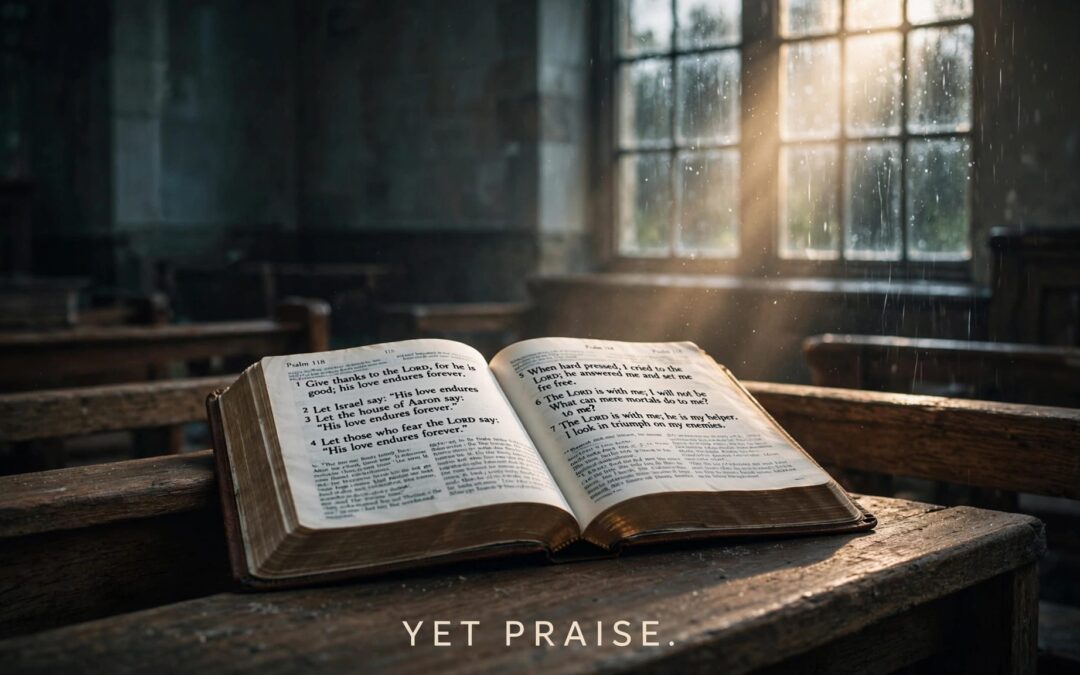
Julie opened Psalm 118 with thanksgiving for His enduring mercy. Its declaration in Psalm 118:24 became the center of her message: "This is the day which the Lord hath made; we will rejoice and be glad in it."

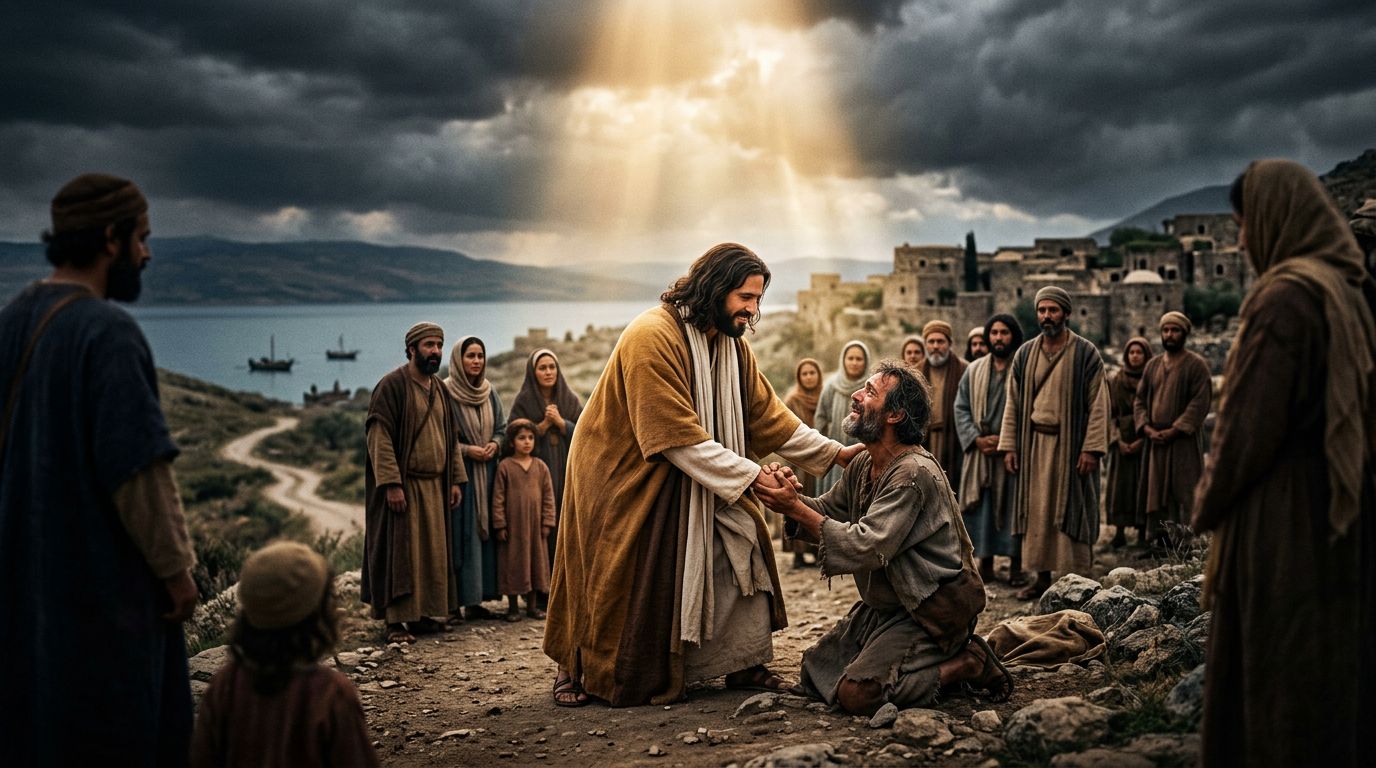
An illustrative scene of congregational worship.
Julie traced the psalmist's distress, opposition, danger, and correction. Trouble surrounded him, yet he chose to rejoice.
She also recounted an Austrian village threatened by Napoleon's forces. In the account, a pastor urged the people to hold their resurrection celebration and leave their defense in God's hands. Bells and singing led the approaching forces to believe the army had returned, and they withdrew.
Julie's emphasis was the people's response: they chose joy, declared it, and demonstrated it.
Joy Remains When Happiness Fades
Julie described the flowers her husband brings home as something that makes her happy. Joy comes from Him, and that joy can remain when pleasant circumstances disappear.
Betrayal, marriage trouble, job loss, and loneliness were hard trials she named. She spoke from grief herself, sharing that after her daughter's death, she had to rise and praise God.
"My condition does not determine my praise."
Her reference to Job 1:21 pressed the point: praising God when He gives must also become praising Him through loss.
We don't have to pretend grief feels good. Our teaching on worship in Spirit and truth carries that same conviction: God remains worthy while His people hurt.
A “Yet Praise” Before Circumstances Change
Julie turned to Habakkuk 3:17-18, where failed crops and empty stalls are followed by a declaration of rejoicing in the Lord.
She called this a "yet praise." God's word in James 1:2 encourages Christians to meet hard trials with joy, even when hardship still hurts. The desired job may not have come yet. Children may not be serving God yet. Healing may not have manifested yet. Faith can still praise Him.
That praise may appear through standing, tears, shouting, giving, loving, or continuing to call on Him. Julie also acknowledged the person who remains seated and lifts a hand. The call was to find a way to thank Him, without waiting for feelings to lead.
Keep Attention on the Father
Julie used an account about Serena Williams and her father moving closer during a difficult match to illustrate redirected attention. A negative focus on an opponent can pull attention away from the Father, so Julie encouraged listeners to turn their focus back to Him.
She connected that lesson to the young athletes she trains. Before leaving, they place a hand on their stomach and declare, "There's a winner in me," because Jesus lives in them.
Her encouragement was to stir up the gift within and remember Who walks beside you, even when other people are absent.
Healing Testimony Led Into Prayer
Julie testified that she tore the labrum in her hip while helping someone move. After prolonged difficulty and repeated insurance delays, she asked God to intervene.
When surgery was postponed again, she attended worship that Sunday. She described beginning to jump and realizing she could move without the trouble she had experienced. There was no dramatic outward sign; she testified that God healed her and that the problem had not returned.
The testimony led into intercession for others, including Michelle, who had neck problems following a car accident. We also interceded for spiritual restoration and a return to worship.
Put God First in Marriage
Our gathering closed around Mike and Amy before their wedding. Married members advised them to pray together, read Scripture, and seek God's direction. They urged forgiveness when emotions and wounded pride threatened to govern conflict, hoping to encourage the couple as they began married life.
Tim and Julie shared how praying together over a particular need strengthened their shared practice of praying, including praying by phone when apart. Julie Laporta described washing one another's feet and praying over each other as a practice in her marriage.
We surrounded the couple in prayer for unity, love, and strength. They were beginning married life with a church community ready to support them.
Frequently Asked Questions
What does it mean to choose joy in difficult times?
It means trusting God and praising Him even when circumstances are painful. Julie's message connected that choice to the joy that comes from Jesus.
Does choosing joy mean pretending grief feels good?
No. Julie acknowledged grief and shared that after her daughter's death, she had to rise and praise God.
What is a “yet praise”?
A "yet praise" is a declaration of rejoicing in God while hardship remains. In Habakkuk 3:17-18, the prophet praises the Lord despite failed crops and empty stalls.
How can someone praise God while hurting?
Julie described praise through standing, tears, shouting, giving, loving, or continuing to call on God. The call is to find a way to thank Him without waiting for feelings to lead.
Praise Belongs in This Day
We don't measure God's worthiness by whether a difficult season has ended. Julie's message called us to praise Him because He is God, while trusting Him through the difficulty.
Joy can remain alongside tears. You may be hurting, but you still have Jesus, and this remains a day He has made.