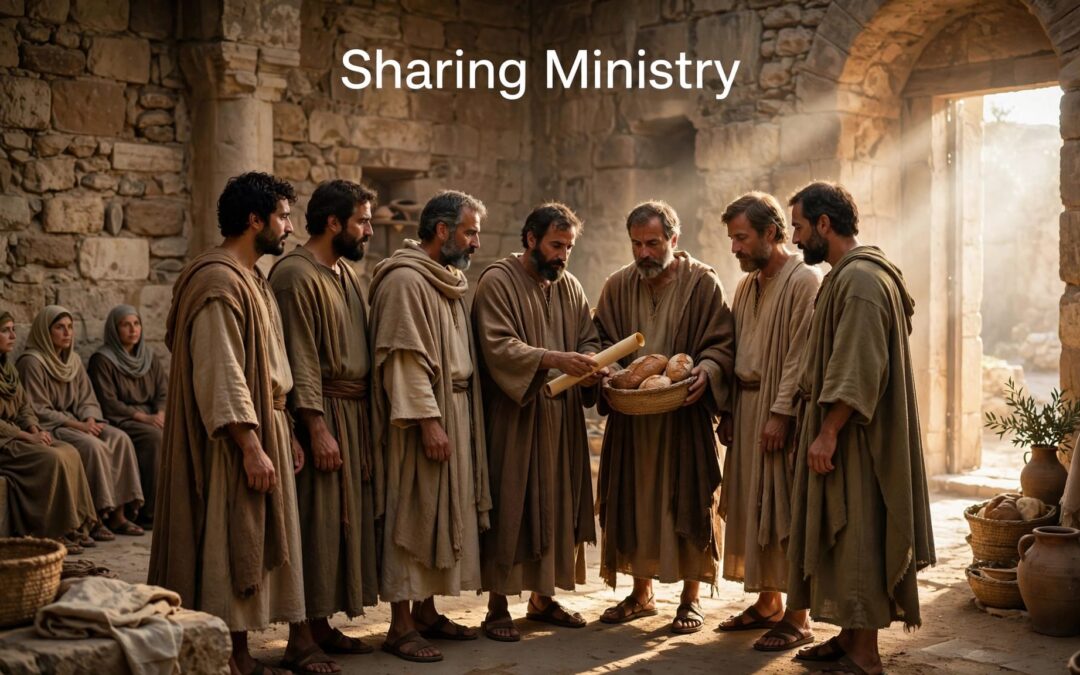
Acts 6 shows the church sharing ministry responsibilities by appointing seven trusted, Spirit-filled men to oversee neglected widows' care while the Twelve continued in supplication before God and the ministry of the Word. Every responsibility mattered, but every responsibility didn't belong to the same person.
In Acts 6:1-7, we see spiritual leadership recognize a practical failure and take responsibility for correcting it. If you want to understand ministry, begin with this truth: God's people must willingly carry the work God has entrusted to His church.
Key Takeaways
- The widows' neglect required an answer, and the apostles addressed the complaint before the gathered disciples.
- The congregation selected seven qualified men, and the Twelve appointed them through prayer and the laying on of hands.
- Spiritual character was required for practical service, while supplication and preaching remained protected responsibilities.
The Complaint Exposed Neglected Widows
Growth Didn’t Remove Responsibility
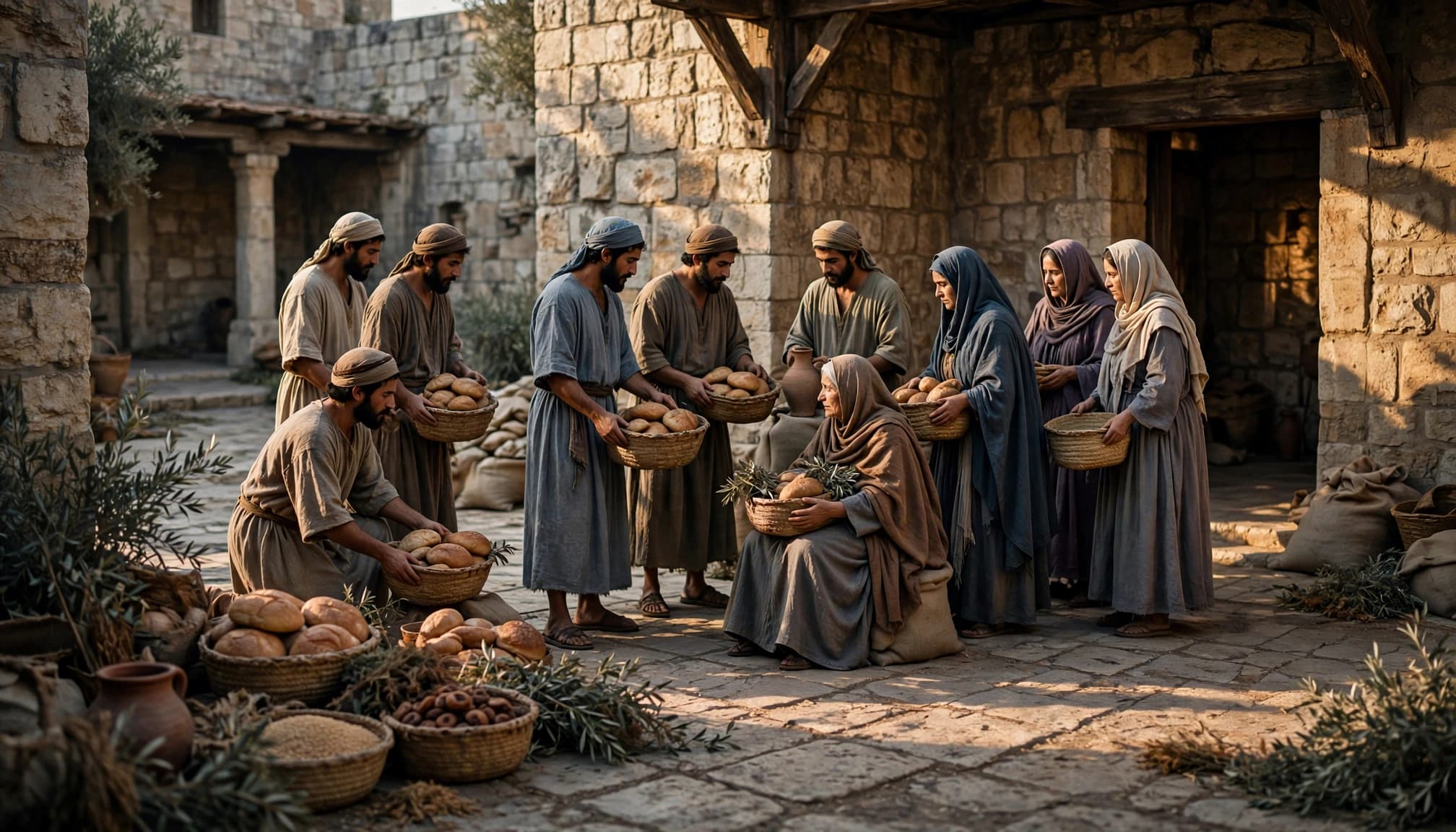
Acts 6:1 tells us that the disciples were multiplying when the Hellenists complained against the Hebrews because their widows were being overlooked in the daily distribution. The Hellenists were Greek-speaking Jews.
These were believers within the same church, yet some of the women weren't receiving the care they needed. Growing attendance hadn't prevented an unequal distribution. The church had to deal with what was happening among its people.
Earlier opposition had come through persecution, and Ananias and Sapphira had brought dishonesty into the congregation. Now a dispute over neglected care threatened fellowship. We must understand that a growing church still needs correction, discernment, and faithful oversight.
The Need Had to Be Addressed
Luke identifies the neglect without explaining whether it came through deliberate favoritism, poor organization, or another failure. We shouldn't assign a motive Scripture doesn't give.
What we can say is that the complaint concerned a genuine need. These women were being overlooked in an established ministry of care, and the Twelve didn't dismiss their suffering. The church addressed the Hellenists' concern.
Biblical unity requires truthful action. Telling neglected people to remain silent wouldn't have corrected the distribution. The church needed servants who would take responsibility for making the care dependable and fair.
The Apostles Protected Prayer and the Word
Their Calling Required Their Attention
In Acts 6:2, the twelve gathered the disciples and explained that it wasn't right for them to leave the Word of God to serve tables.
They weren't declaring that providing that care was beneath them. Their answer provided responsible leadership for that very work. They recognized that personally taking over the distribution would draw them away from responsibilities they were called to fulfill.
We must make the same distinction. A need can be real without becoming the personal assignment of every leader. Faithful leadership identifies who should carry the responsibility and gives qualified people room to carry it.
Prayer Was Part of the Work
They committed themselves to prayer and the ministry of the Word. Communion with God wasn't an occasional addition after everything else was finished. It belonged alongside preaching the word in their continuing ministry.
A church cannot replace dependence on God with activity, even when that activity meets legitimate needs. We need the Word faithfully taught, and we need leaders who seek the Lord.
That doesn't excuse a pastor from loving people or helping when needed. It means the congregation must share responsibility so that shepherding, prayer, teaching, and practical care receive proper attention. One burden mustn't swallow every other assignment.
The Seven Received Real Responsibility
The Congregation Recognized Qualified Men
Acts 6:3 gives the apostles' instruction: select seven men from among the believers who had a good reputation and were full of the Holy Spirit and wisdom.
The congregation chose Stephen, Philip, Prochorus, Nicanor, Timon, Parmenas, and Nicolas, a proselyte from Antioch. Stephen is identified as a man full of faith and full of the Spirit.
The selection pleased the gathered believers. They established the qualifications, the congregation recognized suitable men, and the men were presented to the apostles. Responsibility was shared through an orderly process.
These men were known within the body. Their appointment depended on more than their willingness to fill an empty position.
Their Appointment Had a Defined Purpose
The seven were appointed over the matter that had produced the complaint. Their responsibility was to oversee the daily distribution so that the widows received proper care.
Scripture doesn't provide their schedule, their accounting method, or a complete list of procedures. It does identify the need and place qualified men over it. They had responsibility for the work, rather than merely offering occasional assistance.
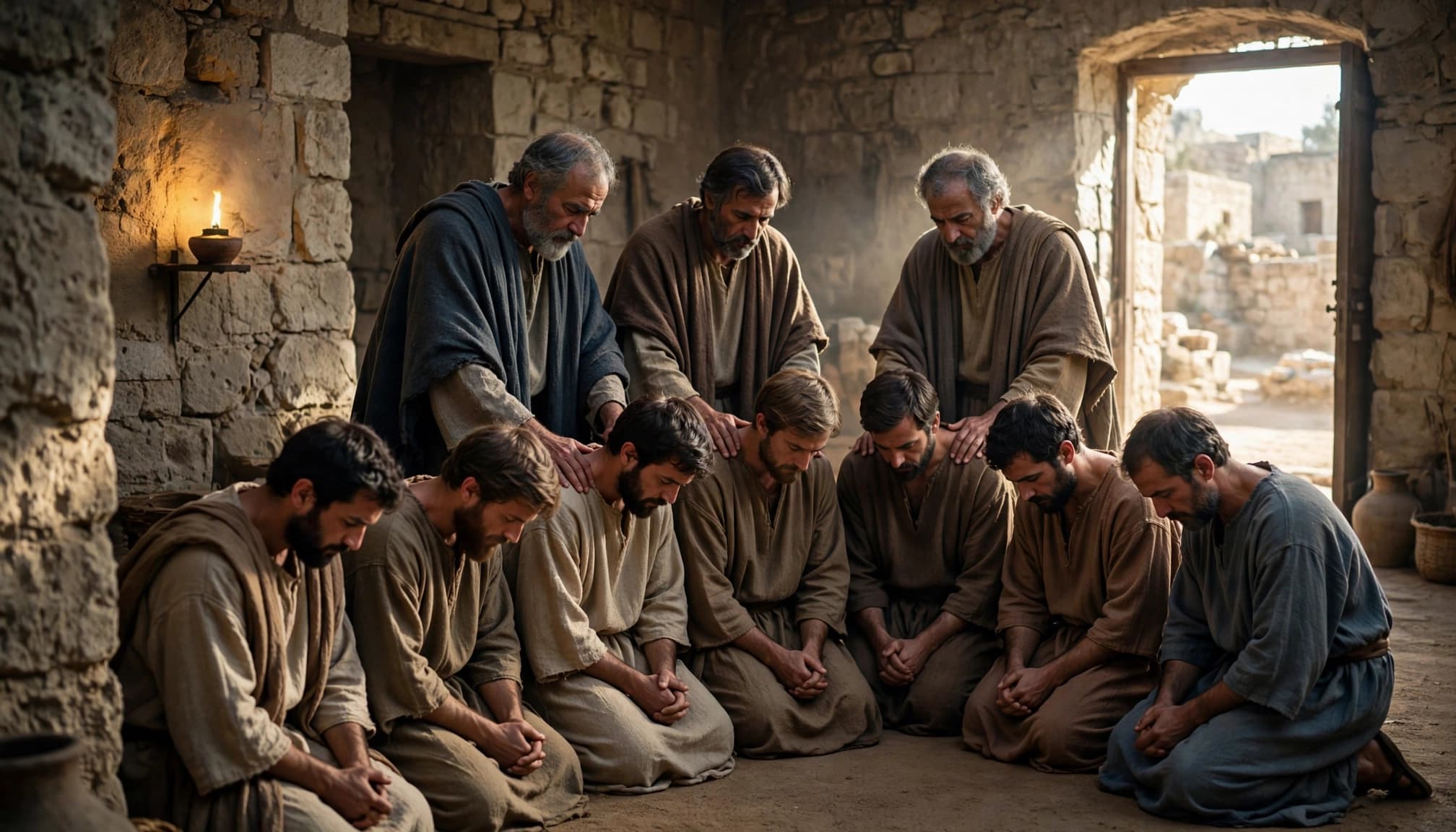
Acts 6:6 records that the apostles prayed and laid hands on them. Their public prayer and laying on hands entrusted them with ministry before God and the congregation. Their service belonged within the church's recognized leadership and shared life.
Spirit-Filled Service Requires Godly Character
Practical Ministry Is Spiritual Service
The Greek word diakonia means service or ministry and belongs to the same word family as deacon, meaning servant.
The same Greek word describes the daily distribution and the ministry of the Word. Both assignments are ministry before God.
That matters because we sometimes measure ministry by visibility. We recognize the person who teaches, while overlooking the person who faithfully cares for someone who cannot repay them.
That standard required men full of the Holy Spirit for the distribution. We must reject the idea that practical work only requires available hands. The Holy Spirit must govern the servant's heart, speech, judgment, and treatment of people.
Trustworthiness Must Accompany Ability
A good reputation means that a person's conduct gives the congregation reason to trust them. Wisdom means they can exercise sound judgment when needs, disagreements, and responsibilities meet.
These qualifications connect naturally with the later requirements for deacons in 1 Timothy 3:8-13. Paul requires serious character, truthful speech, freedom from greed, and proven faithfulness.
Acts doesn't explicitly name the seven as deacons, but the passage informs later deacon ministry. It gives us a clear pattern of entrusted service carried by spiritually qualified people.
Godly character belongs in every ministry. Handling provisions, receiving a complaint, and caring for a widow all require obedience to the Lord.
Shared Ministry Strengthened the Church
Acts 6:7 reports that the Word of God spread, the disciples multiplied greatly in Jerusalem, and a great many priests became obedient to the faith.
Luke places this growth after the church's response to the neglected widows. The Twelve continued their calling, qualified servants received responsibility, and the church continued forward. We shouldn't turn that sequence into a formula guaranteeing attendance growth. We should recognize the faithfulness displayed.
The seven's assignment also didn't prevent God from using them in other ways. Stephen later testified boldly and, when he was stoned, asked the Lord not to hold the sin against his killers in Acts 7:54-60.
His appointed responsibility hadn't placed a limit on his obedience.
Our teaching on Biblical church unity emphasizes that different gifts belong within one body. Shared ministry strengthens fellowship when believers submit their gifts and responsibilities to Christ.
Putting These Responsibilities Into Practice
We should apply this passage by identifying actual needs, appointing qualified servants, and making their responsibilities clear. General appeals for help can leave everyone concerned while no one is responsible.
A church can apply this pattern of social action, rooted in Biblical care, through assignments such as these:
| Ministry need | Responsibility to assign |
|---|---|
| Meals and practical assistance | Coordinate help so that people aren't overlooked. |
| Care for widows and isolated members | Maintain contact and communicate needs to leadership. |
| Benevolence support | Handle resources honestly, fairly, and with appropriate confidentiality. |
The assignment needs a responsible servant, a clear purpose, and a recognized relationship with church leadership.
Those who serve must also remain teachable. Receiving correction without offense, refusing gossip, and treating people without favoritism are part of faithful ministry. A willing worker still needs a submitted heart.
Our teaching on serving in church with humility presses that responsibility into everyday church life. You don't need public recognition to obey Jesus, but you do need willingness to serve where help is needed.
The congregation has responsibilities too. Bring concerns to the proper leaders, support those appointed to serve, and refuse to turn a correctable problem into a divided church.
Frequently Asked Questions
Did the Apostles Consider Serving Tables Unimportant?
Their response shows that they considered the work important enough to require seven qualified, Spirit-filled men. The issue was how to meet the need while preserving prayer and the ministry of the Word.
We should never use the apostles' decision to excuse indifference toward suffering. They made provision for them instead of leaving the complaint unanswered.
How Does This Relate to Pastors and Deacons?
Philippians 1:1 addresses believers together with overseers and deacons. Elders are charged with oversight and shepherding in Acts 20:28 and 1 Peter 5:1-5.
These passages show recognized leadership alongside entrusted service. We shouldn't force every modern job description into the seven's appointment, but the principle is plain: leaders must shepherd faithfully, and qualified servants must help carry the church's work.
Faithfulness Means Carrying the Assigned Work
The ministry responsibilities in Acts 6 show a church answering neglect with spiritual discernment and definite action. The apostles protected their calling, the congregation recognized qualified servants, and the seven received responsibility for needed care.
Faithful service requires obedience. We honor Christ when His Word governs our priorities and His Spirit governs the way we serve.
Bring your willingness before the Lord, receive the responsibility entrusted to you, and carry it faithfully for the good of His people.