In Acts, baptism with the Holy Spirit is the promised empowering Jesus gives His followers for witness and service. We believe Acts presents this baptism as an experience distinct from the new birth.
The Spirit already works in every believer, but new life differs from being filled with the Holy Spirit for ministry. The biblical pattern begins with Jesus' promise and continues through the church's obedient response.
Key Takeaways
- Jesus baptizes believers with the Holy Spirit to empower them for His work.
- We understand speaking in tongues as the initial physical evidence of Spirit baptism.
- Spiritual power must be accompanied by surrender, holiness, and obedience.
Jesus Promised Power From Heaven
John the Baptist said he baptized with water, but Jesus would bring the promised baptism with the Holy Spirit (Mark 1:8; Matthew 3:11; Luke 3:16; John 1:33). Jesus Himself is the Baptizer.
The Greek word baptizo, meaning immerse, helps explain the language of baptism. This promise concerns an encounter with God's own Spirit.
Jesus commanded His disciples to remain in Jerusalem until they received power from on high (Luke 24:49). He identified its purpose: they would receive power to become His witnesses (Acts 1:8). Acts 1-2 presents this promised power as preparation for Spirit-enabled witness, not an isolated experience.
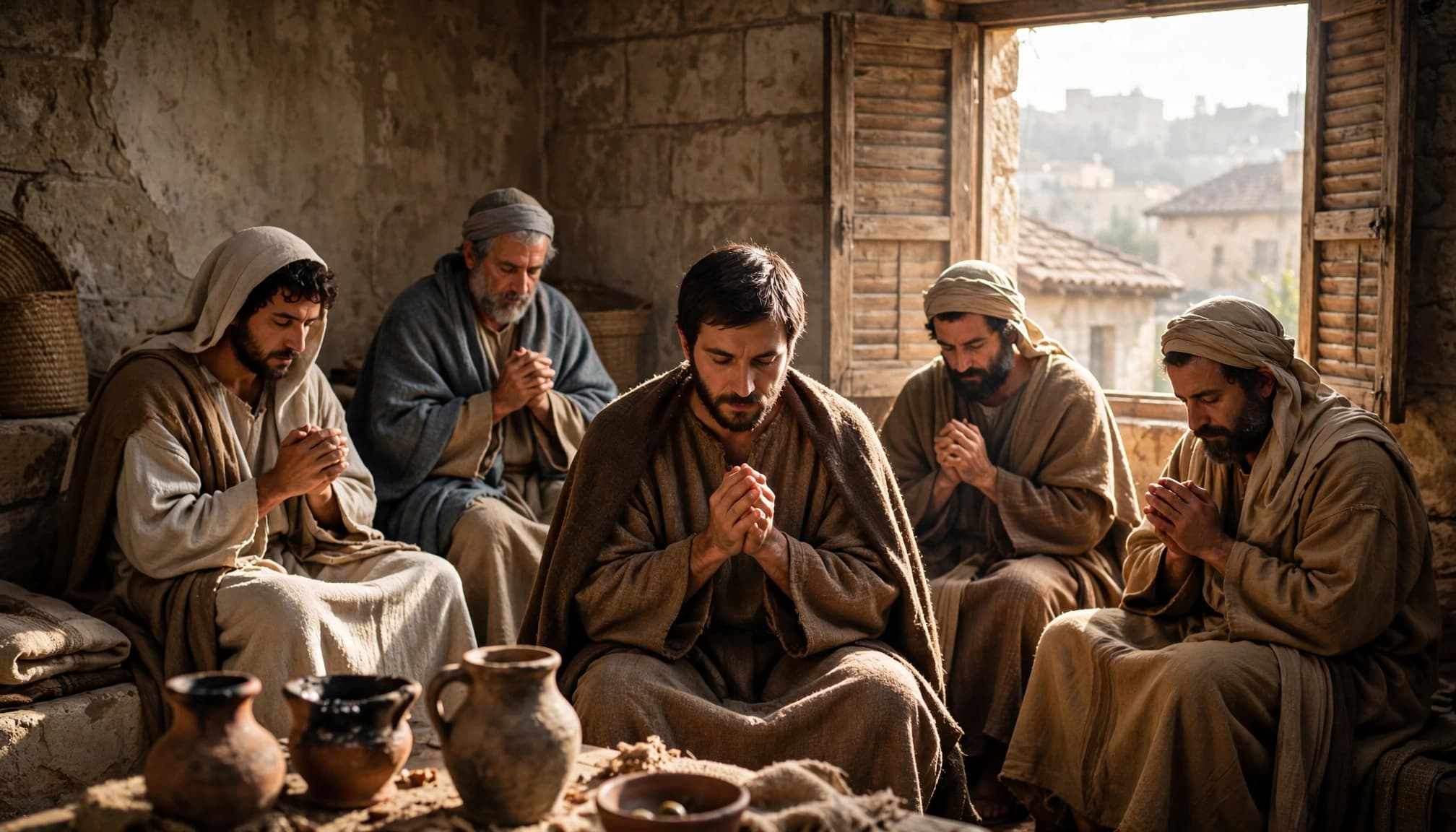
An illustrative scene of first-century believers praying.
On the Day of Pentecost, the waiting disciples were all filled with the Holy Spirit and spoke in other tongues as He enabled them (Acts 2:1-4). Peter declared that the gift of the Holy Spirit was promised beyond that first gathering, to his hearers, their children, and those far away whom God would call (Acts 2:38-39).
New Birth, Water Baptism, and Empowerment
Christians differ about the timing
Many Baptist, Presbyterian, and Reformed Christians understand Spirit baptism as occurring at conversion, citing believers being baptized into one Body in 1 Corinthians 12:13.
Pentecostals, including the Assemblies of God, distinguish this incorporation into Christ from a subsequent empowerment for service. We hold this Pentecostal understanding. The Spirit gives new birth as part of salvation; the baptism of the Holy Spirit is a subsequent empowerment for service, as the Acts accounts describe. Our teaching on being born again explains that necessary inward transformation.
Water baptism declares identification with Christ
Some Christians connect the water and Spirit language of John 3:5 directly with water baptism. We understand water baptism as a public confession of faith that pictures identification with Jesus' death, burial, and resurrection (Romans 6:3-14).
Yet the Samaritan believers had already received water baptism before Peter and John prayed for them to receive the Holy Spirit (Acts 8:14-17). This distinction matters. Water baptism doesn't replace the empowering Jesus promised.
What Baptism in the Holy Spirit Produces
Tongues accompany the Spirit’s coming
We teach that speaking in tongues is the initial physical evidence of Spirit baptism. In Acts, this sign also bears witness that new communities have received the Spirit. At Cornelius' house, believers recognized the outpouring when they heard tongues and praise (Acts 10:46). As at the Day of Pentecost in Acts 2, this sign confirmed God's work, here among Gentiles.
When Paul laid hands on disciples in Ephesus, they spoke in tongues and prophesied (Acts 19:6). This account shows the Spirit's work reaching believers in Ephesus. Jesus also spoke of believers speaking with new tongues in Mark 16:17. Our understanding rests on the repeated witness in Acts, rather than that verse alone.
These Acts accounts present tongues as a public sign of reception. Private tongues have other uses, and biblical references don't all share the same context.
Spiritual gifts equip believers to serve
The nine gifts appear in 1 Corinthians 12:7-11: the word of wisdom, word of knowledge, faith, gifts of healings, working of miracles, prophecy, discerning of spirits, different kinds of tongues, and interpretation of tongues.
Revelation, vocal, and power gifts are customary teaching categories, rather than headings Paul gives. The power of God works through these gifts to equip the church for service and edification. They help believers discern, minister, and build up others.
Gifts never excuse disobedience. The continuing work of the Holy Spirit must also become visible through love, holiness, and submission to Jesus.
Receiving the Holy Spirit Through Faith
The gift of the Holy Spirit comes from God; His work cannot be manufactured.
- Begin with faith in Jesus Christ. Confess Him as Lord and believe God raised Him from the dead (Romans 10:9-10). Confess sin and receive His cleansing (1 John 1:9).
- Ask the Father with confidence. Jesus taught that the Father gives the infilling of the Holy Spirit to those who ask Him (Luke 11:9-13, especially Luke 11:13). Come trusting His goodness and base your expectation on the Word of God.
- Receive prayer from mature believers. Acts records prayer and the laying on of hands, but the power belongs to God rather than the person praying.
- Yield yourself in worship and obedience. Speak as the Spirit enables you, without copying another person's words or allowing anyone to pressure you into a performance.
Our teaching on surrender and Holy Spirit power brings prayer back to willing submission.
You can pray simply: "Father, I belong to Jesus Christ. Cleanse my heart and fill me with Your Holy Spirit. Jesus, baptize me with the Holy Spirit and empower me to obey You and proclaim Your Gospel."
Questions About Receiving the Promise
Must believers travel to Jerusalem?
Jesus' command concerned the disciples awaiting Pentecost. Peter's declaration extended the promise beyond that gathering. You can seek the Lord where you are.
What if tongues don’t come immediately?
Continue seeking Jesus and thanking God for His faithfulness. Scripture gives no deadline for an individual seeking this experience. We must never invent a timetable or pressure someone to imitate tongues.
Power Must Lead to Obedience
Jesus gives His people the power of God to bear witness and serve under His authority. We must receive His promise with faith and obey Him.
Seek the Baptizer Himself. A surrendered life honors the One Who empowers it, and the work He begins must continue in obedience.