

Some days slip through our hands before we have even looked up. We mean to pray, and yet the day fills with noise, duty, and fatigue. A daily prayer routine that lasts is not built by guilt. It is built by return.
The good news is simple. God does not wait for polished words or perfect streaks. He welcomes willing hearts, and when we give Him a set place in the day, prayer stops feeling like a vague wish and starts becoming a living rhythm.
Prayer lasts when it becomes part of life
Prayer is not a performance. It is communion with the living God. If we treat it like a grand event that requires the perfect mood, we will keep postponing it. But if we treat prayer like daily bread, we will come because we need Him, not because we feel impressive.
That is why small, steady patterns win. A long prayer once a week cannot replace a faithful meeting every day. Jesus often withdrew to pray, and that steady turning teaches us something plain: we need repeated contact with God, because our hearts drift fast.
We help this routine last when we choose three things ahead of time: a time, a place, and a focus. It may be the chair near the window at 6:30 a.m. For some of us, it is the parked car before work. Others use the kitchen table after the house grows quiet. The place matters because habits like a home.
We also need a simple focus. Start with praise, move to Scripture, bring real needs, then sit still for a minute. That is enough. If we want help tying prayer to surrendered living, this teaching on Christ-centered daily prayer is a strong next step.
A lasting routine is usually smaller than our ambition, yet stronger than our feelings. Five honest minutes every day will carry us farther than thirty rushed minutes we only manage twice a month.
A simple morning, midday, and evening prayer routine
We do not need to pray the same way at every hour. Morning prayer sets direction, midday prayer re-centers us, and evening prayer returns the whole day to God. This simple framework helps.
| Time | Focus | Simple prayer |
|---|---|---|
| Morning | Surrender and Scripture | "Lord, thank You for this day. Lead my thoughts, words, and steps." |
| Midday | Pause and realignment | "Father, clear our minds. Give us patience, wisdom, and love for what is next." |
| Evening | Review and rest | "Thank You for helping us today. Forgive our sin, quiet our hearts, and give us rest." |
A morning routine can be as simple as reading a short passage, naming three needs, and sitting in silence for one minute. At midday, we may pray while walking, driving, or before lunch. In the evening, we look back, confess quickly, give thanks, and release what we cannot carry into the night.
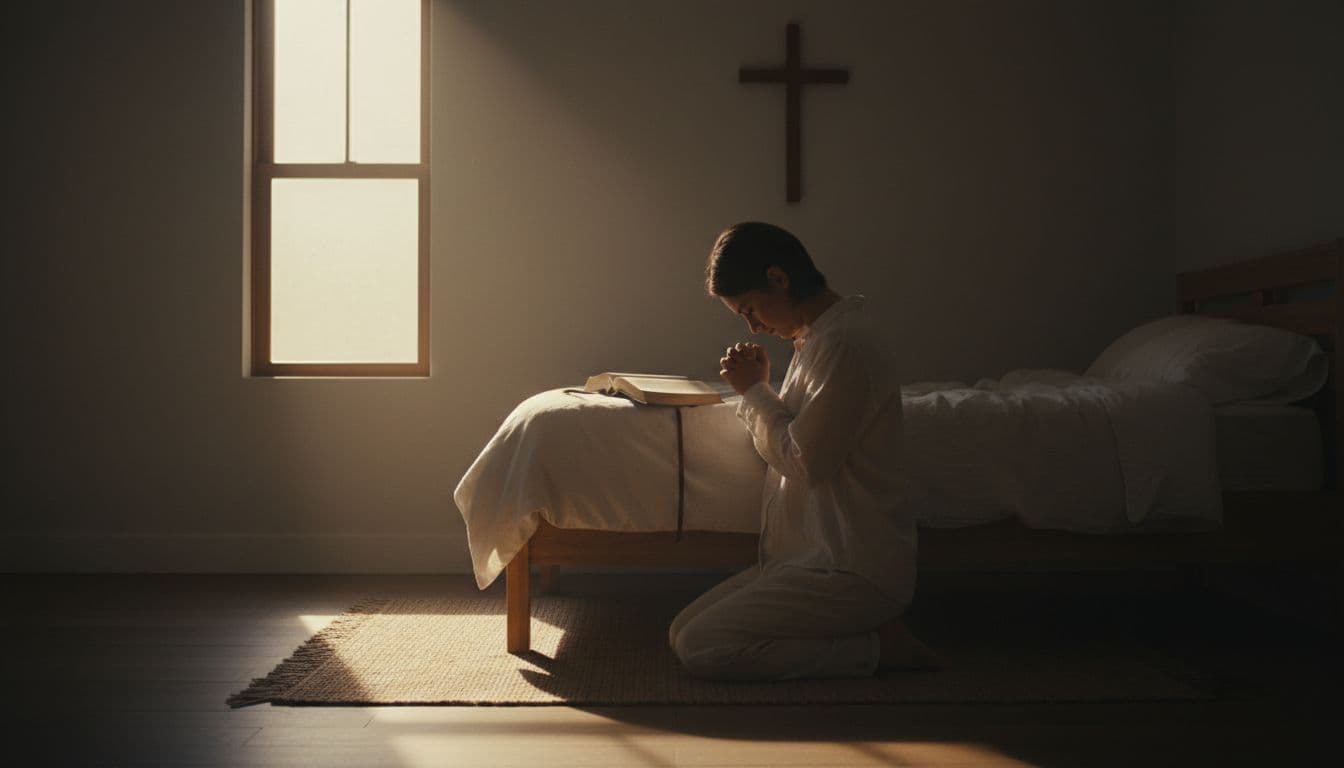
Some of us like a written structure, and this daily Christian prayer routine guide offers one helpful example. Still, the point is not to copy someone else's style. The point is to keep turning our hearts toward God at set moments, the way a sunflower keeps finding the sun.
If one window gets missed, we do not call the whole day lost. We simply pray at the next window. That is how a daily prayer routine grows, not by rigid strain, but by faithful return.
Tips to make our prayer routine last in real life
Most routines fail for ordinary reasons. We stay up late. We reach for the phone first. We expect strong emotion every day. Then we mistake a weak day for a broken life. None of that has to rule us.
What helps? We lower the friction. Keep the Bible open where we pray. Keep a pen nearby. Use the same chair. Tie prayer to an existing habit, such as coffee, lunch, or brushing our teeth. Habits grow best when they ride on the rails of something we already do.
A lasting prayer habit needs a floor, not a ceiling. On hard days, the floor may be one Psalm, one minute, and one honest cry for help.
A short journal also helps. We can write one verse, one burden, and one answered prayer. Over time, that record becomes fuel for faith. If we want added help framing the day, this habit of daily prayer article gives useful perspective.
Prayer also lasts better in community. When other believers are praying, our weak places do not feel so lonely. A local Tuesday Morning Prayer Group can help steady our rhythm, not because others can pray for us forever, but because faithful company often teaches us how to keep going.
Restart with grace when we grow inconsistent
If we miss a day, or a month, we must reject the lie that we have failed beyond repair. Condemnation freezes us. Conviction calls us home. God is not asking us to perform our way back into fellowship. He is calling us back now.
So we restart the same day. We do not wait for Monday, for a new journal, or for a more spiritual mood. We open the Bible, we bow our heads, and we begin again. That simple return is not hypocrisy. It is obedience.

When inconsistency has worn us down, shared prayer can help us begin again. We may choose to join the prayer wall and take one hour as an act of fresh commitment.
A short prayer when words are hard
Lord, here we are. Our minds are busy, but our hearts are Yours. Forgive us, order our steps, and teach us to love Your presence more than our distractions. Give us grace to begin again today. Amen.
The days will still move fast. Schedules will still press. Yet a lasting daily prayer routine can grow in the middle of ordinary life, because progress beats perfection and return beats shame.
Let us start smaller than pride wants, and stay longer than excuses permit. Then, when tomorrow comes, let us meet God again. One faithful return at a time, a praying life is built.