

Creation is not an accident, a meaningless process, or a problem without an answer. The Bible creation purpose is clear: God made all things by His wisdom, for His glory, and according to His will.
Many people look at the stars, the earth, human life, and the order of nature, then ask what it all means. Scripture does not leave us to guess. It takes us back to the beginning, shows us who created all things, explains humanity's place in creation, and points us to Jesus Christ as the One through whom all things are restored.
God Created Everything by His Word
The Bible begins with a direct statement: "In the beginning God created the heaven and the earth" (Genesis 1:1). Scripture doesn't begin with an argument for God's existence. It declares God as the eternal Creator before anything else existed.
Before there were oceans, mountains, animals, planets, or people, God was. He didn't receive life from another source. He didn't discover the materials of creation and work with something outside His control. God created by His own power and wisdom.
Genesis 1 repeatedly says, "And God said." Light appeared because God spoke. The waters were separated because God commanded it. The earth brought forth vegetation, the heavens displayed lights, and living creatures filled the seas and land according to His word.
This truth establishes God's authority over everything He has made. The universe doesn't belong to itself. Creation doesn't answer to human opinion. Every part of it exists under the authority of the One who brought it into being.
The New Testament confirms the same truth. John 1:1-3 says that all things were made by the Word, and Colossians 1:16 says that all things were created by Jesus Christ, "that are in heaven, and that are in earth, visible and invisible."
Jesus was not merely part of creation. He is the Creator. The Son of God was present in the beginning, and all things were made by Him and for Him.
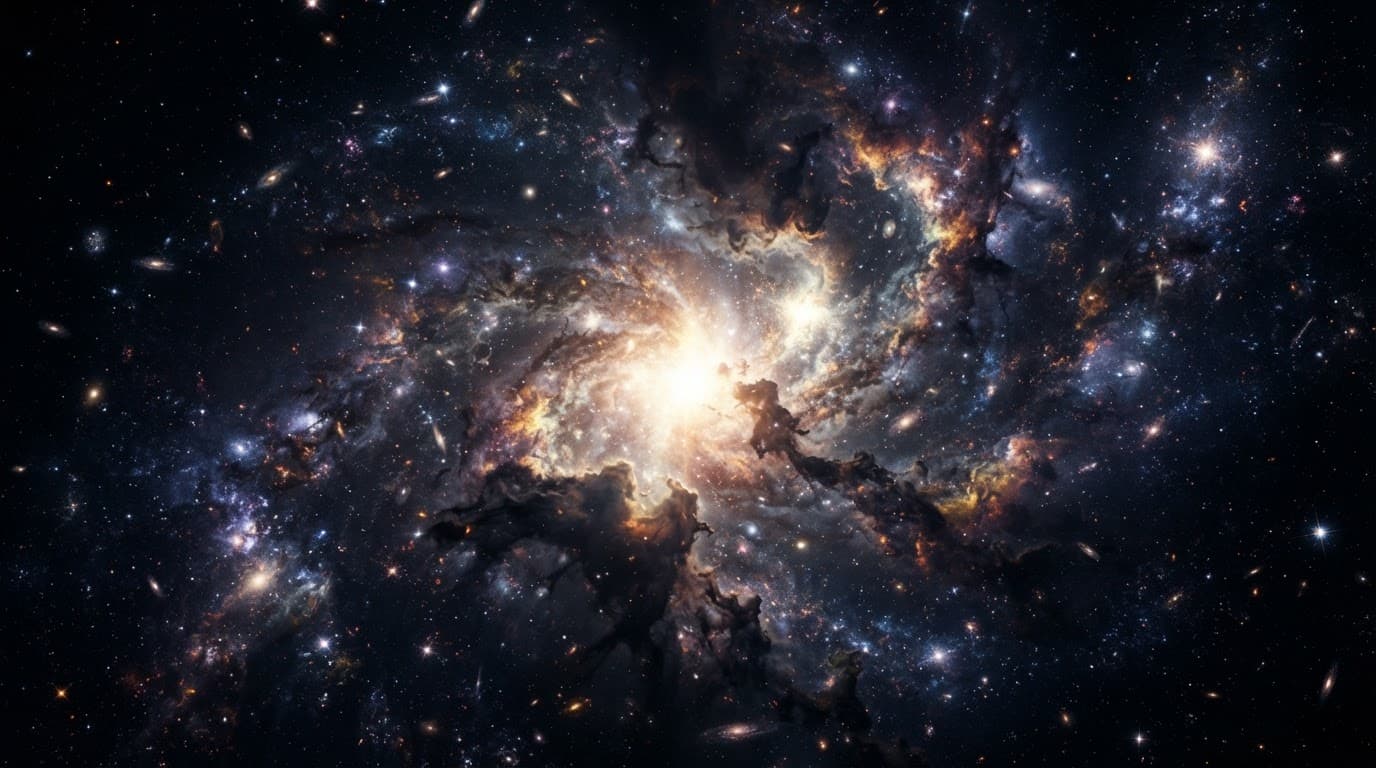
The Bible's creation account gives us the proper starting point for every question about life. We don't begin with ourselves. We begin with God.
Bible Creation Purpose: All Things Exist for God’s Glory
The Bible creation purpose is not centered on human comfort, human achievement, or human independence. Creation exists for the glory of God.
Isaiah 43:7 speaks of people who are called by God's name and created for His glory. Psalm 19:1 says, "The heavens declare the glory of God; and the firmament sheweth his handywork." The heavens display God's greatness, power, wisdom, and order.
Creation is like a work of art that points beyond itself to the artist. When we see the skill in a building, we know there was a builder. When we hear an organized message, we know there was a speaker. When we see the order and complexity of creation, Scripture calls us to recognize the Creator.
Romans 1:20 says God's invisible qualities, including His eternal power and Godhead, are understood through the things He has made. Creation doesn't tell us everything about salvation, but it does reveal that God is powerful and worthy of worship.
This is why idolatry is such a serious sin. Idolatry takes what God created and places it above God. Romans 1 describes people who worship and serve the creature more than the Creator. The problem is not that creation has no value. The problem is that creation has been given the worship that belongs to God alone.
Revelation 4:11 gives the proper response: "Thou art worthy, O Lord, to receive glory and honour and power: for thou hast created all things, and for thy pleasure they are and were created."
God created all things according to His pleasure and will. This doesn't mean creation is meaningless or that God is careless with what He made. It means His purpose is higher than ours, and His glory is the final reason all things exist.
Creation is not the destination of worship. Creation is the witness that directs worship to God.
Humanity Was Created in God’s Image
Genesis 1:26-27 gives humanity a unique place within creation. God said, "Let us make man in our image, after our likeness." Then God created male and female in His image.
Human beings are not animals with greater intelligence. We are not accidents produced by blind forces. We were made by God and given a distinct identity, dignity, and responsibility.
Being made in God's image doesn't mean that we are gods. It means we were created to reflect God's character and authority in the earth. We were made to know Him, obey Him, worship Him, love what He loves, and exercise righteous care over what He has made.
Every human life has value because every person bears God's image. This truth applies to the strong and weak, the wealthy and poor, the born and unborn, the healthy and sick, the young and old. Human worth doesn't come from productivity, appearance, intelligence, or social position. It comes from the Creator.
Genesis 1:28 also gives humanity a command to multiply, fill the earth, subdue it, and have dominion over the living creatures. Dominion is not permission for sinful abuse. It is a charge to rule under God.
A faithful ruler doesn't destroy what has been placed under his care. He protects, orders, cultivates, and uses it according to the will of the one who gave him authority. Humanity's authority is real, but it is delegated authority.
God remains the owner. Psalm 24:1 says, "The earth is the Lord's, and the fulness thereof." We can use the earth, work its soil, build homes, develop skills, and benefit from its resources, but we never become independent owners before God.
Our identity begins with this fact: we were created by God and for God. Any view of human life that removes God also removes the foundation for human dignity and responsibility.
Creation Gives People Work and Responsibility
God did not create Adam and place him in the garden with nothing to do. Genesis 2:15 says the Lord God took the man and placed him in Eden "to dress it and to keep it."
Work existed before sin entered the world. Sin made work painful, frustrating, and exhausting, but work itself is not a curse. God created people to cultivate, build, govern, serve, and care for what He has entrusted to them.
The garden was not a place of passive existence. Adam had a task. He was to dress the garden and keep it. He was also given the responsibility of naming the animals, which showed his authority under God.
This gives biblical purpose to ordinary responsibilities. Raising children, preparing food, repairing equipment, earning an honest living, caring for a home, serving a church, and helping a neighbor can all be done before the Lord. The value of work is not measured only by income or public recognition.
We often separate spiritual activities from ordinary life, but Scripture doesn't permit that division. Colossians 3:23 says, "And whatsoever ye do, do it heartily, as to the Lord, and not unto men." Work becomes worship when it is done in obedience to God.
The creation account also establishes the pattern of rest. Genesis 2:2-3 says God rested from His work and blessed the seventh day. God was not tired or limited. His rest declared that His work was complete.
People are not machines. We weren't created to be driven by endless production, greed, or the need to prove our worth. Our worth was established by God before we produced anything. Faithful work matters, but worship, obedience, and trust matter more.

The biblical purpose of work is not self-exaltation. It is faithful service under the authority of the Creator.
Creation Was Good, but Sin Brought Corruption
Genesis 1 repeats a phrase that should not be overlooked: "And God saw that it was good." After creating humanity, God saw everything He had made, and it was "very good" (Genesis 1:31).
God did not create evil. He did not create death, rebellion, shame, or separation from Him. The original creation was good because it came from a holy and wise God.
Genesis 3 explains how sin entered human experience. Adam and Eve disobeyed God's command, believed the serpent's lie, and ate from the tree of the knowledge of good and evil. Their sin brought guilt, shame, fear, pain, alienation, and death.
The fall damaged every part of human life. The ground was cursed. Work became difficult. Relationships became marked by conflict. The human heart became inclined toward sin. Romans 5:12 says that sin entered the world through one man, and death came through sin.
Creation is still God's creation, but it is not operating in the condition God originally gave it. Romans 8:22 says that the whole creation groans and travails together until now. We see the effects of the fall in sickness, decay, violence, injustice, natural disaster, and death.
This matters because the Bible does not tell us to deny the brokenness of the world. Neither does it tell us that brokenness is the final truth. Sin explains why creation is suffering, but God's promise explains why suffering will not last forever.
We must also understand that human sin is not a small defect in an otherwise acceptable life. Sin is rebellion against the Creator. It turns worship inward, rejects God's authority, and brings death because God is holy.
The answer to the world's condition is not human improvement alone. We need redemption. We need reconciliation with God. We need the One who came to restore what sin destroyed.
Jesus Christ Is Lord Over Creation and Redemption
The Bible's teaching about creation leads directly to Jesus Christ. The same Son through whom all things were created came into the world to save sinners.
John 1:14 says the Word became flesh and dwelt among us. The Creator entered His creation. Jesus took on a real human body, lived without sin, suffered under human injustice, died on the cross, and rose again from the dead.
The cross was not separate from God's purpose in creation. It was God's answer to the rebellion that had corrupted creation. Colossians 1:19-20 says that it pleased the Father by Christ "to reconcile all things unto himself," having made peace through the blood of His cross.
Jesus didn't come only to make people feel better about themselves. He came to reconcile them to God. He came to break the power of sin, forgive those who repent and believe, and bring them into the family of God.
When a person is born again, that person becomes a new creation in Christ. Second Corinthians 5:17 says, "If any man be in Christ, he is a new creature: old things are passed away; behold, all things are become new."
This new creation begins inwardly through salvation, but God's work doesn't stop there. The gospel promises the full restoration of all things under the rule of Christ.
Jesus is not only the Savior of individual people. He is Lord over heaven and earth. All authority belongs to Him. Every power, ruler, nation, and spiritual force remains under His authority, whether they acknowledge it willingly or not.
The purpose of creation will be fulfilled when Christ is openly honored as Lord and God makes all things new. Redemption is not God's response to a failed plan. It is the unfolding of His holy purpose through Jesus Christ.

This is why creation and salvation cannot be separated. The One who made us is the One who came to redeem us.
The Purpose of Creation Calls for Worship and Obedience
If God created all things, then our lives belong to Him. This is not an oppressive truth. It is the truth that gives life its proper order.
A tool has a purpose because someone made it. A house has a design because someone built it. Human beings have purpose because God created us. We don't discover our purpose by placing ourselves at the center. We receive it by submitting to the Creator.
Jesus said the greatest commandment is to love the Lord our God with all our heart, soul, mind, and strength. The second is to love our neighbor as ourselves (Mark 12:29-31). These commands summarize the life God intended for humanity.
Worship is more than singing. Worship is the proper response to God's worth. We worship when we honor Him, trust Him, obey His Word, give thanks, repent of sin, and refuse to treat created things as more important than the Creator.
Obedience is also more than outward religious activity. God wants the heart. A person can speak Christian language, attend services, and maintain a religious appearance while resisting God's authority. The purpose of creation calls for willing submission, not empty performance.
We were made for fellowship with God. Genesis shows God walking in the garden, and the whole story of Scripture moves toward God's dwelling with His people. Revelation 21:3 says, "Behold, the tabernacle of God is with men, and he will dwell with them."
The Christian life is not a search for a purpose God has hidden. God's will is revealed in Scripture. We are called to believe the gospel, follow Jesus, walk in holiness, love others, and use our lives for God's glory.
For those seeking a biblical answer about the Bible creation purpose, the answer is both clear and demanding. We exist because God created us, and we exist for His glory. That truth affects every decision, relationship, ambition, and response to suffering.
Creation Points Toward a Future Restoration
The Bible does not end with Genesis 3. It ends with God restoring His people and bringing His purposes to completion.
Revelation 21 describes a new heaven and a new earth. God wipes away tears. Death is no more. Mourning, crying, and pain are removed. The curse is gone, and God's people dwell with Him.
This promise doesn't mean that the material world is worthless. God created the physical world, and He will renew it. Christian hope is not escape from everything God made. It is the resurrection of the body and the restoration of creation under the reign of Christ.
Romans 8 connects the future glory of God's children with the liberation of creation itself. The world now groans under corruption, but it will not groan forever. God has not abandoned what He created.
The resurrection of Jesus is the foundation of this hope. Christ rose bodily, not as a ghost or an idea. His resurrection shows that death doesn't have the final word and that God's redemption reaches the whole person.
Our future hope also gives meaning to present faithfulness. The work we do for the Lord is not empty. First Corinthians 15:58 tells believers to be steadfast, unmovable, and always abounding in the work of the Lord because their labor is not in vain.
We don't have to control the future. God has already declared the end of His purpose. We are called to remain faithful while we wait for Christ's return and the renewal of all things.
Creation began with God's word, and it will reach its appointed end under God's authority. Sin has damaged the world, but sin will not have the final victory.
How Creation Should Shape Daily Christian Life
A biblical view of creation changes how we live on ordinary days. It gives us reasons to reject pride, fear, waste, greed, and despair.
First, creation should produce humility. We are creatures, not the Creator. Our knowledge is limited, our strength is temporary, and our lives depend on God. We have no reason to boast as though we made ourselves.
Second, creation should produce gratitude. Every breath, ability, relationship, meal, and moment of beauty is received within God's created order. Gratitude turns our attention away from constant complaint and back toward God's generosity.
Third, creation should produce responsibility. We should care for our bodies, treat people with dignity, use resources wisely, and carry out our work honestly. Dominion never gives us permission to act as though no one will judge us.
Fourth, creation should produce confidence. The world may appear chaotic, but it is not outside God's rule. The Creator remains Lord over what He has made. Our faith rests in His character, not in the stability of present circumstances.
Finally, creation should produce repentance. If we were made for God, then living for self is a direct contradiction of our purpose. We must turn from sin and trust in Jesus Christ, the Creator and Redeemer.
These truths are not reserved for a church service or a Bible study. They belong in the home, the workplace, the classroom, and every private decision. The person who understands God's purpose in creation cannot continue living as though life belongs only to him.
God made us to know Him and glorify Him. Jesus saves us so we can return to that purpose through faith and obedience.
Conclusion: Creation Finds Its Meaning in God
The Bible teaches that God created all things by His word, made humanity in His image, gave people responsibility, and appointed creation to display His glory. Sin corrupted what God made, but Jesus Christ came to redeem sinners and restore God's purposes.
The Bible creation purpose is not a mystery reserved for a few people. Creation exists for God's glory, and human life finds its meaning in worship, obedience, fellowship with God, and faithful service.
The stars still declare His glory. The earth still belongs to Him. Every person still answers to the One who created them. In Christ, broken people become new creations, and the day is coming when God will make all things new.