
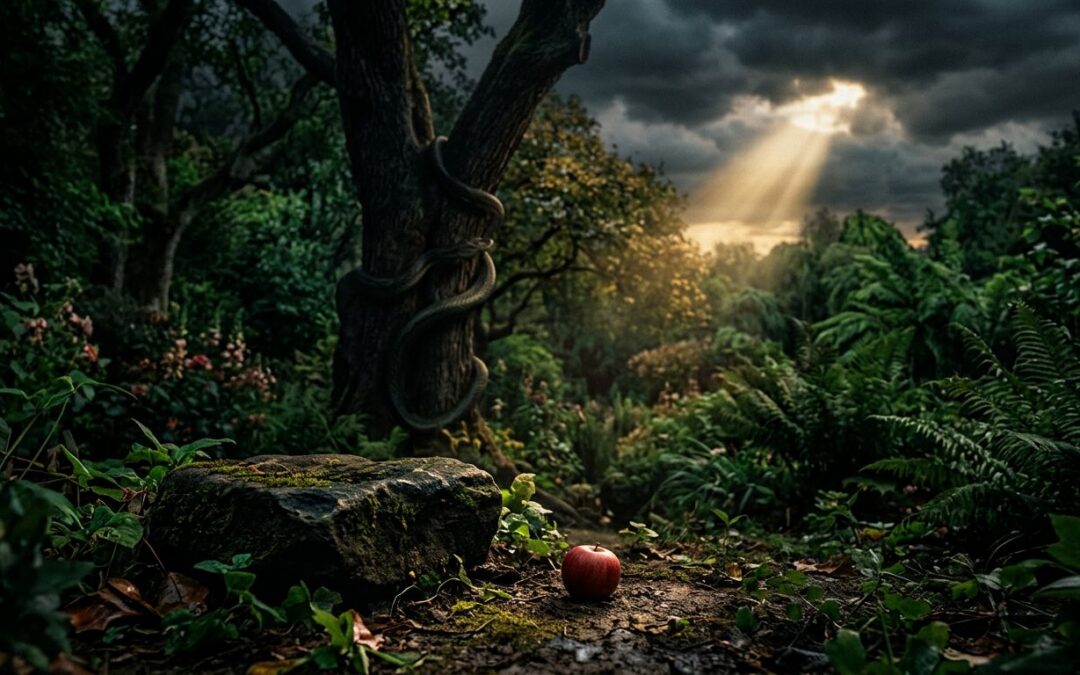
Every human life bears the marks of a broken world. We see guilt, violence, pride, fear, and death, but the Bible gives the reason: humanity's fall into sin began with rebellion against God's clear command.
Sin isn't a harmless weakness or a flaw we can correct through better habits. It is disobedience against our holy Creator. When we understand what happened in Genesis 3, we also understand why humanity needs forgiveness, redemption, and restoration through Jesus Christ.
What Does It Mean to Fall Into Sin?
To fall into sin is to turn away from God's truth and choose our own way. Sin begins in the heart before it appears in our words or actions. It rejects God's authority, distrusts His goodness, and treats His wisdom as something we can question or ignore.
The Bible says, "All have sinned, and come short of the glory of God" (Romans 3:23, KJV). That statement includes every nation, generation, family, and individual. No one escapes the reach of sin through education, morality, religious activity, or good intentions.
We may not all commit the same sins, but we all stand guilty before God. Some sins are public, while others remain hidden in the heart. Pride can look respectable. Bitterness can stay private. Coveting can appear successful. God sees what people see, and He also sees what people conceal.
Sin is not only doing what God forbids. It is also refusing to do what God commands. James 4:17 says, "Therefore to him that knoweth to do good, and doeth it not, to him it is sin." The problem reaches beyond individual actions. Sin has affected our desires, thinking, relationships, and worship.
Humanity’s Fall Began in Eden
Genesis 1:31 says that God saw everything He had made, and it was "very good." Creation didn't begin with evil, suffering, or death. God made humanity in His image and placed Adam and Eve in the garden of Eden, where they lived under His provision and blessing.
God gave Adam a direct command:
"Of every tree of the garden thou mayest freely eat: But of the tree of the knowledge of good and evil, thou shalt not eat of it" (Genesis 2:16-17, KJV).
The command was clear. Adam and Eve weren't confused about what God had said. The issue was not a lack of information. The issue was whether they would trust God enough to obey Him.
The Serpent Questioned God’s Word
Genesis 3 introduces the serpent, who approached Eve with a question: "Yea, hath God said?" The serpent attacked God's Word before he attacked God's command. He planted suspicion about God's goodness and suggested that obedience was keeping Eve from something desirable.
The lie continued: "Ye shall not surely die" (Genesis 3:4, KJV). The serpent contradicted what God had spoken, and Eve listened. She saw that the tree was good for food, pleasant to the eyes, and desirable to make one wise. Then she took the fruit and ate. Adam also ate.
This is how the fall happened. It wasn't an accident, and it wasn't an unavoidable event. Adam and Eve willingly rejected God's command because they believed their own judgment could lead them to something better.
The first sin was an act of disobedience, but it was also an act of distrust. They chose the creature's word over the Creator's Word.
Sin Brought Shame, Separation, and Death
Immediately after Adam and Eve sinned, their eyes were opened, and they knew they were naked. Shame entered their experience. They tried to cover themselves and then hid from God when they heard Him walking in the garden (Genesis 3:7-8).
Sin always brings shame and separation. It promises freedom, but it produces bondage. It promises wisdom, but it darkens understanding. It promises satisfaction, but it leaves the soul exposed and empty.
God called Adam and Eve to account, and their responses revealed another effect of sin. Adam blamed Eve, and Eve blamed the serpent. Instead of taking responsibility, they shifted the blame. Sin bends us inward, making us defend ourselves rather than confess our guilt.
God's judgment followed. The serpent was cursed. Eve would experience pain and conflict. Adam would labor against the cursed ground. They were driven from Eden, and death entered human experience. Genesis 3:19 says, "For dust thou art, and unto dust shalt thou return."
Romans 5:12 explains the wider result: "By one man sin entered into the world, and death by sin; and so death passed upon all men." Adam's rebellion didn't remain in the garden. It affected the entire human race.
Why We All Need Forgiveness
The Bible teaches that Adam's sin brought humanity under the reign of sin and death. Romans 5:19 says, "By one man's disobedience many were made sinners." We inherit a sinful condition, but we also confirm that condition through our own choices.
We aren't guilty because we personally ate the fruit in Eden. We are guilty because Adam's rebellion brought sin into the human family, and because every one of us has also chosen disobedience. We have lied, judged, lusted, envied, hated, neglected God, and resisted truth.
Psalm 51:5 shows the seriousness of our condition. David said, "Behold, I was shapen in iniquity; and in sin did my mother conceive me." David wasn't accusing his mother of a particular sinful act. He was confessing that sin had marked him from the beginning of his life.
Still, Scripture doesn't remove personal responsibility. Ezekiel 18:20 says, "The soul that sinneth, it shall die." Each person must answer to God. We can't blame our family, culture, circumstances, or Adam for every sinful decision we make.
The fall explains why we sin, but it doesn't excuse our sin.
God’s Judgment Was Joined With Mercy
God's response in Genesis 3 was righteous judgment, but judgment wasn't the only word He spoke. Before Adam and Eve left the garden, God gave the first promise of redemption.
Speaking to the serpent, God said, "It shall bruise thy head, and thou shalt bruise his heel" (Genesis 3:15). Christians have long understood this as the first promise of the gospel. A coming Deliverer would suffer, but He would defeat the serpent.
God also made coats of skins and clothed Adam and Eve (Genesis 3:21). Their own coverings couldn't deal with their shame. God provided a covering they couldn't provide for themselves. Even in judgment, mercy was present.
This pattern continues throughout Scripture. God doesn't overlook sin, because He is holy and just. He also provides a way for sinners to receive mercy. The sacrifices of the Old Testament pointed toward the greater sacrifice of Jesus Christ, who would bear sin once for all.
Romans 6:23 tells us that "the wages of sin is death; but the gift of God is eternal life through Jesus Christ our Lord." Sin earns death. Salvation is God's gift.
Jesus Christ Restores What Sin Ruined
The answer to humanity's fall isn't self-improvement. We don't overcome sin by promising to try harder, hiding our failures, or comparing ourselves with people who appear worse than we are. We need a Savior.
Jesus came as the sinless Son of God, the One Scripture calls the "last Adam" (1 Corinthians 15:45). Adam disobeyed in a garden and brought condemnation. Jesus obeyed the Father and went to the cross, where He bore the judgment sinners deserve.
Romans 5:18-19 sets the contrast plainly. Through one man's disobedience, many were made sinners. Through Christ's obedience, many can be made righteous. The cross wasn't a symbol of human kindness. It was the place where Jesus gave Himself for our sins.
"God commendeth his love toward us, in that, while we were yet sinners, Christ died for us" (Romans 5:8, KJV). We don't earn this love. We receive it through repentance and faith.
The resurrection confirms that Jesus conquered sin and death. Those who trust in Christ are forgiven, declared righteous before God, and given new life. Romans 8:1 says, "There is therefore now no condemnation to them which are in Christ Jesus."
Christ doesn't merely improve the old life. He creates a new one. "If any man be in Christ, he is a new creature" (2 Corinthians 5:17). The damage caused by sin is real, but the grace of God is greater.
How Should We Respond to the Fall?
The Bible's teaching about sin should lead us to honest repentance, not despair. We must stop excusing what God calls sin. We must stop treating confession as weakness. We must bring our guilt into the light and trust the mercy God has provided through Christ.
First John 1:8-9 gives a clear warning and a clear promise. If we say we have no sin, we deceive ourselves. If we confess our sins, God is faithful and just to forgive us and cleanse us from all unrighteousness.
Repentance means turning from sin and turning toward God. It isn't merely feeling sorry after being caught. It is agreeing with God about our sin and submitting to His truth. Faith means trusting Jesus Christ, not our performance, to save us.
We should also expect a continuing battle with sin. Salvation doesn't mean temptation disappears. It means sin is no longer our rightful master. Through the Holy Spirit, we learn to put off the old ways and walk in obedience.
Conclusion: Hope After the Fall
The Bible tells us the truth about humanity's fall into sin without softening it. Sin entered through Adam's disobedience, spread through the human race, brought death and separation from God, and continues through our own willing choices.
Yet Genesis 3 isn't the end of the story. The promised Deliverer came in Jesus Christ. Through His death and resurrection, sinners can receive forgiveness, new life, and restoration with God.
We don't have to remain under condemnation. The same Bible that exposes our sin announces the grace of God in Christ. When we repent and believe, the fall doesn't have the final word. Jesus does.