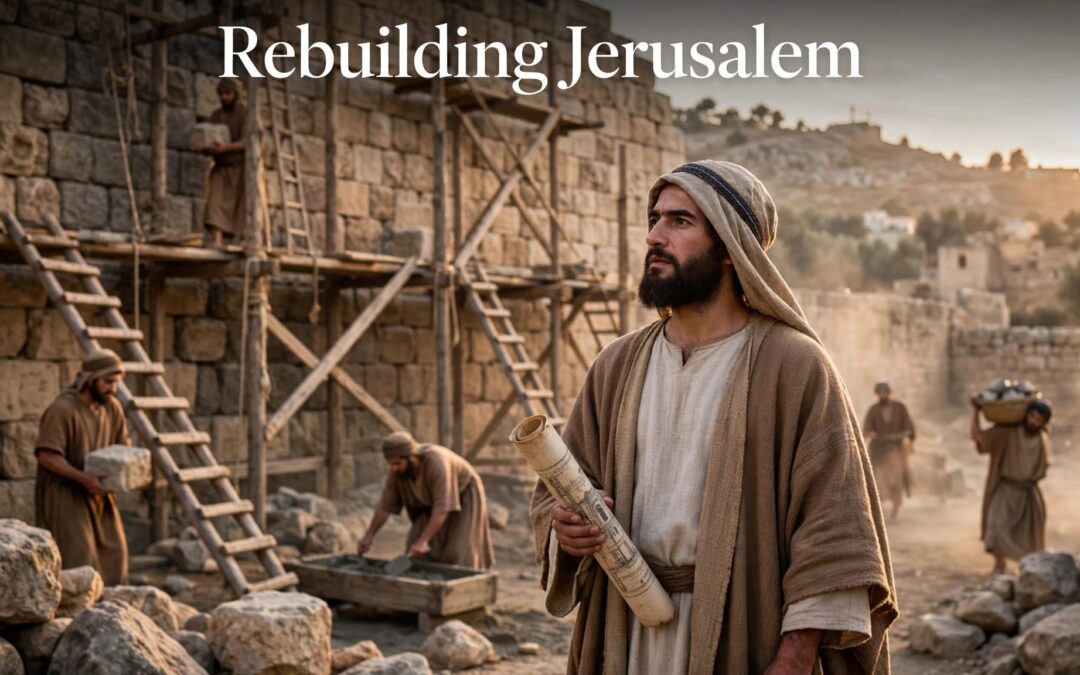
Nehemiah led the rebuilding of Jerusalem's walls through prayer, royal authorization, organized labor, and steady resistance to opposition. The work was completed in 52 days, but the account begins with a man who wept over the condition of God's people.
We must understand both parts of this history: Nehemiah trusted God, and Nehemiah accepted responsibility for the work before him. His response offers a model of prayerful leadership, showing how prayer, preparation, courage, and willing obedience belong together.
Key Takeaways
- Nehemiah sought God before approaching the king or organizing the builders.
- Families, priests, tradesmen, and neighboring communities shared responsibility for rebuilding.
- Opposition required prayer, watchfulness, and continued work.
- The completed walls protected Jerusalem, but the people still needed God's Word, repentance, and continuing obedience.
Nehemiah’s Burden Began With Prayer
Hanani brought news of Jerusalem’s disgrace
Nehemiah 1 introduces Nehemiah at Susa, serving as cupbearer to King Artaxerxes. The cupbearer held a trusted position that regularly placed him in the king's presence.
His brother Hanani arrived with men from Judah. Their report was painful: the survivors were suffering, Jerusalem's walls were broken down, and its gates had been burned.
The destruction belonged to the larger history of Jerusalem's fall and exile. Although the temple had already been rebuilt, the city's damaged defenses left its people exposed and disgraced.
Nehemiah confessed before he requested
Nehemiah sat down, wept, mourned, fasted, and prayed. He confessed Israel's sins, including his own family's sins, and appealed to God's covenant promises.
His burden brought him before God before it brought him before the king. We must receive that correction. Concern for God's work doesn't excuse prayerlessness, and recognizing another person's failure doesn't remove our responsibility to examine ourselves.
Nehemiah sought mercy when he later made his request. His prayer already anticipated a practical step.
The King Authorized the Rebuilding
The usual date for Nehemiah's rebuilding is 445 BC. The Biblical Archaeology Society places Nehemiah's return to Jerusalem in that year.
The opening report came in Kislev, commonly placed in late 446 BC; the royal conversation followed in Nisan, a spring month. These ancient months don't follow our January-to-December calendar. The sequence shows months of prayer before the commission.
In Nehemiah 2, Artaxerxes noticed Nehemiah's sadness. As the king's cupbearer, Nehemiah explained Jerusalem's condition, prayed to God, and requested permission to rebuild.
He also requested letters for safe passage and a letter to Asaph, keeper of the royal forest. Timber was needed for the temple fortress gates, the city wall, and his residence. The king supplied authorization and sent army officers and cavalry with him.
Scripture gives no total construction cost. Nehemiah's requests for permission, protection, and materials show practical leadership. Dependence on God didn't remove preparation.
The Night Inspection Came Before the Public Appeal

After three days in Jerusalem, Nehemiah went out at night with a few men. He hadn't yet announced what God had put in his heart.
He rode his mount, traditionally pictured as a donkey, through the Valley Gate. He passed the Dung Gate and approached the Fountain Gate and the King's Pool. The rubble eventually stopped his animal near the Dung Gate.
The route followed the city's western and southern approaches toward the southeastern water area. Nehemiah examined the damage before assigning the work.
Then he gathered the leaders and people. He described Jerusalem's disgrace, testified to God's good hand upon him, and explained the king's support.
The people agreed to rise and build. Notice the order: prayer, authorization, inspection, then a public call to action. Nehemiah's confidence included a clear understanding of the task.
Families and Tradesmen Shared the Wall
Each group received a defined responsibility
Nehemiah 3 records the builders and their sections. Eliashib the high priest and his fellow priests rebuilt and consecrated the Sheep Gate.
Goldsmiths and a perfumer also worked. Rulers, priests, families, and people from surrounding settlements joined the labor. Shallum's daughters participated alongside him.
Several builders repaired sections opposite their own houses. Others worked on assigned stretches elsewhere, so we shouldn't turn the chapter into a rule that every family worked only at home.
The assignments made responsibility visible. A particular group repaired a particular section, while neighboring groups repaired their assigned stretches.
Tekoa’s people worked despite their nobles
The nobles of Tekoa refused to put their shoulders under the work of their supervisors. Scripture records their refusal without explaining their motive.
Their people still repaired the wall. Nehemiah 3:27 records the Tekoites repaired another section, even though their nobles had withheld support.
Another person's unwillingness doesn't release you from obedience. That is a concrete lesson for ministry. You can serve faithfully in the responsibility entrusted to you without waiting for everyone else to become willing.
Our teaching on obedience that comes from love follows this same responsibility before God. Willing service must become action.
Opposition Required Watchfulness and Justice
The people prayed and established guards
Sanballat, Tobiah, and Geshem mocked the rebuilding. Sanballat and his allies then threatened the workers, conspired against them, and tried to frighten them.
Nehemiah 4 records the response: the people prayed and posted a guard. Nehemiah stationed families at exposed places and reminded them to remember the Lord.
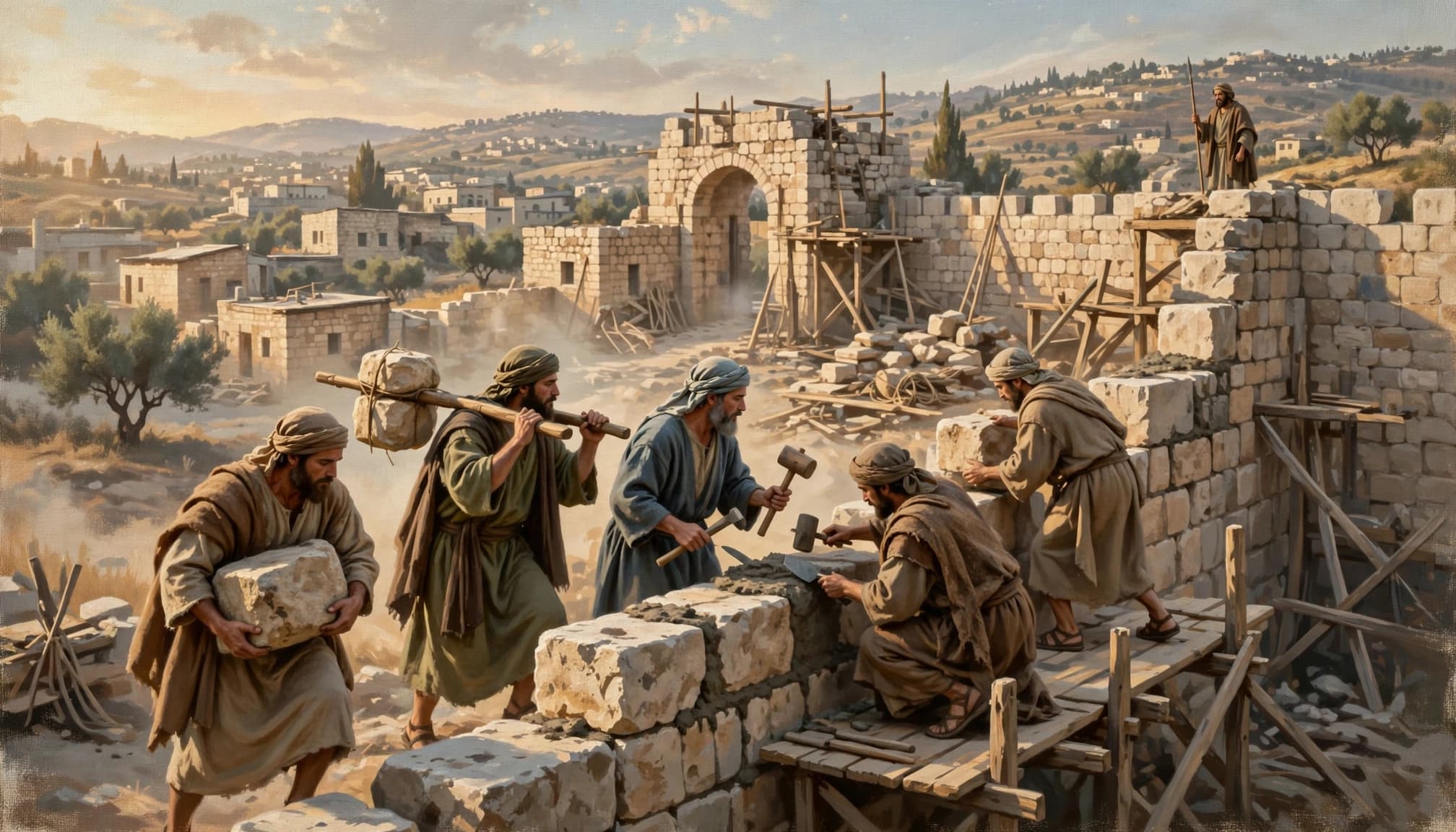
Half of his servants worked while half held spears, shields, bows, and coats of mail. Burden bearers worked with one hand and held a weapon with the other; builders wore swords at their sides.
A trumpeter stayed near Nehemiah so scattered workers could gather when danger came.
The weapon-and-tool description includes different assignments: burden bearers held weapons, builders wore swords, and guards protected the work.
This account doesn't authorize Christians to threaten opponents. We receive its instruction about prayer, watchfulness, courage, and faithful service.
Nehemiah confronted wrongdoing within the community
The danger wasn't only outside Jerusalem. Poorer Jews complained about debt, hunger, lost property, and their children being forced into servitude.
Nehemiah confronted nobles and officials who were charging interest and required restitution. He also refused to burden the people through the governor's customary food allowance.
We must hear this clearly: Godly leadership confronts injustice among its own people. A leader cannot faithfully defend the community while ignoring those being harmed within it.
The Wall Was Finished in 52 Days
Nehemiah 6 describes further attempts to stop the work. Nehemiah's enemies invited him to meetings intended to harm him, circulated accusations of rebellion, and used a false warning to tempt him into wrongdoing.
Nehemiah refused to abandon his responsibility. He prayed for strength and recognized that fear was being used to draw him into sin.
The wall was completed on the twenty-fifth day of Elul after 52 days. The surrounding enemies lost confidence because they recognized that God had helped His people.
That is the meaning of the completion account: God's help brought the work to its appointed finish despite sustained opposition.
The 52 days describe the rebuilding period, not the entire time between Hanani's report and completion. Prayer, royal authorization, travel, and preparation came beforehand.
We must also avoid turning this event into a deadline God has promised every believer. The passage gives testimony to His faithfulness, not a universal 52-day timetable.
God’s Word Had to Govern the Restored City
Ezra taught the assembled people
The completed wall didn't remove the people's need for instruction. In Nehemiah 8, Ezra the scribe read the Book of the Law before the assembly near the Water Gate.
The Levites helped the people understand what they heard. Conviction was followed by instruction, worship, rejoicing, and observance of the Feast of Tabernacles. Confession and covenant renewal followed in the continuing account.
Our study of Ezra's return from exile distinguishes these assignments: the temple was rebuilt before Ezra arrived, Ezra taught God's Law, and Nehemiah rebuilt the walls.
As Spirit-filled believers, we must receive the same correction. The Holy Spirit leads us into obedience to Scripture. Spiritual response must include submission to what God has spoken.
Later compromise still required correction
Nehemiah eventually returned to Artaxerxes' court. When he later came back to Jerusalem, he found serious violations.
Nehemiah 13 records Eliashib's provision of a large temple chamber for Tobiah, the same man who had opposed the rebuilding. Nehemiah threw Tobiah's belongings out and ordered the rooms cleansed.
The high priest who helped rebuild the Sheep Gate later permitted compromise within the temple precincts. Earlier service didn't excuse later disobedience.
Restored buildings couldn't cleanse the heart. We need Jesus Christ's saving work and the Holy Spirit's renewing presence to walk faithfully before God.
Frequently Asked Questions
Why does the builders’ list begin at the Sheep Gate?
The priests rebuilt and consecrated this gate near the temple area. Its placement connects their labor with their responsibility for worship. Scripture doesn't say that starting there established a required spiritual sequence for every rebuilding project.
Were all the gates finished before the wall?
No. The account describes wall sections and gates together, and the wall's gaps were closed before all gate doors were installed. Gates mattered for security, but the narrative doesn't teach that every gate was completed first.
What does Nehemiah 6:15 mean?
Nehemiah 6:15 records the completion date and the 52-day rebuilding period. The following verse attributes the achievement to God's help, which even the enemies recognized.
Faithfulness Must Continue After the Work Is Finished
Nehemiah's prayer, shared labor, and courage under pressure were hallmarks of faithful leadership as he rebuilt Jerusalem's walls. Yet the finished wall didn't remove the continuing call to obedience.
We must seek God's help, accept our responsibility, and remain willing to receive His correction. The God Who enabled the rebuilding also required His people to hear His Word and live under His authority.