
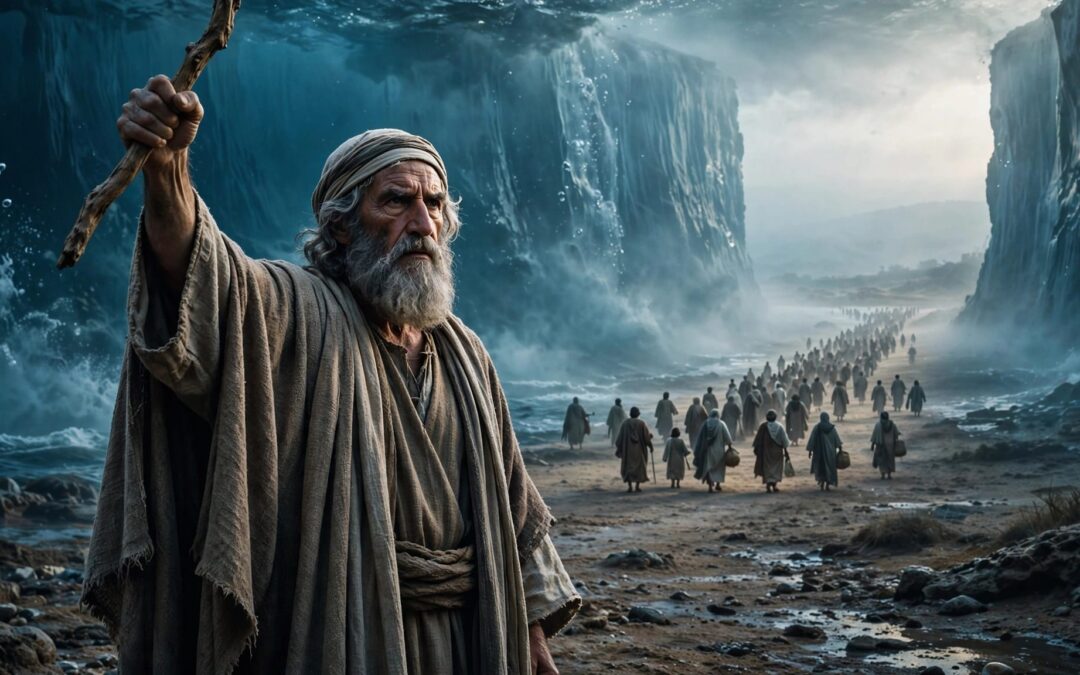
You can read Exodus, remember the burning bush and the divided sea, and still miss what holds the book together. God rescues a people for Himself, and Israel's deliverance in Exodus must be understood within that purpose.
We must hear what God says about Israel before making the story about our own circumstances. The account begins with bondage, but it carries us toward covenant, worship, and God's presence among His people.
Begin with Israel’s Bondage and God’s Promise
Exodus begins with names. These are the descendants of Jacob who entered Egypt, the family whose story we have already followed in Genesis. Joseph's generation has died, but God's promise has not died with them.
When we read the opening chapter of Exodus, we see Israel multiplying while a new king treats that growth as a threat. Pharaoh imposes forced labor and orders the destruction of Hebrew sons. The oppression is bodily, public, and deadly.
We must retain that reality. Israel's slavery cannot be reduced to a picture of discouragement or a difficult season. These people suffer under a ruler who claims authority over their labor, their families, and their lives.
Shiphrah and Puah, the Hebrew midwives, fear God and refuse the king's command (Exodus 1:15-21). Their obedience exposes the difference between Pharaoh's authority and God's authority. A king may command evil, but his command does not make evil righteous.
Exodus 2:23-25 then places Israel's suffering beside God's covenant with Abraham, Isaac, and Jacob. God hears, remembers, sees, and knows. His remembering means He acts faithfully toward His covenant; it doesn't mean He had forgotten His people.
Israel's deliverance belongs to a promise already given. We read the rescue rightly when we keep that covenant before us.
The Lord Reveals Himself and Confronts Pharaoh
God’s Presence Grounds Moses’ Calling
At the burning bush, God declares that He has seen Israel's affliction and will deliver His people (Exodus 3:7-10). Moses receives a commission because God has determined to act.
Moses asks who he is to undertake such a task. God's answer places the weight on His own presence: He will be with Moses (Exodus 3:11-12). We should read that exchange before turning Moses into a lesson about confidence. His calling rests on the Lord who sends him.
God also makes Himself known by His name and identifies Himself with Israel's ancestors (Exodus 3:13-15). The One speaking to Moses is the covenant God, faithful to the people He has promised to bless.
Pharaoh Refuses the Lord’s Authority
Pharaoh's question in Exodus 5:2 concerns the Lord's authority over him. He refuses to recognize that authority and increases Israel's burden. Obedience to God's commission does not produce immediate relief.
The plagues answer Pharaoh's refusal through judgment. BibleProject's overview of Exodus 1-18 follows this confrontation between the Lord and the oppressive king. The repeated demand is that Israel be released to serve God.
The narrative describes Pharaoh hardening his heart and God hardening Pharaoh's heart (Exodus 8:15; 9:12). We must retain both statements rather than removing whichever one troubles us.
God's power is righteous power. The judgments expose Pharaoh's resistance and declare that Egypt's ruler cannot overrule the Lord. We should read these events with the seriousness the text gives them, rather than turning judgment into religious entertainment.
Deliverance in Exodus Comes Through Judgment and Rescue
Passover Establishes a Lasting Remembrance
Exodus 12 gives Israel instructions before the judgment on Egypt's firstborn. A lamb without blemish is selected, its blood is placed on the doorposts and lintel, and the household eats the appointed meal.
God identifies the blood as the sign by which those households will be spared (Exodus 12:13). We must understand the protection according to His promise. The blood is not a magical object, and Israel does not invent the means of rescue.
Passover also becomes a remembrance to be taught within the household. When children ask about the observance, their families are to explain the Lord's saving action (Exodus 12:26-27).
Deliverance gives Israel a testimony that must outlive the generation who experienced it.
The Sea Crossing Ends Pharaoh’s Pursuit
In Exodus 14, Israel stands between the sea and Pharaoh's approaching forces. Fear rises, and the people accuse Moses of bringing them into the wilderness to die.
The Lord makes a passage through the sea, Israel crosses, and the pursuing forces are overwhelmed. Our teaching on God's power in biblical rescue keeps that saving action joined to His righteousness.
Exodus 14:30 states the result: the Lord saves Israel from the Egyptians. The song in Exodus 15 responds by praising the Lord for His victory.
We shouldn't turn this crossing into a guarantee that every threatening circumstance will end the way we desire. Its first claim is clear: the Lord defeats the power holding Israel captive.
Freedom Requires Trust and Covenant Obedience
The Wilderness Exposes Israel’s Heart
Deliverance does not end Israel's need to trust God. In Exodus 15-17, water, hunger, and thirst become occasions for complaint, provision, and testing.
The manna instructions require Israel to receive God's provision according to God's command (Exodus 16). The people cannot separate receiving His gifts from hearing His word.
We see an important distinction here. Israel has witnessed God's power, yet the people still struggle to trust Him. An extraordinary experience does not remove the responsibility to believe and obey.
These chapters concern actual food and water for a rescued community. Their spiritual instruction grows out of that account. We must not erase the people's physical need in order to preach about inward faith.
Sinai Defines Israel’s Life Before God
At Sinai, God reminds Israel that He carried them out of Egypt and brought them to Himself (Exodus 19:4). He then calls them to covenant faithfulness as His treasured possession, a kingdom of priests, and a holy nation.
Exodus 20 begins the commandments by identifying the Lord as the God who brought Israel out of slavery. Rescue precedes the commands. The commandments govern the life of a people already delivered.
The laws that follow address worship, justice, property, injury, and treatment of vulnerable people. Exodus 22:21 forbids mistreating a foreigner and recalls Israel's own experience in Egypt.
God's deliverance places obligations upon the delivered. Israel must remember its suffering when dealing with others, rather than reproducing the cruelty it endured.
Israel’s Sin Makes God’s Mercy Plain
The Golden Calf Violates the Covenant
Exodus 32 records Israel making a golden calf while Moses is on the mountain. The people who have received God's commandments turn to an image they have made.
We must allow that sequence to correct any idea that witnessing miracles guarantees faithfulness. Israel's rebellion follows deliverance, provision, and covenant instruction. The problem is a heart that refuses to remain faithful to the God who has spoken.
Moses intercedes, judgment follows, and the question of God's continuing presence becomes urgent. Israel's sin threatens the fellowship that deliverance was meant to establish. We cannot call that sin harmless merely because the people have already been rescued.
God’s Presence Remains the Book’s Goal
In Exodus 34:6-7, God declares His mercy, patience, faithfulness, and justice. He forgives sin, and He does not treat guilt as though it were innocent. We must receive both truths as part of His revealed character.
The tabernacle instructions and their fulfillment give considerable attention to God's dwelling among Israel. Exodus 25:8 states that purpose, and Exodus 40 closes with the Lord's glory filling the tabernacle.
BibleProject's guide to the book of Exodus helps you follow this whole-book movement. The ending matters: Israel has been delivered so that life with God becomes the center of its existence.
Let the Text Govern Interpretation and Historical Claims
We begin with what the passage says. Who is speaking? What has God commanded? What changes after His action? Which words and purposes recur?
Those questions protect us from treating every object as a hidden symbol. A staff, a basket, or a curtain must first be read within its narrative setting. Our guidance on interpreting biblical narratives carefully follows that discipline: application must answer to the passage's meaning.
We must also distinguish the narrative's testimony from disputed historical reconstructions. Exodus presents Israel's rescue as God's action within the people's past. Questions about chronology, routes, and archaeological evidence require their own careful examination.
The Biblical Archaeology Society's discussion of evidence concerning the Exodus addresses those historical questions. We shouldn't present a proposed date, an identification of Pharaoh, or a reconstructed route as settled fact.
That distinction doesn't require us to weaken the book's theological claims. It requires us to avoid attaching the authority of Scripture to conclusions Scripture itself doesn't state.
You can trust God's Word without pretending that every historical question has been resolved. Careful reading requires conviction about what is written and honesty about what remains disputed.
Read the Christian Connections Scripture Gives
The New Testament Identifies Christ with Passover
Christian readers must hear Israel's story within its original setting and then follow the connections the New Testament establishes. Paul identifies Christ as the Passover sacrifice in 1 Corinthians 5:7.
That connection directs us toward Jesus' saving death. Israel's rescue through the appointed Passover sacrifice prepares Christian readers to understand deliverance through Christ.
Our teaching on biblical typology and Christ explains how these scriptural patterns guide interpretation. We don't need to assign a separate Christian meaning to every detail of the meal.
Luke 24:27 also records Jesus explaining the Scriptures concerning Himself. Reading toward Christ must remain governed by Scripture, rather than by an interpretation we find impressive.
Israel’s Wilderness Experience Warns Believers
In 1 Corinthians 10:1-13, Paul recalls Israel's passage through the sea and wilderness experience. He uses their failures to warn Christians against idolatry, sexual immorality, testing Christ, and grumbling.
The application carries moral weight. God's saving gifts must not become an excuse for careless living. Paul directs believers toward faithfulness and warns against confidence that ignores temptation.
We should also keep the distinction clear: Exodus narrates Israel's release from Egyptian slavery, while the New Testament proclaims Christ's rescue from sin and judgment.
The connection is real, but the accounts are not interchangeable. Christian application honors Israel's story when it follows the apostolic teaching without replacing the people, circumstances, and commands recorded in Exodus.
Read Deliverance as a Call to Belong to God
Exodus holds together God's covenant faithfulness, His judgment against oppression, and His purpose to dwell among a people who hear His word. Deliverance carries a claim upon the delivered.
We read faithfully when we receive Israel's story before drawing conclusions about our own lives. Then we follow Scripture's connections to Christ and its call to obedient faith.
Keep reading beyond the divided sea, because the God who rescues Israel also calls Israel to worship Him and live before Him.